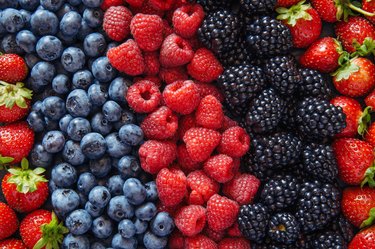
The Hay Diet, or food combining, is based on the idea that you should avoid eating certain foods together because some combinations hinder digestion and increase levels of acidity in your system, says the netfit website. While this diet is promoted as a way of life, some books, such as the "7 Day Hay Diet Plan" by Carolyn Humphries, suggest using the same diet as a detox, for one week only, says the weightlossforgood website.
About the Hay Diet
Video of the Day
As far as the Hay Diet is concerned, all foods fall into one of three categories, says the netfit website. Fruits and vegetables, for example, are alkali foods that help balance your body's acidity levels. The second and third categories are proteins and carbohydrates, or starches, both of which form acid during digestion. Breakfast is considered the most essential meal under the Hay Diet, says fitnessvenues.com. This should be followed by two other meals throughout the day, with one meal consisting of alkaline foods only.
Video of the Day
Fruits and Vegetables
Fruits and vegetables are alkali foods, which produce very little acid as they are digested and should therefore be the main part of every meal, says the netfit website. The Hay Diet is based on the idea that a diet that mainly includes these foods will enhance digestion and reduce harmful acidity levels that can lead to conditions such as constipation, indigestion and arthritis.
Proteins
Only small amounts of foods in this category should be eaten at any meal, and should not be combined with carbohydrates, says the netfit website. Protein foods include meat, game, fish, eggs and cheese. Under the Hay Diet, milk is also considered a protein, but you should not have it with meat, says the Synergy website. Alcohol, such as red and white wine and cider, is also included in this category. You should leave four hours between a protein meal and one based on carbohydrates.
Carbohydrates
Within this food group, you should eat moderate amounts of grains and wholewheat bread and pasta, says the netfit website. However, processed carbs should be avoided altogether, which means white bread, cakes, cookies and candy are banned substances when you're on the Hay Diet. However, beer is considered a "good" carb and so can be consumed in moderation.
Precautions
There is no scientific evidence that the premise behind the Hay Diet is accurate, says the Soll Leisure Magazine website. In fact, in high concentrations, protein and dairy products can raise your cholesterol levels, while limiting your intake of carbohydrates can result in vitamin and mineral deficiencies. As with any diet or drastic change to your eating habits, it is important to seek medical advice before you get started on the Hay Diet to ensure it is safe for you.