Givaga/iStock/Getty Images
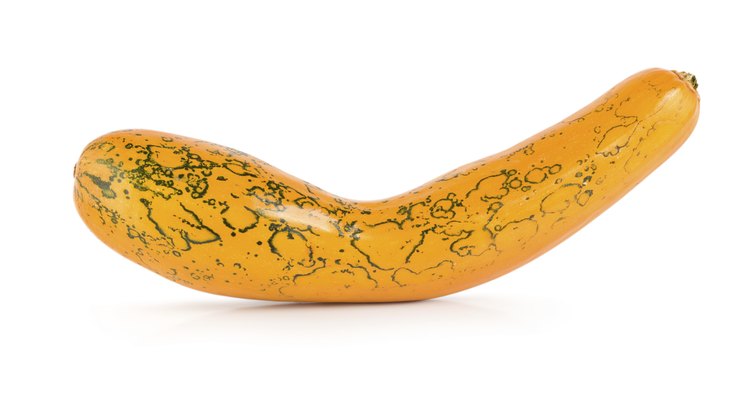
For most people, the term zucchini conjures up images of green fruits ready for shredding and baking in cakes and breads. But zucchinis range in color from various shades of green to nearly black, with or without stripes. Zucchini also comes in shades of yellow and gold, often referred to as golden zucchini. Distinguishing yellow zucchini from straight neck yellow squash poses a problem for some, but once you learn the difference, you’ll never be fooled again.
It’s All About Shape
Although yellow zucchini and yellow straight neck squash have a similar color, their shape is different. Zucchini grows long and cylindrical and the diameter of the fruit does not change from end to end. Yellow straight neck squash tapers to a narrow neck where it attaches to the vine. The body of the fruit looks slightly swollen and bulbous, like an elongated pear. The blossom end of the yellow zucchini is blocky, while the end of the yellow squash is typically more rounded.
Mature Size
Like other zucchinis, yellow zucchini can grow to lengths of 20 inches or more and weigh in at more than 10 pounds. Yellow squash does not reach these monstrous sizes and typically stops growing at about 7 to 8 inches long. Yellow squash typically develops toughened skin and deepens in color if left on the vine after it reaches this size. Some yellow squash develop a bumpy skin as they mature. Although they can be eaten at this stage, many prefer to discard overly mature yellow squash as the skin is tough and the insides are filled with large seeds.
Flavor and Texture
Yellow zucchini has a distinctive flavor that is sweeter than either green zucchini or yellow squash. The flesh is firm and crisp, but tends to be slightly softer than yellow squash when cooked. While both zucchini and yellow squash can be eaten raw in salads, the flavor isn't the same. Yellow squash lends a nutty flavor, while young zucchini tastes more like fresh cucumbers.
Cooking With Zucchini and Yellow Squash
Because both zucchini and yellow squash are types of summer squash, they are often used interchangeably in recipes. Harvesting them when they are young and tender, typically at a length of 6 to 8 inches, produces the best fruit for eating raw or adding to recipes. Mature zucchini, including the yellow zucchini, are often shredded and used in baking cakes or breads.
Related Articles
Differences in Acorn & Butternut Squash
What Is Yellow Zucchini?
How to Freeze Raw Zucchini
How to Clean Zucchini
Calories in a Large Zucchini
How to Cook a Neck Pumpkin
How to Cook Zuccini & Squash in a ...
How to Prepare Peter Pan Squash
How to Store & Keep Zucchini and Squash ...
Can Yellow Squash Be Substituted for ...
How Fast Does Cooked Spaghetti Squash ...
How to Grill Chayote Squash

How to Broil Zucchini in the Oven
Butternut Squash vs. Spaghetti Squash
How to Cook Delicata Squash Cut in Half
Substitutes for Kabocha Squash
How to Blanch Zucchini Squash
Can I Eat the Peel on Kombucha Squash?

How to Cook Buttercup Squash
How to Julienne Jicama
References
Resources
Writer Bio
Nannette Richford is an avid gardener, teacher and nature enthusiast with more than four years' experience in online writing. Richford holds a Bachelor of Science in secondary education from the University of Maine Orono and certifications in teaching 7-12 English, K-8 General Elementary and Birth to age 5.
Photo Credits
Givaga/iStock/Getty Images