
Can You Play Football With a Torn Meniscus?
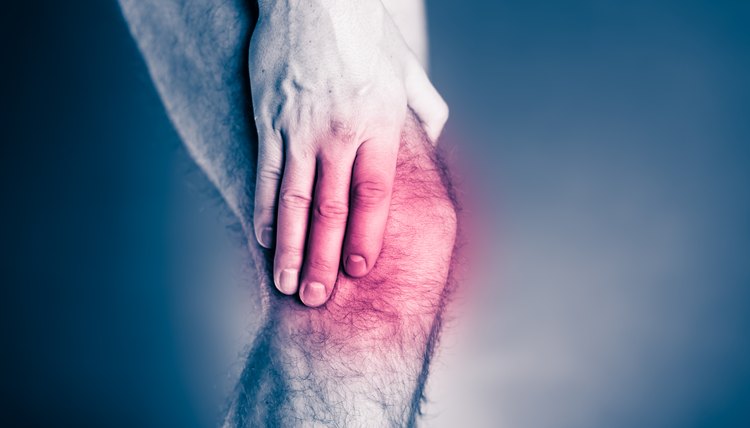
Meniscus is cartilage that cushions your knee as it moves in multiple directions. It protects your knee in sports like football where you move forward, backward, laterally and on a diagonal. But when you tear your meniscus you lose this cushioning. You can play football through a meniscus tear, but doing so will put you at risk for greater injury.
Playing Through the Injury
It's possible to play through a meniscus tear. For instance, Tennessee Titans running back Chris Johnson didn't reveal until the end of the season that he played through one for 13 weeks. However, orthopedic surgeon Eric S. Millstein. advises against this course of action. According to Millstein's website, playing can cause the tear to increase. You can also cause damage to your knee cartilage, resulting in greater pain and a risk of developing arthritis.
Recommended Treatment
Rest is the first course of action for a torn meniscus. Football, with all of its impacts, is just the opposite of that. You should keep your knee elevated above your heart as often as possible, ice it several times a day for 20 minutes at a time and wear a compression bandage to prevent swelling. If your symptoms go away after a few days your doctor may clear you to play football. If they don't, you may need surgery that can sideline you for six to eight weeks. For specific recommendations, talk to your doctor.
References
- American Academy of Orthopaedic Surgeons: Meniscal Tears
- ESPN: Chris Johnson Has Knee Surgery
- Masini BD, Dickens JF, Tucker CJ et al. Epidemiology of Isolated Meniscus Tears in Young Athletes. The Orthopaedic Journal of Sports Medicine. 2015;3(7).
- Meniscus transplant. University of Iowa Hospitals & Clinics. 2018.
- Maher SA, Rodeo SA, Warren RF. The Meniscus. J Am Acad Orthop Surg. 2017 Jan;25(1):e18-e19. doi: 10.5435/JAAOS-D-16-00689
- American Academy of Orthopedic Surgeons. (n.d.). Meniscus Tears.
- Jones BQ, Covey CJ, Sineath MH. Nonsurgical Management of Knee Pain in Adults. Am Fam Physician. 2015 Nov 15;92(10):875-83.
- Raj MA, Bubnis MA.StatPearls [Internet]. Knee Meniscal Tears. Treasure Island (FL): StatPearls Publishing; 2018 Jan-.
- Miller MD, Thompson SR. DeLee, Drez, & Miller’s Orthopaedic Sports Medicine: Principles and Practice (5th Edition). Elsevier. 2020.
- Meniscal Tears. USF Department of Orthopaedics & Sports Medicine USF Health. 2010.
- Meniscus Tears. American Academy Of Orthopaedic Surgeons.
- Meniscus Tears. Hospital for Special Surgery.
- Meniscus Tears. TeensHealth from Nemours. 2014.
- Howell R, Kumar NS, Patel N, Tom J. Degenerative meniscus: Pathogenesis, diagnosis, and treatment options. World J Orthop. 2014;5(5):597-602. doi:10.5312/wjo.v5.i5.597
- Torn Meniscus. UW Orthopaedics and Sports Medicine.
- Rinonapoli G, Carraro A, Delcogliano A. The clinical diagnosis of meniscal tear is not easy. Reliability of two clinical meniscal tests and magnetic resonance imaging. Int J Immunopathol Pharmacol. 2011;24(1 Suppl 2):39-44. doi:10.1177/03946320110241S208
- Meniscus tears - aftercare. US National Library of Medicine. 2019.
- Wolf SF. ACL Injuries in Young Athletes. American Academy of Pediatrics. 2019.
- Common knee injuries. American Academy Of Orthopaedic Surgeons.
- Hazle C, Duby C. Anterior cruciate ligament injury diagnosis and management in a pediatric patient: a case report. Int J Sports Phys Ther. 2012;7(6):678-90.
- 4 Injections That Could Ease Your Joint Pain. Cleveland Clinic. 2018.
- Kise NJ, Risberg MA, Stensrud S, Ranstam J, Engebretsen L, Roos EM. Exercise therapy versus arthroscopic partial meniscectomy for degenerative meniscal tear in middle aged patients: randomised controlled trial with two year follow-up. BMJ. 2016;354:i3740. doi:10.1136/bmj.i3740
- Miller MD, Thompson SR. DeLee, Drez, & Miller’s Orthopaedic Sports Medicine: Principles and Practice (5th Edition). Elsevier. 2020.
- Kim SG, Nagao M, Kamata K, Maeda K, Nozawa M. Return to sport after arthroscopic meniscectomy on stable knees. BMC Sports Sci Med Rehabil. 2013;5(1):23. doi:10.1186/2052-1847-5-23
- Cavanaugh JT, Killian SE. Rehabilitation following meniscal repair. Curr Rev Musculoskelet Med. 2012;5(1):46-58. doi:10.1007/s12178-011-9110-y
- Patil SS, Shekhar A, Tapasvi SR. Meniscal Preservation is Important for the Knee Joint. Indian J Orthop. 2017;51(5):576-587. doi:10.4103/ortho.IJOrtho_247_17
- Gersing AS, Schwaiger BJ, Nevitt MC, et al. Is Weight Loss Associated with Less Progression of Changes in Knee Articular Cartilage among Obese and Overweight Patients as Assessed with MR Imaging over 48 Months? Data from the Osteoarthritis Initiative. Radiology. 2017;284(2):508-520. doi:10.1148/radiol.2017161005
- Kise NJ, Risberg MA, Stensrud S, Ranstam J, Engebretsen L, Roos EM. Exercise therapy versus arthroscopic partial meniscectomy for degenerative meniscal tear in middle aged patients: randomised controlled trial with two year follow-up. BMJ. 2016 Jul 20;354:j3740. doi: 10.1136/bmj.i3740
Writer Bio
A. McDougall is an editor, writer and athlete. McDougall is a marathon coach certified by the North American Academy for Sport Fitness Professionals and an American College of Sports Medicine certified personal trainer. McDougall has edited and written for several national magazines.