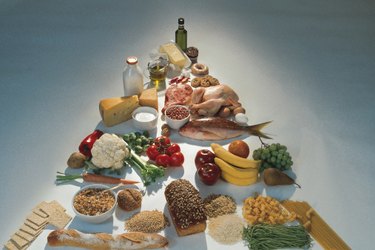
The food pyramid is the federal government's representation of a healthy diet. In 2005, the USDA changed the 1992 pyramid in an attempt to better educate Americans on how to eat healthy, notes KidsHealth.org. The old food pyramid provided an estimated range of each food category; the new food pyramid provides more specific serving sizes. The new food pyramid also bases recommended nutrient intake on 12 different caloric levels and includes physical fitness as part of the pyramid.
Whole Grains
Video of the Day
The old food pyramid recommended 6 to 11 servings of bread, rice, cereal or pasta. The new food pyramid recommends a certain amount, in ounces, based on the number of calories an individual is consuming. For example, a person consuming 2,000 calories a day should have 6 oz. of grains. The new food pyramid also recommends that half of all grains eaten come from whole grain sources.
Video of the Day
Fruit and Vegetable Groups
The old food pyramid recommends consuming 2 to 4 servings of fruit and 3 to 5 servings of vegetables per day. The new food pyramid recommends varying the type of fruits and vegetables you consume and personalizes the amount based on the number of calories consumed. For a 2,000 calorie diet, the USDA now recommends that you consume at least 2 cups of fresh fruits and vegetables each day.
Dairy Group
The new food pyramid recommends consuming 3 cups of fat-free or low-fat dairy products each day. This is much different from the old food pyramid that only recommended consuming 2 to 3 servings of milk, cheese, or yogurt each day.
Meat Group
According to the old food pyramid, you should consume 2 to 3 sources of meat, fish, poultry, dry bean, eggs or nuts per day. The new food pyramid accounts for personal caloric intake and recommends consuming 5.5 oz of lean cuts of meat, seafood and beans; it also recommends not frying meat.
Oils and Fats
Perhaps the most significant difference between the two pyramids is the attention given to oils in the new pyramid. The old pyramid suggests consuming fats, oils and sweets sparingly. In contrast, the new pyramid provides specific details about the oils you should consume. It recommends that most oils come from fish, nuts and vegetables and that you limit butter and margarine.