
Shotput Workouts (with Video)
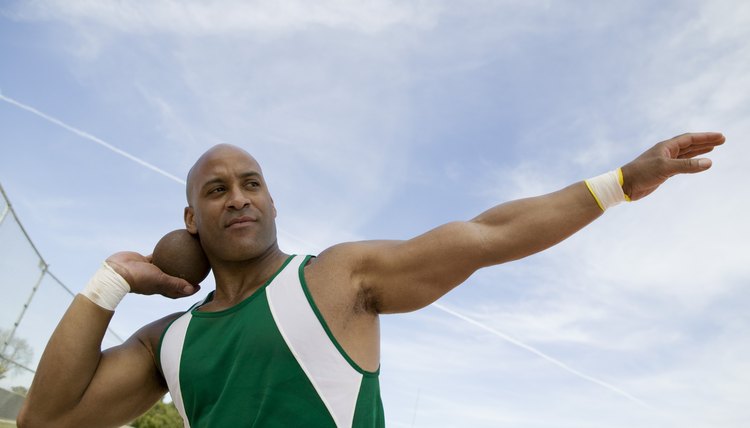
Shotput is an athletic track and field event where competitors, called throwers, take turns throwing a heavy metal ball from a 7-foot diameter circle using one arm. The shot is pushed -- called putting -- as opposed to thrown under or over the arm like a discus would be. Shotput combines an initial rotational drive with the legs followed by a strong arm action so athletes must develop whole body strength and power to be successful at shotput. While only a select few may be training for the Olympic level, strength training is necessary even for high school shot putters. Here’s a few exercises you can add to your training program to help you go from average joe to Ryan Crouser.
What is Push Press?
The push press is a weight room classic and an Olympic lift that develops upper and lower body power and inter muscle/joint coordination. Grasp a barbell using an overhand shoulder-width grip and rest the bar across the front of your shoulder. Lower your elbows so they are below your hands. Stand with your feet hip-width apart. Inhale and brace your abdominal muscles. Bend your knees and descend into a quarter squat position while maintaining an upright torso. Exhale and explosively extend your legs and arms to drive the weight above your head to arms' length. Lower the bar back to shoulder level and repeat. This exercise can be performed using dumbbells and also using one arm at a time. This exercise should help discus throwers increase lower body drive during their discus throw, especially when using the shot put glide technique.
What are Plyometric Push-ups?
While Plyometric push-ups, sometimes called clapping push-ups, may not win you a championship; they will develop explosive upper body pushing power. Adopt the push-up position with your hands directly below your shoulders, your abs tight and your head, hips and knees aligned. Inhale and lower your chest to the floor. Forcefully extend your arms so that, as your arms straighten, your hands leave the floor. Clap your hands while you are in mid air. Land on slightly bent arms and immediately descend into another rep. This is a good exercise for beginners as it utilizes only body weight and develops hand eye coordination. Avoid this exercise if you have any history of wrist injury.
What are High Pulls?
This weight training bodybuilding exercise develops strength and explosive power in the legs, hips, back and arms which is essential in successful shotputting. Place a barbell on the floor. Stand with your feet hip-width apart and your toes just under the bar. Bend forward and grasp the bar with a shoulder-width overhand grip. Lift your chest, arch your lower back slightly and drop your hips so that they are just below your shoulders. From this position, explosively extend your legs and hips and simultaneously stand upright. Pull the bar up and under your chin while keeping your elbows higher than your hands. The bar should move smoothly from the floor to your chin in one unbroken movement. Lower the bar to your hips and then to the floor. Continue the exercise for the desired number of repetitions.
What are Box Jumps?
moodboard/moodboard/Getty Images
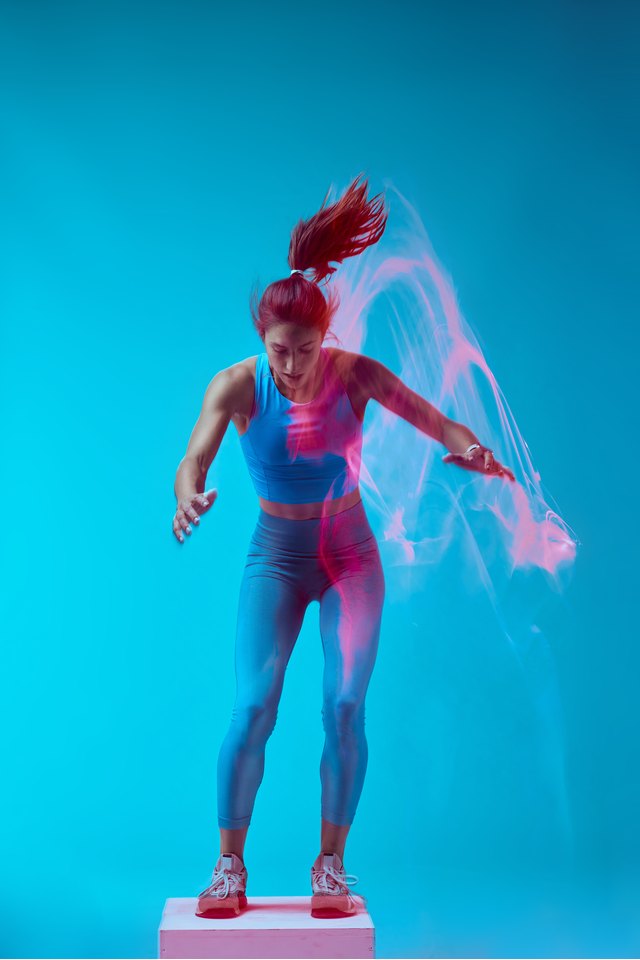
Performing box jumps will develop the explosive strength in your legs which is especially important as the shotput is initiated by a powerful leg drive. Adjust an exercise step so that it is set to knee height. Stand around 24 inches from the step. Bend your knees and descend into a quarter squat position, swinging your arms behind you as you do so. Swing your arms forward and upward and jump up onto the top of the step. Climb back down, reset your position and repeat. You can make this exercise more challenging by using a higher step, wearing a weight vest or holding dumbbells in your hands.
What are Medicine Ball Chest Pass Throws?
moodboard/moodboard/Getty Images
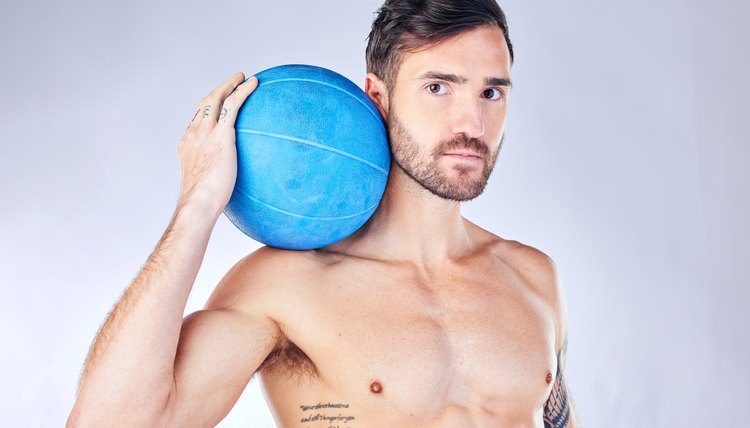
This exercise will develop your upper body power in the same way a bench press would and uses similar muscles to shotputting. Adopt a staggered stance with your right foot around 24 inches in front of your left. Hold the med ball in both hands. Raise the ball to chest height with your hands on either side and slightly toward the rear of the ball. Lean back slightly to "wind up" the throw. Contract your abdominal muscles, thrust your shoulders forward and extend your arms to explosively push the ball away from you. Either throw the ball to a training partner or at a sturdy wall. Retrieve the ball and repeat. Alternate leading legs on a set by set basis.
Writer Bio
Patrick Dale is an experienced writer who has written for a plethora of international publications. A lecturer and trainer of trainers, he is a contributor to "Ultra-FIT" magazine and has been involved in fitness for more than 22 years. He authored the books "Military Fitness", "Live Long, Live Strong" and "No Gym? No Problem!" and served in the Royal Marines for five years.