
Isotonic Training
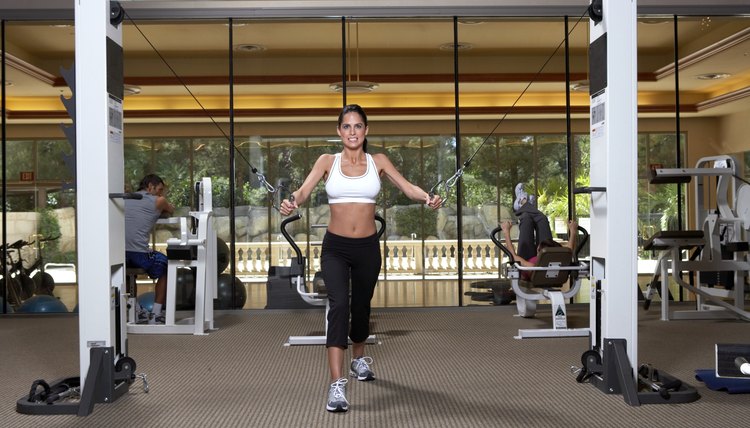
Isotonic exercise consists of movements using a constant load. The same amount of resistance is used independent of the speed or movement you use during the exercise. By altering the number of repetitions, sets and intensity of isotonic exercises, you can build a tailor-made fitness regimen. Before starting a resistance program, though, consult a physician.
Isotonic Training
Isotonic movements involve the contraction and shortening of muscles and can improve performance in many sports and day-to-day activities. These exercises have many physiological and physical benefits, such as increasing bone stress and overall energy and promoting weight loss. Lifting weights causes your bones to support a greater tension than normally accustomed to, resulting in more minerals being deposited on your bones and greater overall bone density. Increased muscle mass gained from isotonic training also helps your body burn fat.
Advantages
Isotonic exercise promotes the development of muscle endurance, muscle tone and muscle strength. These movements have also been shown to improve ligament and tendon strength, helping you prevent injuries, improve posture and develop joint stability. You can also minimize the chance of experiencing lower back pain or arthritis by following an isotonic training regimen. Isotonic training helps you strengthen a muscle throughout a range of movement. It's also easier to choose sports-specific exercises that mimic movements in your sport of choice.
Disadvantages
One chief disadvantage of isotonic movements is that your muscles become quite sore during and after exercise because of the stress experienced during shortening. You might need to take off increased time between isotonic training sessions, delaying your progress. Another drawback is that your muscle strengthens the most at the weakest point of action instead of evenly through the entire movement, meaning the time during which your muscles are being optimally strengthened is limited.
Other Forms of Training
Isokinetic movements involve a muscle contracting and shortening at a constant speed. Using isokinetic training is the quickest way to increase muscle strength but requires the use of special equipment to detect the speed at which a muscle contracts and shortens. Isometric movements, like the plank exercise, do not involve joint movements. The muscle(s) simply contracts, helping you increase static strength. Some stabilizer muscles are activated isometrically in support of other muscles' isotonic activity.
References
Writer Bio
Based in New Jersey, Ryan Biddulph has been writing since 2010, with his articles appearing on LIVESTRONG.COM, among others. He has helped clients reach their personal fitness goals since 2001. He also runs an Internet marketing blog. He holds a Bachelor of Science in meteorology from Kean University and a certificate in Web development from the Cittone Institute.