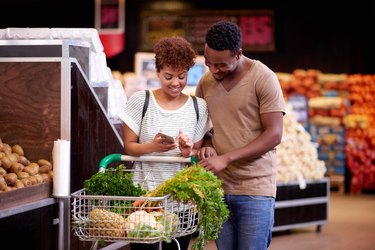
The average American family spends about 10 percent of their disposable income on food, according to the USDA's Economic Research Service, with about half of that being spent at restaurants and half on food eaten at home.
But that was in 2019, prior to the coronavirus pandemic, which threw commodity prices for a loop.
Video of the Day
Video of the Day
The most recent Food Price Outlook, a monthly report from the USDA, found that spending on food eaten at home (aka supermarket and online grocery shopping) is expected to jump between 2.5 and 3.5 percent from now through the end of 2020. What's more, food prices are 4 percent higher now than the same time last year.
While we can't control prices as consumers, we can control what we buy and how we buy it — and even save money with a few simple tricks. And one of the best ways to do that is to download an app or two.
The following free grocery apps offer nearly effortless ways to save some dough on your future shopping trips.
1. Ibotta
Download this free grocery app and upload your receipts to earn cash back (via PayPal, Venmo or Ibotta Pay) on your in-store or online supermarket purchases.
With more than 500,000 participating retailers — including convenience stores, as well as non-food retailers such as home improvement centers, pet stores and pharmacies — Ibotta offers money back when you stock up on items from specific brands.
You can also link your loyalty card for many stores to make the experience even more seamless and receive your payout quicker.
2. Paribus
If you've ever felt miffed about purchasing a family pack of salmon only to spot it $5 cheaper next week, Paribus is here to save your sanity.
The free app tracks your confirmation emails and watches for price changes, and then gives you money back when prices drop on items you've bought or when groceries arrive from Walmart, Target, Amazon Fresh, Costco and more.
Download the Paribus app on iPhone or sign up for the desktop app.
3. Receipt Pal
Snap a picture of your receipt from your go-to grocery store (or connect to your Amazon account to make it automatic) and earn points that you can redeem for gift cards from retailers or to enter to win sweepstakes for cash prizes.
Your gift cards can be used at participating partners like Uber Eats, Starbucks, iTunes, Visa and more. Essentially, this free app rewards you for stuff you'd already buy — and for letting someone peek inside your shopping cart.
4. Checkout 51
"Earn cash back on gas and groceries" is Checkout 51's succinct promise. Add offers on your smartphone app before you shop, buy that item, then scan your receipt for money returned for products by brands including Unilever, Kellogg's, Nestle and others.
Food offers are updated every Thursday, so you'll always find the coupons you need before heading to the store on the weekend. And let's not forget, this free app saves you big bucks on gas — earn up to 25 cents per gallon.
5. Dosh
Use Dosh in store or online (like at Thrive Market, Instacart and Walmart) with your linked credit card and you'll automatically receive money back. GNC, Cost Plus World Market, Dunkin' and more partner with the app.
You'll get up to 10 percent at some retailers for certain purchases — no receipt scanning or coupons required. You can then transfer that money to your bank account, PayPal account or donate it to your charity of choice.
6. Fetch Rewards
Since Fetch Rewards teams up with hundreds of brands (including Bubly Sparkling Water, Cheerios, Yoplait and LARABAR) no matter where you buy them, this is the ideal free grocery app for those who like to shop around at different stores, online or in real life.
Once you're done shopping, scan your receipts and start racking up points for participating products. Redeem those points to donate to charity or for gift cards for Visa, Mastercard, Target, Whole Foods Market and hundreds of other stores, restaurants and services.