HandmadePictures/iStock/Getty Images
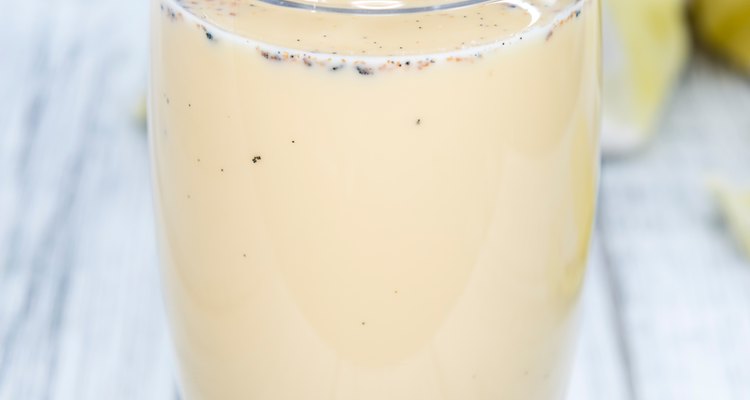
There is nothing like the sweet, creamy taste of an old-fashioned vanilla milkshake. Usually made by mixing ice cream and milk to taste, a milkshake packs a high-calorie punch, but is redeemed from junk-food status by the generous amounts of protein and calcium it provides. Adding 1/2 tsp. of vanilla extract, as recommended by the Food Network, adds not only extra flavor but health benefits; the flavoring is a potent antioxidant. A milkshake -- if reserved for a treat on special occasions -- can be part of a healthy diet.
Basics
One 16-oz. milkshake provides 509 calories, and contains 17.54 g of protein: about the same amount as that found in three large scrambled eggs. It also contains 13.77 g of fat -- about 20 percent of the recommended daily intake -- and 80.66 g of carbohydrates, roughly a third of the day's suggested intake. A 16-oz milkshake also contains 55 mg of cholesterol.
Minerals
According to the USDA National Nutrient Database, a 16-oz. milkshake provides a whopping 663 mg of calcium, essential for helping to control blood pressure and building strong bones and teeth. Calcium may reduce the risk of colon cancer and kidney stones; it can also help you lose weight, particularly around the belly. A milkshake is also a good source of phosphorus -- essential for making thyroid hormones -- containing 523 mg in a 16-oz. serving.
Vitamins
A milkshake is a good source of antioxidant vitamin A, with the USDA listing 414 International Units (IU) -- roughly 20 percent of the recommended daily value -- per 16-oz. serving. Vitamin A helps regulate the immune system, and plays an important role in vision, bone growth and cell division. The type of vitamin A found in milk and ice cream is absorbed in the form of retinol, one of the most usable forms. A milkshake is also a good source of vitamin D, a fat-soluble vitamin that promotes calcium absorption in the digestive tract. The USDA lists a 16-oz. serving as containing 218 IU, roughly half the recommended daily value.
Vanilla
According to Today's Woman and Health, vanilla's antioxidant qualities allow it to scavenge destructive free radicals, possibly inhibiting the growth of breast cancer cells. In addition, the aroma of vanilla triggers the release of serotonin, a mood stabilizer. Vanilla also has the ability to reduce nausea.
Related Articles

How to Reduce Acne Inflammation

Ingredients in Hairfinity Vitamins

Can Age Spots Be Reversed?
Skin Care Products That Contain ...
Nutrition Information on Blueberries

How to Add Irish Cream to Buttercream ...
Calories in a Tablespoon of Cream Cheese

Vitamins for Mental Alertness
How to Use Vaniqa Cream

Copper Peptides Side Effects

Elastin Supplements
The Best Anti-Cellulite Supplements
Foods Containing Theobromine
Benefits of Indian Sarsaparilla

How to Make a Lip Mask for Extremely ...
What Foods Provide Calcium D-Glucarate?

Does Copper Peptide Work for Hair ...
Nutritional Benefits of Butter Leaf ...
Collagen & Rosacea
How to Make a Cinnamon Milk Face Mask
References
Writer Bio
Carol Sarao is an entertainment and lifestyle writer whose articles have appeared in Atlantic City Weekly, The Women's Newspaper of Princeton, and New Millennium Writings. She has interviewed and reviewed many national recording acts, among them Everclear, Live, and Alice Cooper, and received her Master of Fine Arts degree in writing from Warren Wilson College.
Photo Credits
HandmadePictures/iStock/Getty Images