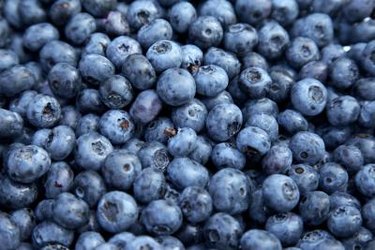
Blueberries are a nutritious, sweet fruit often added to yogurt, cereal or eaten plain by the handful. But some people may have digestive issues after eating them. So, why do blueberries cause diarrhea, exactly?
Here's everything you need to know about blueberries and diarrhea, including some potential reasons why blueberries can cause diarrhea, if they're a good food to eat while you have loose stool and how they can affect the color of your bowel movements.
Video of the Day
Video of the Day
1. They're High in Fiber
Fiber is an essential nutrient that helps support good digestion, relieves constipation and can also help you maintain a healthy weight and decrease your risk for conditions like diabetes and heart disease, according to the Mayo Clinic.
Blueberries are rich in the nutrient — a cup of the fruit contains 14 percent of your daily dose of fiber, per the Cleveland Clinic.
But eating too much fiber at once or adding too much fiber to your diet too quickly if you're not accustomed to adequate doses of the nutrient — which can happen if you overload on blueberries — can lead to symptoms like diarrhea, gas and bloating, per the Mayo Clinic.
Fix it: If you're not used to high doses of fiber, slowly increase your intake of the nutrient over the course of a few weeks, according to the Mayo Clinic. This will allow your body to adjust without those uncomfortable side effects.
Staying hydrated may also help your body better process fiber and keep digestive symptoms at bay.
How Much Fiber Should You Eat?
According to the 2020-2025 Dietary Guidelines for Americans, adults should aim to eat the following amount of the nutrient per day:
- People assigned female at birth: 22 to 28 g
- People assigned male at birth: 28 to 34 g
2. You Got Food Poisoning
Produce is a common source of food poisoning, according to the Centers for Disease Control and Prevention (CDC). Blueberries can become contaminated with germs such as Salmonella, E. coli, and Listeria at any point during their growth and processing.
Contamination may also occur in your own home, per the CDC, especially if the produce isn't properly washed or stored.
And it's these disease-causing organisms that may be the reason why eating blueberries gives you diarrhea. Indeed, food poisoning can cause loose stools, along with vomiting, stomach cramps and low-grade fever, per the Mayo Clinic.
Fix it: To avoid food poisoning from berries — and the resulting blueberry poops — wash them thoroughly and pat them dry before eating, and store them in the refrigerator.
Warning
Most symptoms from food poisoning are mild and don’t typically cause any long-term complications, but if you have a high fever or become dehydrated or very weak as a result of severe diarrhea, see your doctor or head to urgent care ASAP, per the Mayo Clinic.
3. You’re Allergic to Blueberries
Food allergies occur when your immune system overreacts to certain proteins in your meal to produce allergic symptoms, according to Food Allergy Research & Education (FARE). It's basically your immune system mistaking a certain food for something harmful.
And a food allergy may be the reason why blueberries cause diarrhea, as loose stools can be a symptom of an allergic reaction, per the Cleveland Clinic. Other common symptoms include:
- Vomiting
- Skin rash
- Swelling
- Trouble breathing
Fix it: Food allergy symptoms can vary from person to person, according to the American College of Allergy, Asthma & Immunology, so the only way to know for sure if you're allergic is to have a doctor do a skin prick or blood test.
If an allergy is the culprit, your doctor can prescribe antihistamines, steroids or epinephrine, depending on the severity.
To avoid blueberries or any other food you're allergic to, make sure to read nutrition labels.
Warning
Some people can have an extreme allergic reaction called anaphylaxis, where your throat closes up and makes it difficult to breathe, per the Cleveland Clinic. Seek medical care immediately if this happens to you.
4. It’s a Fructose Intolerance
Some people can't tolerate fructose, a naturally occurring sugar in fruits, some veggies, juices, table sugar, high-fructose corn syrup and honey, according to the Mayo Clinic. This means the sugar can't be broken down or digested correctly, which can cause symptoms like:
- Upset stomach
- Diarrhea
- Gas
Fix it: If you suspect you have a fructose intolerance, your doctor may want to run a hydrogen breath test to make a diagnosis.
Blueberries are relatively low in fructose, but they could trigger symptoms if eaten in large quantities. So if you have an intolerance, you'll want to eat them in moderation.
5. It's a Salicylate Sensitivity
Salicylate is a chemical found naturally in various fruits and vegetables, including blueberries, according to Food Intolerance Diagnostics. It helps protect the plant during the growth process, per a November 2020 article in International Journal of Molecular Sciences, and is very similar in chemical makeup to aspirin.
So, if you're sensitive to aspirin, you're more likely to react to salicylate in blueberries and other produce. And having this type of intolerance could be the reason why blueberries cause diarrhea, says Ashley Kravitz, RD, owner of Nutrition Specialists of New Jersey.
According to Food Intolerance Diagnostics, symptoms of salicylate intolerance or sensitivity include:
- Headache
- Nasal congestion
- Skin rash, hives and/or itching
- Swelling of the hands, face and/or feet
- Inflammation of the eyes
- Stomach pain
- Nausea
Fix it: Salicylate intolerance to medications is well established, but there's a lack of research on sensitivity to salicylate in foods. There are no tests to diagnose this intolerance, so your doctor may use process of elimination by ruling out a food allergy and having you keep a food and symptom diary.
Warning
Diarrhea that lasts for more than a few days or is bloody may be related to a more serious medical condition, according to Johns Hopkins Medicine. If you have other symptoms such as tiredness, thirst and/or dizziness, see your doctor or head to urgent care.
Can Blueberries Help With Diarrhea?
Blueberries do cause diarrhea for some people, but for others, they can be helpful in controlling the condition.
"Initially, when someone has diarrhea, usually they'll only tolerate a low-fiber diet. However, as the acute diarrhea improves, increased fiber may be helpful to get the bowels more regular. And blueberries have a lot of fiber," says Jacqueline Wolf, MD, a gastroenterology specialist at Beth Israel Deaconess Medical Center and Harvard Medical School.
Blueberries are also high in antioxidants, according to the Mayo Clinic. A December 2019 review in DARU Journal of Pharmaceutical Sciences suggest that these antioxidants may be help with gastrointestinal disorders like IBS.
Blueberries and Green Poop
Fun fact: A lot of the foods you eat can cause your poop to change color, according to the Cleveland Clinic. Oftentimes, blueberry poop color is dark blue or even blackish.
Here's the thing: Poop is normally brown because it mixes with bile, which starts as a yellow-green hued fluid then turns to a greenish-brown bile during digestion, per the Mayo Clinic. Now, if you mix blueberries with yellowish-green bile, you get green poop.
But Kravitz thinks this is a good thing. "The rich, dark color of blueberries can change the color of your stool, which is nothing to be concerned about — it just simply shows that your body is absorbing all of the incredible health benefits and antioxidants of this super food," she says.
Color changes are pretty normal, but if you haven't eaten an entire container of blueberries or any other food than may change your stool color, and the color changes persist, it's time to see a doctor — especially if you have diarrhea, fever or pain, too.
"If the color is due to the blueberries, this is not a problem. If someone is bleeding in the stomach or bowels, the stool may look dark or black. A stool test for blood could distinguish the two," Dr. Wolf says.
- Centers for Disease Control and Prevention: "Foods That Can Cause Food Poisoning"
- Centers for Disease Control and Prevention: "Food Safety in the Kitchen"
- Mayo Clinic: "Food Poisoning"
- Food Allergy Research & Education: "What Is a Food Allergy?"
- Cleveland Clinic: "Food Allergies"
- Food Intolerance Diagnostics: "Salicylate Intolerance"
- International Journal of Molecular Sciences: "Natural Salicylates and Their Roles in Human Health"
- Mayo Clinic: "Fructose Intolerance: Which Foods to Avoid?"
- Mayo Clinic: "The Power of Blueberries"
- DARU Journal of Pharmaceutical Sciences: "Natural Polyphenols for The Prevention of Irritable Bowel Syndrome: Molecular Mechanisms and Targets; A Comprehensive Review"
- Cleveland Clinic: "How Your Diet Can Affect Your Poop Color"
- Mayo Clinic: "Stool Color: When to Worry"
- Johns Hopkins Medicine: "Diarrhea"
- American College of Allergy, Asthma & Immunology: "Food Allergy Diagnosis"
- U.S. Department of Agriculture and U.S. Department of Health and Human Services: "2020-2025 Dietary Guidelines for Americans"
- Cleveland Clinic: "The Health Benefits of Blueberries"
- Mayo Clinic: "Dietary fiber: Essential for a healthy diet"
Is this an emergency? If you are experiencing serious medical symptoms, please see the National Library of Medicine’s list of signs you need emergency medical attention or call 911.