

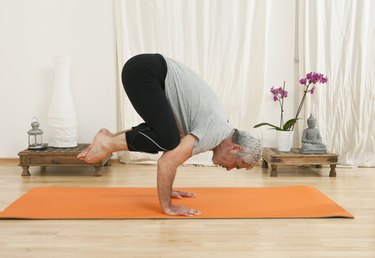






















Practicing yoga consistently can do more than increase your flexibility and strength. It can also help reduce your stress and improve your cardiovascular health by potentially lowering blood pressure and your resting heart rate. How much yoga affects your heart rate and blood pressure varies; your current health, physical condition and yoga practice will all play into what benefits you receive. Regardless, yoga can be an excellent addition to your workout routine.
Aspects of Yoga
The most common type of yoga found in studios and fitness clubs across the U.S. is hatha yoga, which focuses on specific body postures and breathing techniques. Yoga poses, called asanas, range in intensity from lying on the floor to physically demanding postures that will test your endurance, strength and flexibility. Instructors will teach you to breathe through your movements, emphasizing diaphragmatic and other types of breathing to potentially increase your oxygen intake. Meditation is another aspect of yoga that focuses your mind and relaxes your body.
Yoga and the Cardiovascular System
At certain times during your practice, particularly in more demanding yoga forms, your heart and breathing rates will accelerate to supply needed oxygen and blood to your muscles. This strengthens your cardiovascular system, increasing your endurance. As your heart becomes stronger, it needs fewer beats to pump blood throughout your body. This increase in strength will slow your overall heart rate. Additionally, by increasing your oxygen intake through conscious breathing techniques, your respiration rate will also slow as your breathing volume increases.
Yoga and Stress
Stress is a known factor in high blood pressure and heart rate acceleration. Yoga combines physical and mental exercises to achieve peacefulness of body and mind, according to MayoClinic.com, helping to reduce stress and anxiety. Exercise in itself helps to boost your mood; adding yoga in to your routine can help you feel more relaxed and happy. During relaxation, your heart beats more slowly.
Research
The "International Journal of Gynaecology and Obstetrics" published a study in March 2009 that investigated yoga's effects on heart rate in pregnant women. Results found that perceived stress in the yoga group decreased by 31 percent, and the sympathetic nervous system -- or stress response -- heart frequencies decreased. Another study, featured in "Psychological Reports" April 2002, found that in a group of 35 males who participated in two sessions of yoga-based guided relaxation, heart rate reduced in participants in both session types. The study also concluded that yoga played a role in reducing the participants' stress response.
References
- MayoClinic.com: Yoga: Tap Into the Benefits
- NursingDegree.net; 77 Surprising Health Benefits of Yoga; M. Walker
- "International Journal of Gynaecology and Obstetrics"; Effect of integrated yoga on stress and heart rate variability in pregnant women; M. Satyapriya et al; March 2009
- "Psychological Reports"; Yoga-based guided relaxation reduces sympathetic activity judged from baseline levels; R.P. Vempati and S. Telles; April 2002


Member Comments