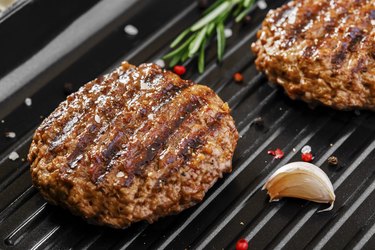
The amount of beef Americans have eaten since the cattle industry began its mass production in 1870 steadily increased until the 1970s, when the average consumption was 85 pounds each year. It began to decline because scientists made the connection between cholesterol and saturated fat in beef and heart disease. In 2007, the beef consumption for each American had declined to an average of 66 pounds each year, the equivalent of 1.26 pounds per week. The No. 1 cause of health-related death in the U.S. is heart disease, and the frequency of beef consumption has been a controversial aspect of the debate over how to cut heart disease rates.
Saturated Fat, Cholesterol and Heart Disease
Video of the Day
The saturated fat and cholesterol levels in the diet impact cardiovascular health. Beef is one of the foods in the American diet that provides more of these substances than any other. As a result, restricting beef consumption can help prevent heart disease because it can clog arteries, which increases blood pressure and boosts the odds of heart attack or stroke. The Food and Drug Administration recommends consuming no more than 20 grams of saturated fat each day and 300 mg of cholesterol.
Video of the Day
Beef Varieties
Different cuts and preparation methods of beef provide different amounts of saturated fat and cholesterol. A 3 ounce serving of ground beef provides 70 mg of cholesterol and 3.6 g of saturated fat. A 3 ounce serving of beef round steak provides 72 milligrams of cholesterol and 1.8 gram of saturated fat. A 3 ounce serving of beef pastrami slices provide 57 milligrams of cholesterol and 2.3 grams of saturated fat. The cuts of beef that have "round" and "loin" in the name are the leaner cuts. Removing excess fat from meat also trims cholesterol and saturated fat levels.
Other Protein Sources
The amount of beef you include in your diet depends on the other foods you include. Most people need about 50 grams of protein daily, the FDA says. Acquiring this amount from nuts, seeds, meat, poultry, legumes and dairy products results in about two to three servings each day. Keeping the saturated fat and cholesterol levels within recommended amounts is fairly straightforward if the quantity of the sources of these nutrients is kept within reasonable limits. A 3 ounce serving of chicken provides 0.9 gram of saturated fat and 73 milligrams of cholesterol, and a cup of milk provides 3 grams of saturated fat and 20 milligrams of cholesterol.
Environmental Impact
The environmental impact of beef consumption is another factor that might influence the number of beef servings to include in your diet. Most beef is corn-fed and impacts the environment negatively because corn production utilizes a high level of natural resources, including water and fossil fuels. The cultivation of corn also degrades soil quality, according to "Scientific American" magazine.
Frequency of Dietary Beef Consumption
Harvard University School of Public Health advises that you eat no more than 1.5 pounds of red meat each week, which includes beef, pork and lamb. If you consume more, you are putting yourself at risk for developing health disorders, such as cancer and cardiovascular disease.
- "Scientific American"; "That Burger You're Eating Is Mostly Corn"; David Biello; November 2008
- PBS: How Much Meat Do We Eat?
- USDA: Beef, Ground, 90 Percent Lean Meat /10 Percent Fat, Patty, Cooked, Pan-Broiled
- USDA: Beef, round, Top round, Steak, Separable Lean and Fat, Trimmed to 1/8" Fat, All Grades, Raw
- USDA: Beef, Cured, Pastrami
- USDA: Chicken, Broilers or Fryers, Breast, Meat Only, Cooked, Roasted
- USDA: Milk, Reduced Fat, Fluid, 2 Percent Fat
- Harvard University School of Public Health: Protein