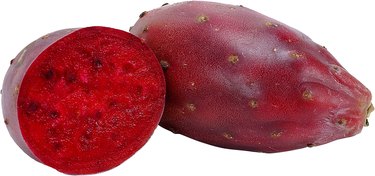
The Jamaican tuna plant is a variety of prickly pear cactus sometimes called coastal prickly pear. The cactus is native to the Southeastern United States, Mexico and South America, although it now grows in Jamaica, other parts of the Caribbean and throughout the Mediterranean and Middle East regions. Tuna usually refers to the oval red fruit that's produced by the cactus. Both the fruit and the leaves of the prickly pear cactus are used as herbal remedies in Jamaica and many other countries. The health benefits are largely anecdotal and more research is needed before ethical medicinal claims or recommendations can be made.
Jamaican Tuna Plant
Video of the Day
The most common prickly pear cacti in Jamaica are the Opuntia littoralis and Opuntia ficus-indica species. The Opuntia ficus-indica species is the larger of the two and can grow as high as 16 feet. It also produces the largest fruit, or tunas, which are often described as looking like a cross between a strawberry and a fig. The cacti grow well in arid conditions and flower in early May. The fruit ripen in late summer and are eaten after removing the thick outer skin. The bright red or yellowish flesh contains many seeds and tastes like sweet watermelon or strawberry. The flesh of the flat green leaves can also be eaten after the skin and thin quills are removed.
Video of the Day
Potential Health Benefits of the Tuna
The tuna or ripe fruit of the prickly pear cactus has been used as a folk remedy and a food source for many generations of Jamaicans and other cultures around the world. The tuna is eaten raw and made into jams, jellies and beverages such as juice and herbal teas. The fruit is a good source of dietary fiber, vitamin C and other antioxidants. It also displays astringent properties, which can help reduce mucus production and bleeding, according to "Principles and Practice of Phytotherapy: Modern Herbal Medicine." Astringents are also helpful for gastrointestinal problems such as indigestion, diarrhea and irritable bowel syndrome.
Potential Health Benefits of the Leaves
In Jamaica, the leaves of the Jamaican tuna plant are made into an herbal infusion and consumed to help relieve constipation, reduce fevers and combat menstrual problems. The flesh of the cactus leaves are sometimes applied directly to minor cuts, burns and musculoskeletal injuries to stimulate healing and reduce pain, which is similar to how the aloe vera plant is used. Furthermore, the fresh sap from the cactus leaves is used as a natural cleaning shampoo and to eliminate dandruff and other scalp problems.
Cautions
Prickly pear juice and tea are sometimes recommended for lowering blood glucose and cholesterol levels, but the scientific research supporting these claims is currently lacking. Prickly pear contains a variety of nutrients and has been used as an indigenous medicinal plant for hundreds of years, but more investigation is needed. Consult with an herbalist or naturopath about the potential benefits and side effects of consuming prickly pear products.