What does fact checked mean?
At Healthfully, we strive to deliver objective content that is accurate and up-to-date. Our team periodically reviews articles in order to ensure content quality. The sources cited below consist of evidence from peer-reviewed journals, prominent medical organizations, academic associations, and government data.
The information contained on this site is for informational purposes only, and should not be used as a substitute for the advice of a professional health care provider. Please check with the appropriate physician regarding health questions and concerns. Although we strive to deliver accurate and up-to-date information, no guarantee to that effect is made.
How Do I Treat a Bone Chip?
Bone chips--medically termed osteochondritis dessicans--occurs when a fragment of bone or cartilage comes loose 2. This can result in pain and other symptoms. It most commonly affects the knee but can occur in any joint. Prompt treatment offers a good outcome and reduces the risks of long-term complications.
If you are experiencing serious medical symptoms, seek emergency treatment immediately.
Refrain from sports and other physically demanding activity. The American Academy of Family Physicians recommends you do this for at least 6 to 8 weeks.
Torn Tendons & Ligaments From Hyperextension
Learn More
Reduce stress on the affected area. This might include avoiding certain types of movements and immobilizing the area with crutches, braces or slings.
Use over-the-counter pain relievers to ease pain. Talk to your doctor about stronger options if these do not provide adequate relief.
How to Rehab a Suspensory Strain
Learn More
Apply ice to the affected area to ease inflammation and swelling. The University of Buffalo Sports Medicine recommends 20 to 30 minutes every four hours the first few days after the injury.
Work with a physical therapist. He can show you exercises to stretch and strengthen the affected area. Low-impact activities like swimming can help maintain physical fitness.
Talk to your doctor about surgery if symptoms have not improved after three months. Arthroscopic surgery can remove or reattach the bone fragments. This will improve blood flow and joint function.
Related Articles
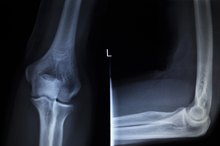
Torn Tendons & Ligaments From Hyperextension
Learn More

How to Rehab a Suspensory Strain
Learn More

Rehabilitation Exercises for a Dislocated Finger
Learn More

What Are the Symptoms of Torn Tendons?
Learn More
Will a Torn Rotator Cuff Heal Without Surgery?
Learn More
How to Treat Pelvic Hairline Fracture
Learn More
Groin & Hip Pain Upon Standing & Walking
Learn More
Ligament Tear & Knee Hyperextension
Learn More

MCL Injury & Walking
Learn More

What Causes Pain to the Back of Your Ankle & Heel When You Walk?
Learn More
References
Writer Bio
Kelli Cooper has been a writer since 2009, specializing in health and fitness. She holds a Bachelor of Arts in political science from Rutgers University and is a certified personal trainer with the American Council on Exercise.