
Treadmill Length
Treadmill decks vary in lengths from 45 to 54 inches. Differences exist in console features, safety design and width of the belt. Some treadmills fold for storage, connect to your home electronics and can choose workouts for you. When deciding on a treadmill, do not negotiate the length of the belt. Choose a belt that best suits you and your workout.
Making a Decision
Spencer Platt/Getty Images News/Getty Images
Whether you are walking for cardiovascular fitness, jogging for weight loss or training for cross-county running, the treadmill should accommodate you and your long-term goals. If you intend to start walking on your treadmill and work up to running, choose a treadmill built for that purpose. The same applies to walking. If you never intend to run or jog on the treadmill, purchase a treadmill that will only allow you to walk on the belt.
Walking Lengths
Spencer Platt/Getty Images News/Getty Images
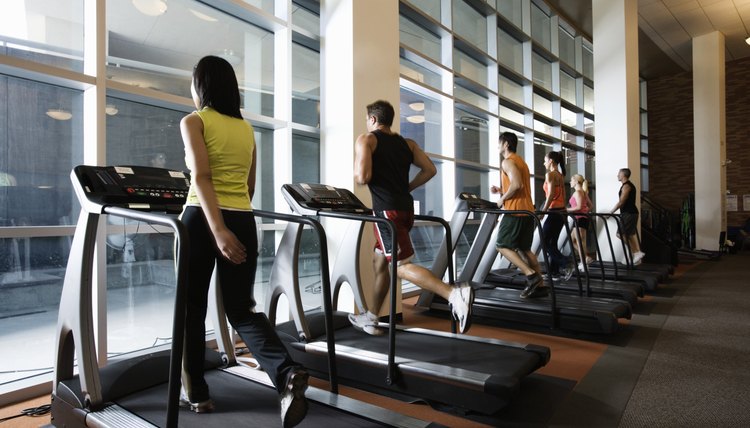
Walking on a treadmill does not require a long belt or a highly cushioned deck. The stride while walking is shorter than a jogging or running stride, and walking places less stress on the body. A shorter belt with some cushioning, or give, accommodates the user who only intends to walk on his treadmill. Choose the length of the belt based on the length of the walking stride. If you are less than 5 feet 7 inches tall, a minimum 52-inch walking belt should accommodate your stride. If you are between 5 feet 7 inches and 6 feet 4 inches tall, choose a belt with a minimum length of 55 inches. If you are between 6 feet 5 inches tall and 6 feet 11 inches, a minimum 58-inch walking belt will accommodate you.
Jogging Lengths
Spencer Platt/Getty Images News/Getty Images
A treadmill used for jogging should have a deck that flexes to minimize the impact on your body. Consider adding inches to the length of the belt to accommodate your stride while jogging. If you are less than 5 feet 7 inches tall, a minimum 54-inch treadmill belt should accommodate your stride as you jog. If you are between 5 feet 7 inches and 6 feet 4 inches tall, choose a belt that is a minimum 58 inches in length. If you are between 6 feet 5 inches tall and 6 feet 11 inches, a minimum 60-inch belt will work.
Running Lengths

Spencer Platt/Getty Images News/Getty Images
When selecting a treadmill for running, choose one that has a cushioned and flexible deck to decease the impact on your joints. Adding inches to the length of the treadmill belt is necessary for the extended length of the running stride. If you are shorter than 5 feet 7 inches tall, a minimum 58-inch treadmill belt should accommodate the length of your running stride. If you are between 5 feet 7 inches and 6 feet 4 inches tall, choose a belt that is a minimum 60 inches in length. If you are between 6 feet 5 inches and 6 feet 11 inches tall, a minimum 62-inch belt will accommodate you.
Writer Bio
Cecilia Harsch has been writing professionally since 2009. She writes mainly home improvement, health and travel articles for various online publications. She has several years of experience in the home-improvement industry, focusing on gardening, and a background in group exercise instruction. Harsch received her Certified Nurses Assistant license in 2004. She attended Tarrant County College and studied English composition.