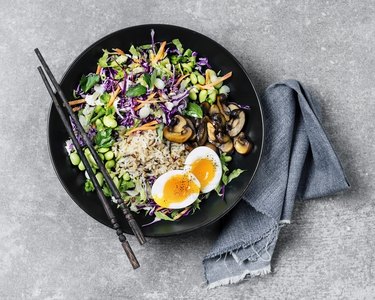
If you're aiming to eat 3,000 calories a day to gain or maintain your weight, there are a few guidelines you can follow to make sure your diet is healthy and nutritious. Even a fairly easy high-calorie diet takes some planning.
Here's what you need to know to get started.
Video of the Day
Video of the Day
Who Should Follow a 3,000-Calorie Diet
How many calories you need each day depends on your age, body size, activity level and goals. With that said, there are two groups of people who may benefit from getting 3,000 calories a day:
1. Some Active Young Adults
According to the 2020-2025 Dietary Guidelines for Americans, people assigned male at birth who are between the ages of 15 and 35 and are active need at least 3,000 calories a day to maintain a healthy weight. In this case, "active" means that the person is doing physical activity equal to walking more than 3 miles a day at a brisk pace.
2. Some People Who Are Trying to Gain Weight
This may also be a good temporary calorie goal for someone who needs to gain weight, including people who have a BMI of less than 18.5 (this falls into the underweight category).
Weight gain occurs when you take in more calories than you burn. But the amount of calories needed to gain weight varies from person to person and is based on a few different factors, including your age, sex, current weight and activity level.
You'll need to start by calculating your maintenance calories, or how many calories you need each day to maintain your current weight. (Psst: You can do this using a calorie tracking app.) Then, to gain weight gradually, you'll want to add 250 to 500 daily calories to that number, which should help you gain up to 1 pound per week.
It's also a good idea to check with your doctor before you start a weight-gain diet plan, to make sure you're taking a healthy approach for your body and needs.
3 Healthy Tips for Eating 3,000 Calories a Day
It's definitely possible to get 3,000 daily calories and still eat healthy. Here are a few tips to keep in mind to make it easier:
1. Spread Calories Throughout the Day
If you have a high calorie goal like this, it's a good idea to distribute your calories throughout the day. This means you won't have to calorie-load any one specific meal. Expect to eat at least three meals and two snacks over the course of each day on this type of diet.
2. Balance Your Macronutrients
The American Academy of Family Physicians points out that a 3,000-calorie meal plan for athletes should be based on the same rules of good nutrition as any other healthy diet. Try to structure each meal or snack with the following macronutrient ratio:
- Protein: 10–15% of total calories
- Carbohydrates: 55–60%
- Fats: 25–35%
3. Include Produce
Make sure to eat plenty of fruits and vegetables. These foods are relatively low in calories, but they are rich in important vitamins and minerals.
Breakfast
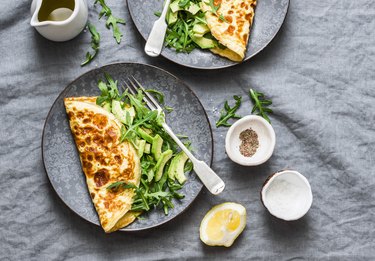
You won't come close to meeting your 3,000-calories-a-day goal without devoting time to breakfast, especially if you live an athletic lifestyle. Ironically, however, the more active you are, the more likely you are to be dashing out the door without having eaten. It helps to have easy 3,000-calorie diet options at the ready.
That's where portable breakfasts come in. The American Heart Association's breakfast sandwich made with egg whites, vegetables and whole-grain bread delivers plenty of nutrients and is even compact enough to finish in the car, if needed. Whether you have it on the run or at the table, finish the meal with a cup of vegetable juice and a side of fruit, such as 1 cup of diced cantaloupe. The total for breakfast is 465 calories.
- Breakfast sandwich (360 calories)
- Cantaloupe (54 calories)
- Vegetable juice (51 calories)
Other breakfast ideas:
- Healthy Smoky Mushroom Breakfast Tacos from The Endless Meal
- Hash Brown Egg Casserole from Dinner at the Zoo blog
- Peanut Butter Breakfast Toast from Eating Bird Food
- Veggie Omelet from Feel Good Foodie blog
Morning Snack
Smoothies can provide you with extra calories and also a range of nutrients. That's why they're a fixture in a typical 3,000-calorie meal plan for athletes. The Mayo Clinic suggests a blend of yogurt, milk, protein powder and wheat germ, to make a generous 3-cup serving.
Some smoothie combinations to try:
- Peanut Butter Blueberry and Banana Smoothie from Dishing Out Health
- Avocado Green Smoothie from Eating Bird Food
- Vanilla Protein Shake with Banana from Tastes Better from Scratch blog
Lunch
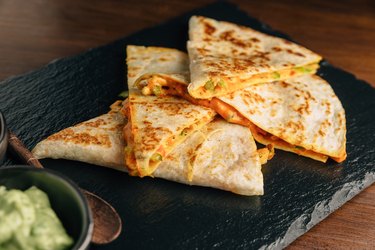
When you still have plenty of hours in the day to go, a high-calorie lunch can help keep your energy levels elevated. The Cleveland Clinic recommends nutritious, higher-calorie foods like quesadillas and apple slices with caramel.
Make the quesadilla with a whole-grain tortilla and a couple of slices of cheese, to be enjoyed at home or reheated at the office. A glass of milk rounds out the 972-calorie meal.
- Quesadilla (650 calories)
- 2 percent milk (122 calories)
- Apple slices with caramel (200 calories)
Other lunch ideas to try:
- Caprese Grilled Cheese Sandwich from Salt and Lavender blog
- Chicken Alfredo Pizza from the Recipe Rebel
- Blackened Chicken Cobb Salad from Eating Bird Food blog
Afternoon Snack
For a simple afternoon snack that delivers a balance of carbs and protein, the Cleveland Clinic suggests mixing a 6-ounce container of flavored yogurt with 1/2 cup of granola. Tasty additions like this help fill in the gaps between meals. Not only do they give you energy and satisfy your appetite, but they also help you make the goal of attaining a 3,000-calorie diet easier for people who dislike eating large amounts in one sitting.
- Yogurt and granola snack (300 calories)
More snack ideas:
Dinner
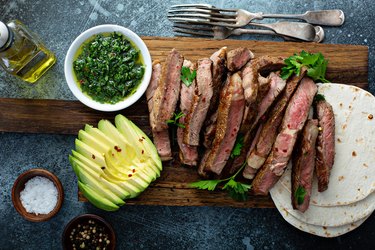
A steak entrée can be the centerpiece of your dinner, especially when you have a post-workout appetite. The American Council on Exercise (ACE) suggests topping it with an avocado salsa mixture.
ACE has also developed hearty recipes such as a Mexican-style casserole featuring beans and vegetables, which work well as side dishes in your 3,000-calorie meal plan. To balance out the richness of the steak and casserole, add a side salad, such as a spicy coleslaw. The total for this dinner is 653 calories.
- Steak strips with avocado and salsa (355 calories)
- Spicy coleslaw (55 calories)
- Southwestern casserole (243 calories)
Other dinner ideas to try:
- Vegan Buddha Bowl with chickpeas, sweet potato and veggie slaw from My Darling Vegan
- Chicken Burrito Protein Bowl from Feel Good Foodie
- Grilled Salmon Bowl with brown rice from Tastes Better from Scratch
- Slow Cooker Flank Steak with veggies from Real Food Whole Life
Dessert
Sometimes, of course, you may have missed a meal or a snack during the day, or simply still have room in your calorie "budget." In those cases, a sweet-but-healthy dessert can fill the gaps.
Try date-coconut yogurt with pistachios, skillet berry cobbler or cherry-mango crumble. All have around 300 calories or more, but are packed with nutritious ingredients like fruit, nuts and yogurt.
Foods to Limit or Avoid
No matter how many calories you're eating each day, the goal should be to get those calories from healthy, nutrient-dense foods and avoid or limit "empty-calorie" or nutrient-poor foods that could jeopardize your health. These include:
- Fried and fast foods, such as doughnuts, french fries and just about anything from a drive-thru
- Foods and drinks high in sugar, such as soda, sweetened coffee drinks, baked goods and candy
- Ultra-processed foods, which are packaged foods with very long ingredient lists that often include hard-to-pronounce terms
- American Academy of Family Physicians: "Nutrition for Athlete"
- American Heart Association: "Avocado Egg Spinach Sandwich"
- USDA: "Vegetable Juice"
- USDA: "Cantaloupe Melons"
- Mayo Clinic: "High-Calorie, High-Protein Smoothie"
- Cleveland Clinic: "Snack Ideas for Weight Gain"
- USDA: "2% Milk"
- American Council on Exercise: "Skillet-Roasted Strip Steaks With Pebre Sauce & Avocado"
- American Council on Exercise: "Chilaquiles Casserole"
- American Council on Exercise: "Mexican Coleslaw"
- U.S. Department of Health and Human Services: "2020-2025 Dietary Guidelines for Americans"
- The Endless Meal: "Healthy Smoky Mushroom Breakfast Tacos"
- Dinner at the Zoo: "Hash Brown Egg Casserole"
- Eating Bird Food: "Peanut Butter Breakfast Toast"
- Feel Good Foodie: "Veggie Omelet"
- Dishing Out Health: "Peanut Butter Blueberry and Banana Smoothie"
- Eating Bird Food: "Avocado Green Smoothie"
- Tastes Better From Scratch: "Vanilla Protein Shake"
- Salt and Lavender: "Caprese Grilled Cheese Sandwich"
- The Recipe Rebel: "Chicken Alfredo Pizza"
- Eating Bird Food: "Blackened Chicken Cobb Salad"
- My Darling Vegan: "Vegan Buddha Bowls"
- Feel Good Foodie: "Chicken Burrito Protein Bowl"
- Tastes Better From Scratch: "Grilled Salmon Bowl"
- Real Food Whole Life: "Slow Cooker Flank Steak"