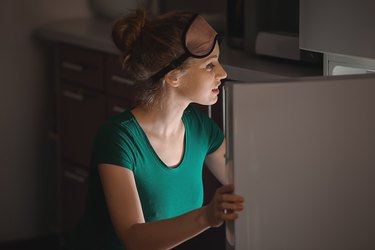
Eating a big meal before bed feels great — until you lie down and try sleeping on a full stomach. You may experience discomfort, like heartburn, and that sense of fullness may disturb your sleep. Here's what you need to know about eating before bed to keep you and your digestive system happy.
Read more: 4 Surprising Benefits of Eating at Night
Video of the Day
Video of the Day
Health Problems From Bedtime Eating
You might be passed out for the night dreaming about breakfast, but your digestive system doesn't fully shut down. "Even though you're unconscious, the digestive system continues to work — just not as hard as during the day while your body is consuming food and drinks," says Niket Sonpal, MD, an internist and gastroenterologist in Brooklyn, New York.
"While there isn't a full stop in your functions, the digestive process is delayed," explains Dr. Sonpal. Because it's slowed down, what and when you eat before bed makes a big difference in the way you'll feel.
When you eat a large meal right before you lie down to go to sleep, your digestive system doesn't have enough time to deal with all that food. Because it's still processing your meal while you're trying to get your zzzs, you might experience some discomfort, Dr. Sonpal says. "You may experience problems like heartburn, acid reflux, indigestion or sleep disruption."
Dr. Sonpal adds that digestion and sleep go hand-in-hand — "if you don't get the proper amount of sleep, your stomach problems can worsen, and eating before you sleep could cause gut problems. Hormones like melatonin and serotonin are mainly found in the gut, and when the stomach isn't digesting properly, they don't generate properly. In the end, this will lead to sleepless nights, constipation and indigestion."
According to Andrea Culliford, MD, a gastroenterologist at Medical Offices of Manhattan in New York City, the acid reflux you might experience can damage the lining of your esophagus. You could also experience what's called gastroparesis.
"It occurs when the stomach doesn't move properly to digest food, and the food doesn't move forward into the small intestine," she says. "It will cause you to feel full and bloated upon waking because your body didn't digest properly during your sleep cycle."
Eating Before Bed 101
Life happens, and sometimes you have to eat dinner later than expected. Or, you simply want to snack before bed. Most nights, following a few rules will help prevent any discomfort or health issues from occurring.
An average-sized meal should be eaten at least two to three hours before bedtime, the experts suggest. If you're having a larger meal, four to five hours are recommended. Because of that, your most substantial meal should be eaten earlier in the day, ideally at lunchtime.
If you do go to bed feeling full, there's a higher chance of stomach acid bubbling up into your esophagus and causing heartburn or acid reflux, Dr. Sonpal says. The Cleveland Clinic notes that lying on your left side with your head elevated — preferably with a body pillow — will help prevent those symptoms.
What you eat is also important. Aim for a nutritionally balanced meal and avoid grease. "It's most difficult to process and digest greasy and processed food because it takes longer for your stomach to break them down," Dr. Sonpal says. He also recommends avoiding fatty foods, which are more likely to cause heartburn and reflux, as well as other difficult-to-digest foods like artificial sweeteners, corn and alcohol.
As for what to eat, Dr. Culliford recommends aiming for a combination of fiber-rich foods, healthy fats and proteins. That's what your body uses overnight for regeneration and to repair itself. It's also helpful to incorporate foods into your meals that prepare your body for bed. "Some foods actually promote sleepiness due to the processing of the amino acid L-tryptophan," she says.
According to the U.S. National Library of Medicine, tryptophan is found in many foods, including milk, soy beans, fish, turkey and poultry, as well as peanuts and seeds, like pumpkin, sesame and sunflower seeds.
Follow this expert advice, and you're less likely to spend the night lying in bed, wide awake, with a bellyache.
Read more: Protein Foods to Eat Before Bed
Is this an emergency? If you are experiencing serious medical symptoms, please see the National Library of Medicine’s list of signs you need emergency medical attention or call 911.