The Side Effects of Bananas
In a way, bananas are perfect fruits. Bananas are packaged in their own recyclable containers, do not require refrigeration and contain essential vitamins and minerals. The vitamins and minerals bring good side effects to your body, such as decreased blood pressure. However, bananas can also be deadly for those who have a severe allergic reaction to them.
If you are experiencing serious medical symptoms, seek emergency treatment immediately.
Vitamins
When you eat a banana, you are ingesting B vitamins. The B vitamins may help to calm your nervous system and reduce symptoms of premenstrual syndrome. Vitamin B-6, which bananas contain, helps to regulate blood glucose levels, which can prevent mood swings. The calming properties of vitamin B-6 can also help ex-smokers recover from nicotine withdrawal.
- When you eat a banana, you are ingesting B vitamins.
- The calming properties of vitamin B-6 can also help ex-smokers recover from nicotine withdrawal.
Minerals
Can You Get Potassium Poisoning From Bananas?
Learn More
Eating a banana will bring potassium and magnesium into your body. Potassium's side effects include regulating your heart rate, lowering your blood pressure, improving your oxygen flow and maintaining your body's water levels. These effects have the overall benefit of reducing your level of stress. Potassium and magnesium can also help to manage nicotine withdrawal symptoms.
- Eating a banana will bring potassium and magnesium into your body.
- Potassium and magnesium can also help to manage nicotine withdrawal symptoms.
Stomach
The fiber in bananas can aid your stomach by restoring normal bowel function and reducing heartburn. If you have an allergy to bananas, you may experience the opposite effects. An allergic reaction to bananas may result in stomach pain, or vomiting. The allergy may stem from a latex allergy since the allergens in a banana are similar to those in latex rubber. A banana allergy may also be a reaction to the fruit itself or to pollen.
- The fiber in bananas can aid your stomach by restoring normal bowel function and reducing heartburn.
- The allergy may stem from a latex allergy since the allergens in a banana are similar to those in latex rubber.
Respiratory
Fruits That Are Natural Laxatives
Learn More
An allergic reaction to bananas may include respiratory complaints. Since your mouth is the first place to make contact with the banana, you may experience a swollen tongue, lips, or throat, a raw roof of your mouth, or an itchy mouth and throat. These symptoms may occur immediately or within an hour of eating a banana and can also include a rash or hives. The most threatening reaction is anaphylactic shock, in which breathing becomes extremely difficult and blood pressure drops.
- An allergic reaction to bananas may include respiratory complaints.
- The most threatening reaction is anaphylactic shock, in which breathing becomes extremely difficult and blood pressure drops.
Related Articles

Can You Get Potassium Poisoning From Bananas?
Learn More

Fruits That Are Natural Laxatives
Learn More
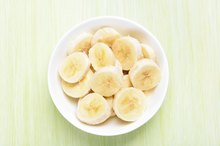
The Tyrosine in Bananas
Learn More

Is Eating a Lot of Bananas Healthy?
Learn More

How to Dehydrate Bananas in a Food Dehydrator
Learn More

Do Bananas Cause Constipation or Diarrhea?
Learn More

Nutrition Facts for Deep-Fried Bananas
Learn More
Foods That Trigger Ragweed Allergies
Learn More

Bananas and Essential Amino Acids
Learn More

What Vitamins Are in Bananas?
Learn More
References
- Bananas, raw. FoodData Central. U.S. Department of Agriculture. Published April 1, 2019.
- Glycemic index for 60+ foods. Harvard Health Publishing, Harvard Medical School. Updated 2020.
- Nutritional Goals for Age-Sex Groups Based on Dietary Reference Intakes and Dietary Guidelines Recommendations. USDA. 2015
- Falcomer AL, Riquette RFR, De lima BR, Ginani VC, Zandonadi RP. Health benefits of green banana consumption: A systematic review. Nutrients. 2019;11(6). doi:10.3390/nu11061222
- Klemm S. Prebiotics and probiotics: Creating a healthier you. Academy of Nutrition and Dietetics. Updated 2020.
- Howarth NC, Saltzman E, Roberts SB. Dietary fiber and weight regulation. Nutr Rev. 2001;59(5):129-39. doi:10.1111/j.1753-4887.2001.tb07001.x
- Pereira A, Maraschin M. Banana (Musa spp) from peel to pulp: ethnopharmacology, source of bioactive compounds and its relevance for human health. J Ethnopharmacol. 2015;160:149-63. doi: 10.1016/j.jep.2014.11.008
- Vitamin C: Fact Sheets for Health Professionals. National Institutes of Health, Office of Dietary Supplements. Updated 2020.
- Hassan AK, Venkatesh YP. An overview of fruit allergy and the causative allergens. Eur Ann Allergy Clin Immunol. 2015;47(6):180-7.
- Manohar M, Verma AK, Upparahalli Venkateshaiah S, Goyal H, Mishra A. Food-induced acute pancreatitis. Dig Dis Sci. 2017;62(12):3287-3297. doi:10.1007/s10620-017-4817-2
Writer Bio
A mother of two and passionate fitness presenter, Lisa M. Wolfe had her first fitness article published in 2001. She is the author of six fitness books and holds an Associate of Arts in exercise science from Oakland Community College. When not writing, Wolfe is hula-hooping, kayaking, walking or cycling.