
How to Count Beats in Aerobics
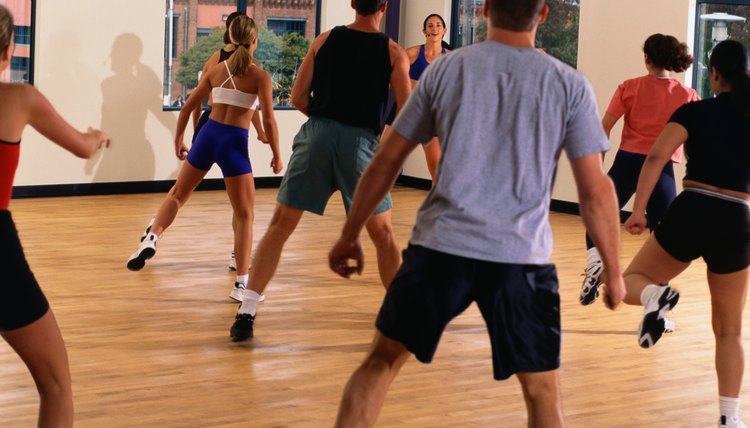
The beats for your movements in an aerobic class are linked to the beats in the music. The music provides motivation and energy and often inspires the aerobic choreography. Music is divided into 32-count phrases, which is perfect for an aerobic routine because you can string together movements that equal 32 counts. The more consistent you are in using the beats and musical phrases, the easier the aerobic workout flows from one movement to the next. You also use less transition time with movements such as marching in place since you quickly transition from one group of exercises to the next.
Select your music based on the type of aerobic workout you are performing. For example, use 118 to 128-beats-per-minute music for step aerobics classes; use 130 to 138-beats-per-minute music for hi/low aerobics or kickboxing classes; and use 140 to 150-beats-per-minute music for high-energy, fast-moving aerobic classes.
Play your music and march in place to get the feel for the beats.
Count the beats in groups of four. March with your right foot on beats one and three. March with your left foot on beats two and four. When four counts is easy, double your group and count to eight to feel one phrase of music.
Keep marching and count four groups of eight until you reach a 32-count phrase.
Try your eight-count phrasing with different movements, such as jumping jacks. Jump your feet apart on counts one, three, five and seven. Jump your feet together on counts two, four, six and eight.
Select four movements that use eight counts and link those together for a 32-beat phrase. For example, do four jumping jacks, followed by an eight-count march, two grapevines and four step-touches.
Tips
The more you listen to your music, the more you will hear the 32-count pattern. You'll find that the chorus of a song is usually made up of one or two 32-beat combinations. Practice your beat counting when you are listening to music in the car, and soon, you will easily be able to count the beats during aerobics.
References
Tips
- The more you listen to your music, the more you will hear the 32-count pattern. You'll find that the chorus of a song is usually made up of one or two 32-beat combinations. Practice your beat counting when you are listening to music in the car, and soon, you will easily be able to count the beats during aerobics.
Writer Bio
A mother of two and passionate fitness presenter, Lisa M. Wolfe had her first fitness article published in 2001. She is the author of six fitness books and holds an Associate of Arts in exercise science from Oakland Community College. When not writing, Wolfe is hula-hooping, kayaking, walking or cycling.