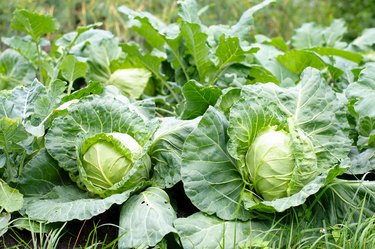
An examination of cabbage health benefits and side effects shows the advantages far outweigh the only possible drawback. Studies reveal the vegetable has value for various aspects of wellness.
The one downside is that cabbage produces gas. If you experience gas after eating this food or drinking the juice, it's perfectly normal, says Keck Medicine of the University of Southern California. Unless your gas is particularly troublesome, you don't need to eliminate this healthy vegetable from your diet.
Video of the Day
Video of the Day
Tip
Cabbage has value for fighting cancer, ulcers, cardiovascular disease and skin conditions. The only side effect is that it causes gas.
Cabbage Juice Nutrients
Cabbage is a cruciferous vegetable, a category of plants that are rich in glucosinolates, which are sulfur-containing chemicals. These components are responsible for the food's pungent taste and aroma, says the National Cancer Institute.
During food preparation or digestion, glucosinolates are broken down into compounds known for their anti-cancer activity. Other vegetables in the cruciferous family include broccoli, cauliflower, Brussels sprouts, kale, watercress and radishes.
All varieties of cabbage are low in calories and plentiful in vitamin C, reports Harvard Health. In fact, one half cup contains 45 percent of the daily recommended vitamin C intake, yet it only has 14 calories.
Cabbage also has vitamin A, potassium and other vitamins and minerals. Red cabbage offers an additional compound called anthocyanins, which are associated with a lower risk of cardiovascular disease.
Best Way to Ingest Cabbage
You may purchase cabbage juice online or in some health-food stores, or you may juice it at home. It's beneficial to drink any vegetable juice every day, but make it a part of a healthy, balanced diet.
While drinking cabbage juice is good for health, it lacks fiber, a plant-food constituent associated with many positive effects. To receive the advantages of all the healthful constituents of cabbage, eat it raw in salads like coleslaw or steam it to use as a side dish.
A study published in Food Chemistry in October 2014 investigated how different cooking methods affected the nutrient content of cabbage. It found steaming retained more of the nutrients than boiling or stir-frying. The raw cabbage consumed in salads had the highest nutritional content.
Cancer-Fighting Properties of Cabbage
Glucosinolates in cabbage break down to form indoles, and isothiocyanates, compounds that scientists have examined for their anti-cancer properties, says the National Cancer Institute. Animal studies show they suppress the development of cancer in the bladder, colon, lung, liver, breast and stomach.
Test-tube experiments and animal research reveal several mechanisms of action that underlie the benefit of cabbage for cancer. These include anti-inflammatory effects, protection from DNA damage and inactivation of carcinogens, as well as antiviral and antibacterial properties, notes the National Cancer Institute. The compounds also induce cell death, inhibit the formation of blood vessels in tumors and hinder tumor cell migration, which is necessary for cancer metastasis.
A study published in Current Developments in Nutrition in August 2017 examined the association between cruciferous vegetable consumption and breast cancer incidence. It found an inverse relationship between breast cancer risk and intake of the vegetables. The authors concluded that the trend in recent decades to eat more cruciferous vegetables could influence breast cancer likelihood.
Other Health Benefits of Cabbage
The Mayo Clinic includes cabbage in its list of botanicals recommended for treating peptic ulcers. A study published in Medicinal Chemistry Research in December 2014 tested the effects of cabbage extract and garlic extract on ulcers in rats. While the study involved animals rather than humans, its conclusions merit notice. Because both extracts produced a range of positive effects on the ulcers, the authors determined they could be used to heal acute gastric ulcers.
Researchers have also studied cabbage benefits for skin. A study featured in the April-June 2018 issue of Pharmacognosy Magazine assessed the antioxidant and anti-inflammatory effects of cabbage on skin irritation in mice. Although the study didn't involve humans, it's worth mentioning due to the promising results. Application of the extract to the skin reduced redness, swelling and thickening. The authors concluded that cabbage could be used to treat skin inflammation.
Protection against cardiovascular disease might be another benefit of cabbage. Results of an investigation published in Nutrients in May 2018 said dietary guidelines regarding vegetables are based on studies linking higher consumption to a lower risk of chronic disease.
The authors of the Nutrients research paper undertook the review of observational epidemiological studies to determine if a link exists between eating certain kinds of vegetables and a lower risk of disease. They concluded that eating leafy green and cruciferous vegetables may offer strong cardiovascular health benefits.
No Benefits in Cabbage Soup
You may have heard of the cabbage soup diet, a fad diet that advocates eating large quantities of the soup for several days. No research shows that cabbage or cabbage juice promotes weight loss, but because the diet is extremely low in calories, it results in weight reduction. However, it has serious negatives, warns the Mayo Clinic.
Some of the soup recipes may be high in salt. Consuming large amounts of cabbage may result in more flatulence. Since the diet is greatly lacking in calories, it's likely to result in weakness and tiredness. Cabbage soup is low in protein, complex carbohydrates, vitamins and minerals, so don't stay on it longer than one week, cautions the Mayo Clinic. Also, consult your doctor before starting it.
The weight loss is likely to consist of water loss, fat loss and possibly muscle loss. Once the diet ends, the weight will return. According to the University of Florida, eating one bowl of the soup makes a healthy meal if it's part of a balanced diet, but eating it nonstop is dangerous. Remember that long-term weight management depends on adopting a healthy diet and getting regular exercise.
Fruit for Reducing Obesity
An October 2016 study published in Nutrients reports that fruit has a paradoxical effect on obesity. Since fruit contains a high content of simple sugars, it's reasonable to expect its consumption to increase the risk of obesity.
Conversely, epidemiological studies consistently show that fruit has a weight-reduction effect. Due to these findings and the impressive vitamin and mineral content of fruit, health organizations are encouraging people to eat more of the food for weight-management purposes.
The Nutrients study review found that eating fruit has an anti-obesity effect for all ages, but drinking fruit juice increases the risk of obesity in children. Fruit juice drinks, which aren't 100 percent fruit juice are even worse because they contain added sugar, says the Heart Foundation. It's best to eat the whole fruit to get the fiber content and health advantages.
- National Cancer Institute: "Cruciferous Vegetables and Cancer Prevention"
- Harvard Health Publishing: "Vegetable of the Month: Red Cabbage"
- Food Chemistry: "Domestic Cooking Methods Affect the Nutritional Quality of Red Cabbage"
- Mayo Clinic: "Peptic Ulcer"
- Medicinal Chemistry Research: "Effect of Garlic and Cabbage on Healing of Gastric Ulcer in Experimental Rats"
- Pharmacognosy Magazine: "Anti-Inflammatory Effects of Brassica Oleracea Var. Capitata L. (Cabbage) Methanol Extract in Mice With Contact Dermatitis"
- Nutrients: "Cardiovascular Health Benefits of Specific Vegetable Types: A Narrative Review"
- Mayo Clinic: "What Is the Cabbage Soup Diet? Can It Help Me Lose Weight?"
- University of Florida: "Cabbage Soup Diet No Lucky Charm for Weight Loss, Says UF Expert"
- Nutrients: "Paradoxical Effects of Fruit on Obesity"
- Heart Foundation: "Belly Fat"
- Keck Medicine: "This Is What Your Excessive or Foul-Smelling Gas Could Mean"
- Current Developments in Nutrition: "Trends in Cruciferous Vegetable Consumption and Associations With Breast Cancer Risk: A Case-Control Study"