
What does fact checked mean?
At SportsRec, we strive to deliver objective content that is accurate and up-to-date. Our team periodically reviews articles in order to ensure content quality. The sources cited below consist of evidence from peer-reviewed journals, prominent medical organizations, academic associations, and government data.
The information contained on this site is for informational purposes only, and should not be used as a substitute for the advice of a professional health care provider. Please check with the appropriate physician regarding health questions and concerns. Although we strive to deliver accurate and up-to-date information, no guarantee to that effect is made.
The Five Best Outdoor Sport and Recreational Exercise Activities
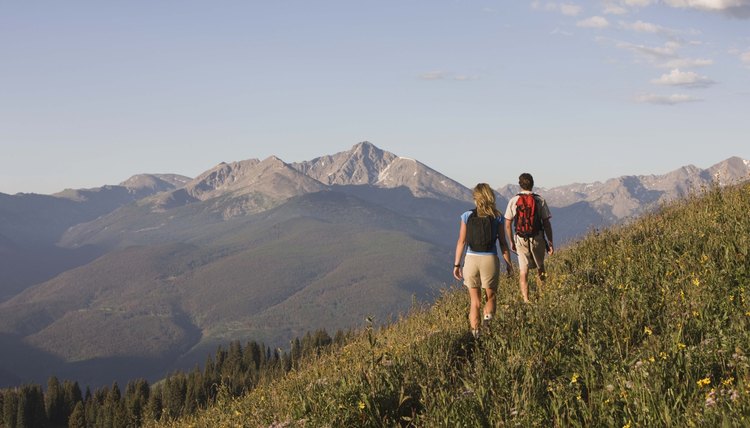
Sports are generally designed to be leisure activities, but you can turn your favorite outdoor sports and recreational activities into exercise. As a result, you can use the sports and activities to improve your fitness level. The five best sports and recreational activities for exercise improve your overall fitness level by building strength and endurance while burning calories and excess body fat.
Cross-Country Skiing
Cross-country skiing is a winter outdoor sport and recreational activity that combines skiing and hiking. The natural motion used in cross-country skiing provides an all-around aerobic workout. Each motion incorporates the shoulders, back, chest, core and legs, resulting in the ability to burn about 600 to 900 calories per hour. Consider learning from an instructor and borrowing equipment from friends to learn the basics of cross-country skiing.
Backpacking
The simplicity of strapping on a pack and hitting the trail makes backpacking one of the five best outdoor sports and recreational activities for exercise. Backpacking and hiking trips can range from short day hikes to multiday expeditions on simple trails to technical climbs. Regardless of the intensity and duration of the backpacking trip, you burn a significant amount of calories while experiencing the great outdoors. Backpacking for one hour can burn about 600 to 700 calories per hour while building lower body strength and stamina.
Running
Running is a classic outdoor sport and recreational activity, and one of the best for building endurance, stamina and muscular fitness while burning calories. It's also an opportunity to spend time with friends and family and requires only minimal equipment and training. Running at 8 mph can burn more than 1,000 calories per hour, and you can increase that amount with rugged outdoor terrain, such as hills or trails.
Cycling
Learning how to ride a bike is a rite of passage for kids, but cycling can provide a lifetime of exercise and fitness. You can take the bike on paved roads or trails along with off-road trails to experience remote locations in the mountains or forests. Along with burning about 400 calories per hour, cycling builds lower body strength while improving balance, coordination and cardiovascular fitness.
Swimming
Swimming is known for providing a low-impact total body workout, but it’s also one of the top outdoor sports. You can vary your swimming activity from freestyle swimming to aqua aerobics in the outdoor pool or local lake. Swimming is a common alternative to running, cycling or hiking when the weather turns hot. One hour of swimming burns about 600 to 700 calories and improves endurance, strength and coordination.
References
Writer Bio
Based in Nebraska, Jeremy Hoefs began writing fitness, nutrition, outdoor and hunting articles in 2006. His articles have been published in "Star City Sports," "Hunting Fitness Magazine" and RutWear field journals, as well as on the Western Whitetail website. Hoefs graduated with a Bachelor of Science in exercise science from Nebraska Wesleyan University.