What does fact checked mean?
At Healthfully, we strive to deliver objective content that is accurate and up-to-date. Our team periodically reviews articles in order to ensure content quality. The sources cited below consist of evidence from peer-reviewed journals, prominent medical organizations, academic associations, and government data.
The information contained on this site is for informational purposes only, and should not be used as a substitute for the advice of a professional health care provider. Please check with the appropriate physician regarding health questions and concerns. Although we strive to deliver accurate and up-to-date information, no guarantee to that effect is made.
Good Nuts Vs. Bad Nuts
While all nuts are good for you, some are better than others because they contain higher amounts of protein or certain nutrients that have health benefits. Around 1 ounce, or 1/4 cup, is a typical portion of nuts. Portion size is key to consuming a healthy amount of nuts, no matter which type you choose.
Wonderful Walnuts
Walnuts top the list as one of the healthiest nuts because they are the only nut source of plant-based omega-3 fatty acids. According to the American Heart Association, omega-3 fats may lower cholesterol levels and support a healthy heart; they also play a crucial role in brain function 2. A serving of walnuts, about 14 halves, provides you with 185 calories, 4 grams of protein and almost 2 grams of fiber.
Amazing Almonds
Blue Diamond Almonds Nutrition
Learn More
The vitamins and minerals found in almonds make them one of the best nut choices. Almonds contain vitamin E and provide up to 35 percent of the recommended daily intake of this vitamin. This nut also supplies calcium and folate, some of the nutrients lacking in the typical American diet, according to the Dietary Guidelines for Americans 2010 4. Almonds also have the highest protein per serving among nuts, with a total of 6 grams per ounce.
- The vitamins and minerals found in almonds make them one of the best nut choices.
- This nut also supplies calcium and folate, some of the nutrients lacking in the typical American diet, according to the Dietary Guidelines for Americans 2010 4.
Perfect Pistachios
Pistachios have a large serving size compared to other nuts: around 49 nuts per ounce. This nut also boasts the highest amount of fiber at a total of 3 grams per serving, as well as almost 6 grams of protein per ounce. Pistachio nuts may help you control your hunger due to their high protein and fiber content. Eating them from the shell may also help you stick to the 1-ounce serving size.
- Pistachios have a large serving size compared to other nuts: around 49 nuts per ounce.
- This nut also boasts the highest amount of fiber at a total of 3 grams per serving, as well as almost 6 grams of protein per ounce.
Less Healthy Nuts
19 Fast, Healthy Convenience Store Snacks
Learn More
Macadamia nuts boast the highest amount of fat per serving, with 17 to 22 grams, giving them a higher calorie count than most nuts at 204 calories per ounce. Macadamia nuts are also very low in protein compared to other nuts, with less than 2.5 grams in a 1-ounce serving. Macadamia nuts do provide a good dose of healthy fat calories, but they lack the protein and nutrients like potassium and magnesium that many of the healthiest nuts provide, which makes them a poorer nut choice.
Related Articles
Blue Diamond Almonds Nutrition
Learn More

19 Fast, Healthy Convenience Store Snacks
Learn More
Can Almonds Raise Your Cholesterol?
Learn More
Cashew & Mango Allergies
Learn More
Almonds: Nutrition & Inflammation
Learn More
Can Certain Nuts Help Lower Your High Blood Pressure?
Learn More
Are Raw Peanuts Good for You?
Learn More
Nutrition Information: Raw Almonds Vs. Roasted Almonds
Learn More
English Walnuts vs. Black Walnuts
Learn More
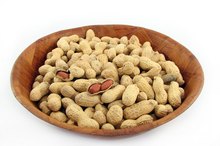
Are Peanuts High in Cholesterol?
Learn More
References
- USDA ChooseMyPlate.gov: Protein Foods: Why Is It Important to Make Lean or Low-Fat Choices From the Protein Foods Group?
- American Heart Association: Polyunsaturated Fats.
- USDA National Nutrient Database: Nuts, Walnuts, English
- USDA Center for Nutrition Policy and Promotion: Dietary Guidelines for Americans 2010
- USDA National Nutrient Database: Nuts, Almonds
- USDA National Nutrient Database: Nuts, Pistachio Nuts, Raw
- USDA National Nutrient Database: Nuts, Macadamia Nuts, Raw
- Nuts, macadamia nuts, dry roasted, without salt added. FoodData Central. U.S. Department of Agriculture. Published April 1, 2019.
- American Heart Association. Monounsaturated fats. Updated June 1, 2015.
- Gordon B. How much protein should I eat?. Academy of Nutrition and Dietetics. Updated May 28, 2019.
- DiNicolantonio JJ, OKeefe J. Dietary fats, blood pressure and artery health. Open Heart. 2019;6(1):e001035. doi:10.1136/openhrt-2019-001035
- Hemler EC, Hu FB. Plant-based diets for cardiovascular disease prevention: All plant foods are not created equal. Curr Atheroscler Rep. 2019;21(5):18. doi:10.1007/s11883-019-0779-5
- Estruch R, Ros E, Salas-Salvadó J, et al. Primary prevention of cardiovascular disease with a Mediterranean diet supplemented with extra-virgin olive oil or nuts. N Engl J Med. 2018;378(25):e34. doi:10.1056/nejmoa1800389
- Stewart M. Macadamia nuts and cardiovascular disease risk factors: A review of clinical trials. FASEB J. 2015;29(1_supp):923-6. doi:10.1096/fasebj.29.1_supplement.923.6
- Kim Y, Keogh JB, Clifton PM. Benefits of nut consumption on insulin resistance and cardiovascular risk factors: Multiple potential mechanisms of actions. Nutrients. 2017;9(11). doi:10.3390/nu9111271
- Brehm BJ, Lattin BL, Summer SS, et al. One-year comparison of a high-monounsaturated fat diet with a high-carbohydrate diet in type 2 diabetes. Diabetes Care. 2009;32(2):215-220. doi:10.2337/dc08-0687
- Lamuel-Raventos RM, Onge MS. Prebiotic nut compounds and human microbiota. Crit Rev Food Sci Nutr. 2017;57(14):3154-3163. doi:10.1080/10408398.2015.1096763
- McWilliam V, Peters R, Tang MLK, et al. Patterns of tree nut sensitization and allergy in the first 6 years of life in a population-based cohort. J Allergy Clin Immunol. 2019;143(2):644-650.e5. doi:10.1016/j.jaci.2018.07.038
Writer Bio
Lindsay Stern is a registered dietitian and licensed nutritionist who has been working in community and clinical nutrition since 2006. Currently she specializes in wellness and prevention and has been a certified Health and Wellness Coach since 2012. Stern holds Master of Public Health nutrition from the University of Minnesota.