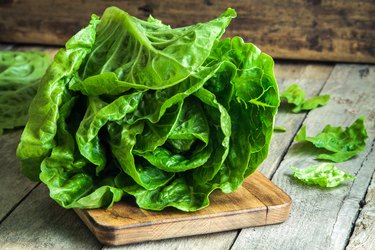
If you eat salads or enjoy lettuce on your sandwiches, chances are you have enjoyed the healthy crunch of romaine lettuce. The type of lettuce that you choose for your salads or other recipes is important. Different types of lettuce have varying degrees of nutritional value. If you prefer romaine lettuce, you should understand the caloric content and health benefits of this vegetable.
Weight Loss
Video of the Day
Romaine lettuce is the perfect supplement to a weight loss diet. To lose weight effectively, you must take in fewer calories per day from food than your body uses. Because romaine lettuce only contains 17 calories per serving, you may eat large portions of romaine lettuce and still lose weight. In addition, romaine lettuce has a high water content, which can help you feel full quicker when eating. Include romaine lettuce in your lunch or dinner salads to improve your weight loss efforts.
Video of the Day
Healthy Digestive Tract
The fiber content of romaine lettuce makes it an good supplement for a clean digestive tract. Specifically, romaine lettuce contains 2 g of fiber per serving, which is 5 percent of your recommended daily value. Fiber is a substance that is not digested, so it acts as a sponge to push waste through your intestinal tract, and high fiber diets have also been linked to a lower risk of heart disease and diabetes. To work effectively, you must drink at least eight glasses of water per day, or you may become constipated and have hard stools.
Vitamins C and K
The high vitamin C content of romaine lettuce makes it a heart-healthy vegetable. One serving of romaine lettuce can provide up to 4 mg or 40 percent of your recommended daily needs. In particular, vitamin C prevents cholesterol from becoming sticky and adhering to the walls of your blood vessels. Thus, if you have heart disease, or a strong family history of heart disease, you should include one to two servings of romaine lettuce in your daily diet to keep your heart healthy. Romaine lettuce is also high in vitamin K, with 100 micrograms in 100 grams of lettuce. Vitamin K is important in helping your blood clot properly and also helps build strong bones.
Muscle Strength
Potassium is essential for not only heart health, but also for muscle strength. If your potassium levels are low, you may experience muscle weakness. Therefore, consuming food rich in potassium is essential for maintaining muscle strength. One serving of romaine lettuce provides your body with 247 mg, or 10 percent of its daily needs. In addition, consuming other fruits and vegetables and legumes will help you meet your recommended daily intake for potassium.