What does fact checked mean?
At Healthfully, we strive to deliver objective content that is accurate and up-to-date. Our team periodically reviews articles in order to ensure content quality. The sources cited below consist of evidence from peer-reviewed journals, prominent medical organizations, academic associations, and government data.
- Office of Dietary Supplements, National Institutes of Health: Vitamin B-6
- Oregon State University: Possible Health Benefits of Coenzyme Q10
The information contained on this site is for informational purposes only, and should not be used as a substitute for the advice of a professional health care provider. Please check with the appropriate physician regarding health questions and concerns. Although we strive to deliver accurate and up-to-date information, no guarantee to that effect is made.
Standard Process for Cardio Plus
Cardio-Plus is a nutritional supplement manufactured by Standard Process 1. Available since 1956, it consists of a mixture of enzymes and extracts purported to increase cardiovascular health in numerous ways, including improved coronary artery flow and supporting the higher oxygen demands of the body during exercise. In addition to significant amounts of various B-vitamins, Cardio-Plus includes bovine heart potentiated magnesium, or PMG, choline, cow and sheep spleen, pig brain and stomach, and coenzyme Q10.
If you are experiencing serious medical symptoms, seek emergency treatment immediately.
Be advised that the U.S. Food and Drug Administration has not investigated the benefits claimed by the manufacturer.
Availability and Dosing
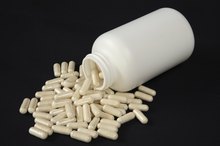
Cardio-Plus is sold in the form of 650 mg capsules, with 330 capsules per bottle. In November 2013, a bottle of 330 capsules retailed for about $44. The maker advises users to consume two capsules with every meal, or about six per day. Therefore, a steady user would incur a cost of about $24 a month as of 2013.
- Cardio-Plus is sold in the form of 650 mg capsules, with 330 capsules per bottle.
- The maker advises users to consume two capsules with every meal, or about six per day.
Pyridoxine and the Heart
How Do the Walls of the Atria & Ventricles Differ?
Learn More
A day's worth of Cardio-Plus contains 75 percent of the U.S. Recommended Daily Allowance of vitamin B-6, also known as pyridoxine. According to the National Institutes of Health, this vitamin participates in a host of functions in the human body, among them red-blood-cell synthesis, immune responses, and blood-glucose regulation 2. While B-6 deficiency is associated with increased levels of homocysteine, a substance that may damage blood vessels and interfere with platelet function, as of 2011 there was no evidence to suggest that B-6 supplementation lowers the risk of heart disease.
- A day's worth of Cardio-Plus contains 75 percent of the U.S.
- Recommended Daily Allowance of vitamin B-6, also known as pyridoxine.
- While B-6 deficiency is associated with increased levels of homocysteine, a substance that may damage blood vessels and interfere with platelet function, as of 2011 there was no evidence to suggest that B-6 supplementation lowers the risk of heart disease.
Bovine Heart PMG
This extract from the heart tissue of cows contains a specially formulated type of magnesium, a metal that is considered a dietary trace element. Magnesium is important for the normal function of the heart, muscles, and kidneys, contributes to the formation of teeth and bones, activates enzymes, contributes to energy production, and helps to regulate serum levels of other nutrients. Deficiencies in magnesium are rare in the United States, but when present, may contribute to cardiac arrythmias. There is no evidence to suggest that supplementation in any form in non-deficient persons confers demonstrated cardiovascular benefits.
- This extract from the heart tissue of cows contains a specially formulated type of magnesium, a metal that is considered a dietary trace element.
Coenzyme Q10
Zinc and Heart Palpitations
Learn More
This substance, also known as ubiquinone or simply as coenzyme Q, is vital in the production of energy within the mitochondria of cells. In a slightly modified form, it is a powerful antioxidant that protects cell membrane proteins from oxidative damage secondary to normal metabolic processes. As Roland Stocker, Ph.D. of the University of New South Wales explains, one facet of this function may be reducing the appearance and severity of atherosclerosis, or the hardening of the arteries that is a major contributor to cardiovascular disease. So it is possible, though not demonstrated, that the coenzyme Q10 in Cardio-Plus may have a protective effect on the heart.
- This substance, also known as ubiquinone or simply as coenzyme Q, is vital in the production of energy within the mitochondria of cells.
- So it is possible, though not demonstrated, that the coenzyme Q10 in Cardio-Plus may have a protective effect on the heart.
Related Articles

How Do the Walls of the Atria & Ventricles Differ?
Learn More

Zinc and Heart Palpitations
Learn More
How Do the Walls of the Atria & Ventricles Differ?
Learn More

Calcium and Magnesium in Caltrate: What Does It Do for the Body?
Learn More
Is There Vitamin D in Omega 3?
Learn More

Supplements That Dilate Blood Vessels
Learn More
Centrum Silver Side Effects
Learn More

What Is L-Carnitine Tartrate?
Learn More
Does Fish Oil Cause Dizziness?
Learn More

Does Magnesium Help You Lose Weight?
Learn More
References
Resources
Writer Bio
L.T. Davidson has been a professional writer and editor since 1994. He has been published in "Triathlete," "Men's Fitness" and "Competitor." A former elite cyclist with a Master of Science in exercise physiology from the University of Miami, Davidson is now in the broadcast news business.