
Do Women Need to Work Out Differently Than Men?
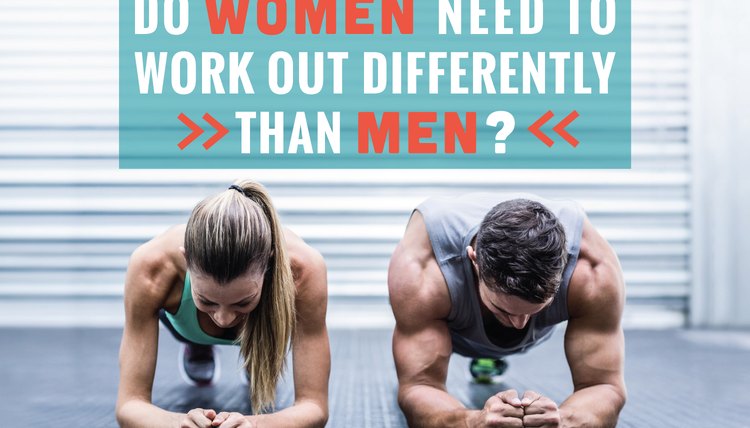
“A woman’s body and spirit is substantially different than a man’s and therefore requires specific techniques to achieve improvements in fitness,” says women’s strength expert Holly Perkins.
Yep, I just quoted myself. Why? Because I want to make you giggle — and because I am a bona fide expert and author on women’s strength.
We’ve finally arrived at a time when women are embracing strength training, and as a certified strength and conditioning specialist with more than 20 years of experience, I couldn’t be happier. Each week I witness women walking into the gym with a new kind of confidence.
But this doesn't mean men and women should share the same workout plan. Your routine should be tailored to your body and your goals — and in these ways, men and women are often very different.

How Men and Women Are Similar
There are many ways that a woman’s body is exactly the same as a man’s. Under a microscope, your muscles, bones and hormones look exactly the same as your guy’s. Along those lines, the basic principles of strength development, fat loss, cardiovascular fitness and physical health apply for both men and women.
In order to change your current state of strength, fitness, or body fat, you must take action that is above and beyond what you have currently been doing. This principle is known as progressive training, and it’s the golden rule to improve your fitness.
The Three Strength Exercises Everyone Should Do
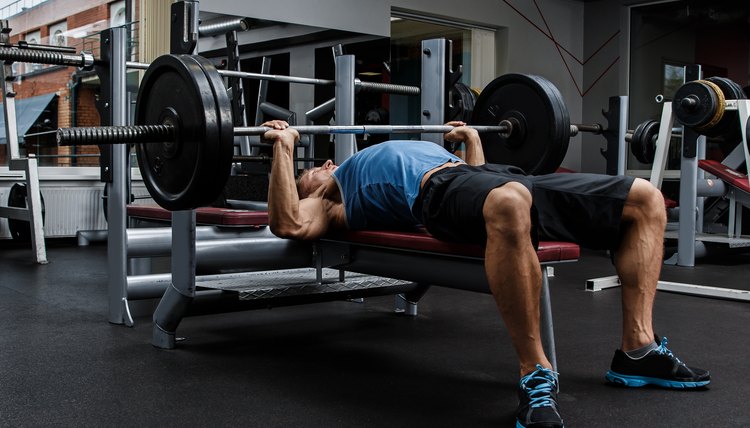
At the very bare minimum, there are three strength exercises that every male and female body needs on a consistent basis: the lat pulldown, bench press and squat. If you were stranded on a desert island, there are the three moves that would keep your body functional and injury free and ward off age-related muscle loss.
The squat, bench press and lat pulldown are foundational movement patterns that very effectively work the muscles of your back, chest, arms, core and lower body. They target the large muscle groups that guide nearly all of your movements, thereby improving your strength, body composition and overall fitness.
Strength Training Builds Muscle
The three exercises are critical for optimal mechanics, yes. Interestingly, they also create very specific visual changes to a body.
There is an archetype of “man” that is strong and masculine. The image of this archetype has wide shoulders and a thick, rounded chest. This is the look that many men still strive for today in the weight room.
Most guys use a wide-grip lat pulldown to sculpt the "V" shape of a wide back and narrow waist. And to build a thick and rounded chest, every guy knows to hit the bench press. This forward-pushing move makes the pectoral muscles grow outward, creating the strong-chested superhero look.
What Women Should Do Differently
Women also need the same three basic movement patterns (the lat pulldown, bench press and squat) to build lean muscle, increase strength, improve posture and optimize knee alignment. But most women don’t want built pecs and the broad back of a bodybuilder.
Women also have a few anatomical differences, such as a wider pelvis, that influence how these key movements should be performed.
Although these exercises are equally important for men and women, there are three key differences women should know:
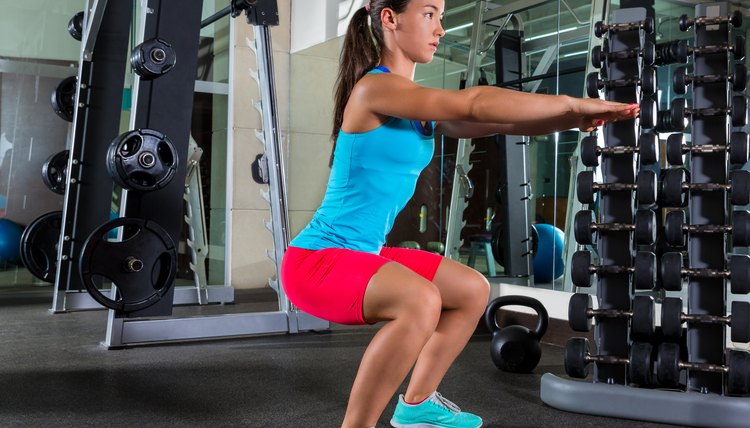
1. Turn out your feet when you squat.
When done correctly, squats strengthen your muscles in a way that improves movement patterns between the feet, ankles, legs, hips and all the way up the body.
The squat also strengthens key muscles like the quadriceps (front of thighs), hamstrings (back of thighs), glutes (butt muscles), adductors and abductors (inner and thighs and hips) as well as many smaller muscles.
The real value, though, is what this move does for your body overall. I started squatting at the age of 23 this move is still in my top three for MVP. It makes your hips and butt strong and lean, which helps you in pretty much every sport and activity.
Women are born with a pelvis that is tilted differently than a guy’s, and this impacts how the female body responds to squats. A woman’s pelvis is rotated forward more than men’s, and the two big bones of the pelvis are turned open more to allow your pelvis to reposition during childbirth.

Both of these come with being a woman and are designed my mother nature. In order to strengthen your entire body with optimal alignment, your foot placement needs to be different than a guy's.
To set up your squat perfectly, stand with your feet turned so that your toes are opened slightly. Imagine that you are standing on a clock. When you look down, your left toes should point to 11:00 and your right toes should point to 1:00.
2. Use a different hand position for the lat pulldown.
“Lat” is short for latissimus dorsi — you can see why we abbreviate it! This muscle is the long muscle that runs from your lower back along the spine and all the way to the upper arms. It is so important for proper upper body movement, shoulder stabilization and core activation.
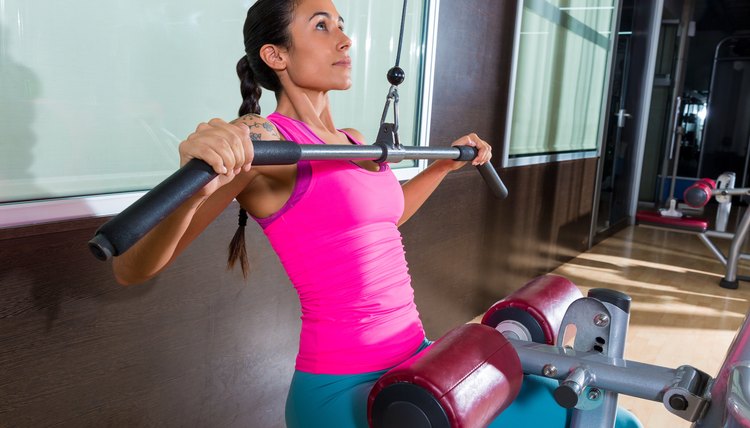
The only way to effectively target this muscle is the lat pulldown, pictured above. If you don’t have a gym membership, you can also perform this move standing or sitting with a resistance band anchored above you. (Fitness expert Nick Tumminello demonstrates a great resistance band option here.)
This move with a wide, overhand grip gives your guy that gorgeous cobra-shaped "V" back by increasing the breadth of his upper back and shoulders. However, most women I work with prefer to have a lean and narrow back to avoid bra strap overhang.
A small tweak of hand placement puts more emphasis on the medial (middle) back muscles and de-emphasizes the outer aspects of the lats. This variation is known as a reverse grip pulldown.
How to do it: When you set up to begin this move, grasp the bar with an underhand grip that is the same width as your shoulders. This means that when you grasp the bar, your palms will be facing the front of your shoulders.
Watch me demonstrate how to do the reverse grip pulldown in the video below:
Some women do prefer a wide back because it looks super athletic. If you want this look, the traditional overhand, wide grip works best.
3. You may want to nix the bench press — and do this instead.
As with the lat pulldown, your hand position during the bench press emphasizes certain aspects of the chest muscles. The traditional grip — overhand at a width that is wider than your shoulders — emphasizes width in your chest. This is a very athletic look that comes with great physical ability.
The drawback for some women: The traditional bench press emphasizes the widest angle of your pectoral muscles, causing any body fat that you may have to push outward. If you’re trying to avoid tank top overhang, this move is not ideal.
On the other hand, if your goal is to be super strong, fit and athletic, this move is very important to develop upper body pushing strength. Personally, I don’t mind having some extra smoosh around my chest and bra strap because I find a great sense of accomplishment when I am super strong.
Other women want to develop just enough strength to feel good and stay injury-free without creating too much muscle around the chest. If this speaks to you, you want to approach chest work differently. Instead of doing a press, I have women focus on using their chest muscles in a pulling approach.
Specifically, any version of a chest fly will improve upper body function and will minimize pectoral size increases in women. I love the upright seated chest fly machine for this, but a lying dumbbell version works great too. It strengthens the chest and arm muscles without adding significant muscle size.
Your Workout Should Fit Your Personality
After 20 years of working in the gym with women, I notice that the vast majority of us are softer and gentler than most guys. Yes, there are soft and gentle men, and yes, there are aggressive and masculine women! But in general, we women tend to be more sensitive to emotions and more critical of our bodies.
Therefore, I encourage the women I train to approach their workout with a strategic, loving and sensing approach. Pay attention to how you’re feeling. Sometimes you need a fast-paced, aggressive workout, and sometimes you need something more nurturing. (The same advice goes for people of any gender who have a more sensitive, gentle or emotional nature.)
A woman’s body responds best when it is lovingly guided toward what it needs on a given day. Listen to your energy, mood and spirit and allow your workout to follow.
Writer Bio
Holly Perkins is the author of Lift to Get Lean, a strength training guidebook for women, and the founder of Women’s Strength Nation. Holly’s mission is to improve the ratio of women to men strength training in gyms around the world.