
What does fact checked mean?
At SportsRec, we strive to deliver objective content that is accurate and up-to-date. Our team periodically reviews articles in order to ensure content quality. The sources cited below consist of evidence from peer-reviewed journals, prominent medical organizations, academic associations, and government data.
The information contained on this site is for informational purposes only, and should not be used as a substitute for the advice of a professional health care provider. Please check with the appropriate physician regarding health questions and concerns. Although we strive to deliver accurate and up-to-date information, no guarantee to that effect is made.
Do Pullups Work Your Posterior Deltoid?
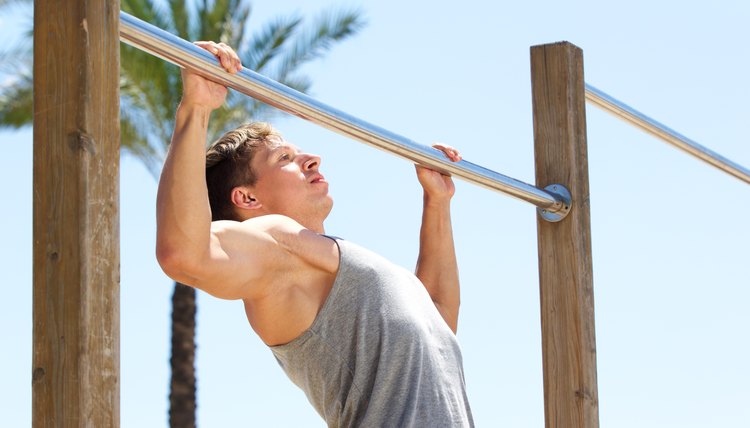
Pullups are a super exercise for training the latissimus dorsi, the broad muscle that lies at the back of the ribs. This total body move doesn't stop there, though. Pullups use most of the major muscles of your upper body, including the posterior deltoid. Always consult your doctor before beginning this or any exercise regimen.
Assisting Muscles
The posterior deltoids, which make up the back of the shoulder, assist the lats as you pull up over the bar. Teres major is another muscle that is part of the scapulohumeral muscle group that, like the deltoid, act on and stabilize the glenohumeral joint of the shoulder during the pullup. Several other muscles on the backside of the body, including the rhomboids and trapezius muscles also assist. Your arms, particularly the forearms and biceps, chest, pectoralis minor and a small muscle around the sides of the neck called the levator scapulae, are worked during a pullup, too.
References
Writer Bio
Andrea Boldt has been in the fitness industry for more than 20 years. A personal trainer, run coach, group fitness instructor and master yoga teacher, she also holds certifications in holistic and fitness nutrition.