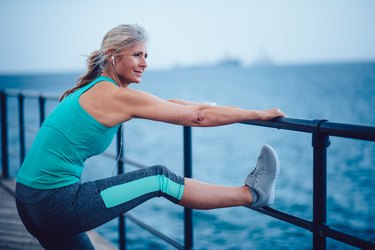
Stretching: It's even more important as we get older, yet something we all neglect to do more often.
"As we age, we lose flexibility in our muscle fibers," Theresa Marko, PT, DPT, a board-certified clinical specialist in orthopedic physical therapy, tells LIVESTRONG.com, "so it's important to stretch to maintain extensibility of the muscles and allow for sufficient joint range of motion."
Video of the Day
On top of that, most people sit too much, and sedentary time typically increases as people get older, Marko says. "All of this sitting makes your hips and knees, specifically your hip flexors, hamstrings and calves very tight," she explains. However, stretching helps prevent tightness.
How to Start a Stretching Routine
Beginning a stretch routine requires some guidance and safety precautions, especially for older adults who may not have stretched or exercised in a while, so Marko recommends seeing a physical therapist.
A physical therapist will evaluate your physical condition and provide stretching recommendations based on your abilities. They can also provide assisted stretching, which is great for people with very limited mobility.
If you can't see a physical therapist for any reason, Marko has a few general tips:
- Begin with five to 10 minutes of stretching. Work your way up as you get used to the new movements.
- Choose two or three stretches to start with and see how your joints respond. Discontinue a stretch if you feel severe pain in your joints (but remember that mild discomfort in your muscles is normal while stretching).
- Don't overdo it by trying to stretch too deeply — respect your current range of motion and give your body time to respond and improve.
- Focus on the main trouble spots: hips, hamstrings, calves and spine.
- Balance skills often diminish with age, so make sure to have a sturdy and supportive anchor, like a chair or wall, to hold onto when you stretch.
Warning
Because osteoarthritis (wear and tear of cartilage between bones) and osteoporosis (bone loss) become more prevalent with age, Marko says, “one must be mindful of the joints and not overstretch, causing excess stress on the joints.” This is particularly true for osteoporosis, as “you don't want to cause an unintended fracture by accident,” she says.
The 7 Best Stretches for Adults Over 60
With those safety tips in mind, here are the best stretches for adults 60 and older. They are simple and don't require any equipment, so you can try them right at home.
Move 1: Wall Calf Stretch
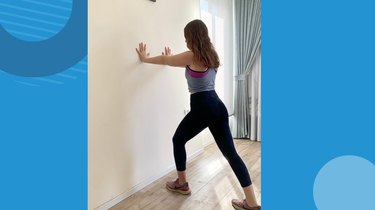
- Standing just shy of one arm’s length away from a wall, place your hands flat on the surface and push your right leg back, bending the left knee for support.
- Keep both feet flat on the floor, making sure the supporting knee does not surpass the toes.
- Push against the wall to feel a stretch down the right leg.
- Hold this stretch for 15 to 30 seconds and then change sides.
Why the Wall Calf Stretch Works
This stretch is crucial for older adults as it can help loosen tight muscles in the calves that could contribute to imbalance and, consequently, a fall, Marko says. In fact, a July 2016 study in the International Journal of Health Sciences suggests that stretching the gastrocnemius (the major muscle in your calves) can significantly improve single-leg balance.
Move 2: Seated Side Stretch
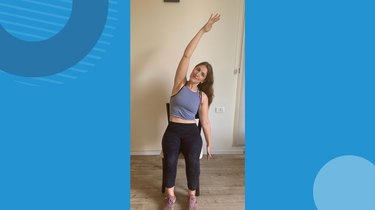
- Sit on a chair with both feet flat on the floor. Take a deep breath in and reach your right arm overhead, stretching away from the body as you exhale.
- Keep your right arm in line with the ribs, and your core lightly engaged to maintain proper form.
- Hold this stretch for 15 to 30 seconds and then change sides.
Why the Seated Side Stretch Works
This stretch is good for the shoulders, says Leoni Jesner, a certified personal trainer with expertise in training older populations. It stretches the intercostal muscles (breathing muscles between the ribs) for better support of each side of the body.
Move 3: Seated Chest Opener
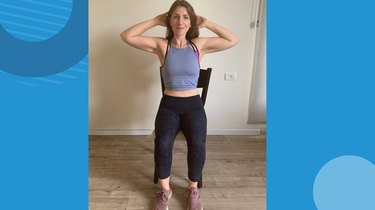
- Sit on a chair with both feet flat on the floor, and gently hold the back of your head with both hands.
- Open your elbows wide to the sides and squeeze your shoulder blades together.
- Keeping your chest proud, neck long and gaze up, roll your shoulders back.
- Hold this stretch for 10 to 15 seconds and repeat for 3 rounds.
Why the Seated Chest Opener Works
“This movement opens and creates space in the front of the body,” Jesner says, “reversing the effects of a rounded shoulder posture and promoting proper spinal alignment.”
Move 4: Seated Hip Stretch
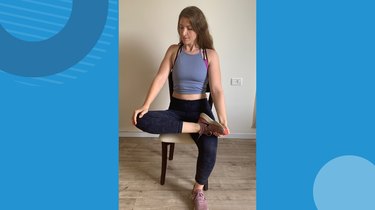
- Sit tall on a chair with your feet hip-width apart and flat on the floor.
- Lift your right ankle and place it on your left thigh, keeping the foot flexed.
- Hold onto the foot and gently press on the right knee until a stretch is felt.
- Hold for a full 30 seconds before switching legs.
Why the Seated Hip Stretch Works
This hip stretch is ideal for relieving tightness and tension in the hip flexors and pelvic area, Jesner says, and it’s great for beginners and older adults because you don’t need much balance to perform it.
Move 5: Neck Stretch
- Stand tall with your feet shoulder-width apart. Drop your chin toward your chest and then slowly extend it back for a few repetitions, keeping the shoulders square.
- Then, do a lateral stretch by gently pulling on the side right of your head to stretch the neck.
- Hold this stretch for 10 to 20 seconds before switching sides.
Why the Neck Stretch Works
Try this stretch to alleviate tension, pain or tightness in your shoulder area, specifically the trapezius muscles, as well as your neck.
Move 6: Seated Knee Hugs
- Sit tall on a chair with both feet flat on the floor.
- Float one knee up high and gently pull it in toward the body with your hands around the knee.
- Hug your knee for a few seconds, and then gently return your foot to the ground.
- Alternate every few seconds between each leg.
Why the Seated Knee Hug Works
“This mobility stretch loosens the hip flexors, promotes better mobility in the hips, stretches the lower back and engages the core as the body stabilizes to balance,” Jesner says. “As you progress in this exercise, the movement can be done from a standing position to further challenge the core.” Dynamic stretching like this can help older adults improve hip range of motion, according to a March 2019 study in the Journal of Sports Science and Medicine.
Move 7: Standing Spine Twist
- Stand with your feet hip-width apart and your core engaged. Stack your hands on top of your elbows at 90-degree angles.
- Keeping your hips forward and square, keep your gaze on your right hand and twist at the waist to achieve a stretch in the spine.
- Return to the center, pause and twist in the other direction. Continue twisting in alternate directions.
Why the Standing Spine Twist Works
The spine twist helps to improve the flexibility of the spine and trunk muscles in both directions, as well as increase pelvic stability, Jesner says, which are important for older adults. An April 2014 study in Clinical Interventions in Aging suggests that spinal flexibility is one of the most important factors in retaining autonomy in old age.
- International Journal of Health Sciences: "Effect of Lower Extremity Stretching Exercises on Balance in Geriatric Population"
- Journal of Sports Science and Medicine: "Effects of Dynamic Stretching with Different Loads on Hip Joint Range of Motion in the Elderly"
- Clinical Interventions in Aging: "Changes in Spinal Range of Motion After a Flexibility Training Program in Elderly Women"
- The Mayo Clinic: "Osteoarthritis"
- The Mayo Clinic: "Osteoporosis"
- Teach Me Anatomy: "Thoracic Muscles"
- Physiopedia: "Trapezius"
Was this article helpful?
150 Characters Max
0/150
Thank you for sharing!
Thank you for your feedback!