Managing irritable bowel syndrome (IBS) can be challenging at times. If you have experienced any negative side effects (think terrible diarrhea, for one), you'll do anything in your power to avoid it. Vegetables can be tricky, but there are some veggies that are generally fine to eat.
IBS is a gastrointestinal disorder marked by chronic abdominal pain or discomfort, and bowel changes such as diarrhea or constipation, notes the National Institute of Diabetes and Digestive and Kidney Diseases (NIDDK). Up to 70 percent of people with IBS associate symptom onset or exacerbation with certain foods, according to a March 2014 review in Gastroenterology & Hepatology. The good news is that there's some solid evidence on food links and IBS symptoms.
Video of the Day
Video of the Day
What to Know About FODMAPs
Along with other dietary restrictions, your doctor may recommend restricting foods with what are called FODMAPs — fermentable carbohydrates found in many foods, from fruits and veggies to wheat and dairy — as it appears to help people avoid IBS symptoms.
For instance, a meta-analysis of 12 studies, published in Nutrients in August 2017, showed that a low-FODMAP diet had a favorable impact on IBS symptoms, especially abdominal pain and bloating. Another meta-analysis, published in April 2019 in Complementary Therapies in Medicine, also showed that the low-FODMAP diet, done for short periods, can lessen IBS symptoms — but also noted that prolonged use could be harmful.
In addition, NIDDK highlights a low-FODMAP diet as one of three main dietary strategies that doctors may recommend to IBS patients.
More studies are needed to see whether low-FODMAP diets are superior to standard IBS diets in the long run, but it does appear that certain veggies, high in FODMAP, are more likely to cause your IBS symptoms and that short-term reduction may be helpful.
Which Vegetables Can I Eat?
Wondering whether a sweet potato, carrot or tomato is on the "OK" list? Here are some low-FODMAP veggie options that may be easy to tolerate:
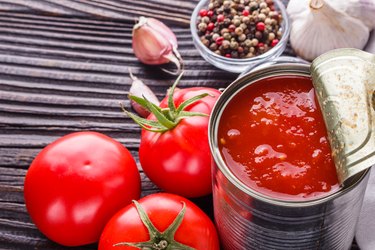
- Tomatoes. If you love this summer fruit, you'll be glad to learn that Monash University categorizes fresh and canned tomatoes as low in FODMAPs. However, sun-dried tomatoes, tomato paste and ketchup have excess fructose, and therefore consumption may trigger unwanted symptoms.
- Carrots. Like tomatoes, carrots are categorized by Monash University in the low FODMAP category. Carrots are a versatile and satisfying vegetable that should be tolerated relatively well.
- Sweet potatoes. If you are a sweet potato lover, the good news is the authors of a review article in Current Gastroenterology Reports, published in January 2014, note that sweet potatoes are considered low in FODMAPs.
What to Avoid
You may be relieved to learn that you don't have to avoid all vegetables when trying to manage IBS symptoms. Vegetables are an important source of vitamins, minerals and antioxidants, so avoiding all veggies may leave some nutrition gaps in your diet.
But, certain vegetables are in the high-FODMAP category, according to Monash University, which offers an app with a FODMAP food database.
Some of the vegetables classified as high FODMAP, according to Monash University — and the ones you may want to avoid in the short-term — include:
- Artichoke
- Garlic
- Onion
- Asparagus
- Mushrooms
- Sugar snap peas
The Bottom Line
Not everyone with IBS needs to avoid high-FODMAP foods for the rest of their lives. Health care experts often recommend cycling these foods out of the diet temporarily.
"During phase 1, people should avoid high-FODMAP foods and stick to low-FODMAP servings of foods for two to six weeks," explains Rachelle Mallick, RDN, a dietitian in private practice in Chicago. She says this phase should be "long enough to see improvement in symptoms while minimizing the amount of time on a restrictive diet." After those first few weeks, reintroducing foods one at a time to determine if it triggers symptoms is what Mallick explains to be a typical protocol.
So — don't give up completely on high-FODMAP veggies. Just take a break from them.
- Rachelle Mallick, MS, RD, LD, owner, The Food Therapist, Chicago, Ill.
- National Institute of Diabetes and Digestive and Kidney Diseases: “Irritable Bowel Syndrome (IBS)”
- Complementary Therapies in Medicine: “Probiotics, Prebiotics, and Low Fodmap Diet for Irritable Bowel Syndrome - What Is the Current Evidence?”
- Current Gastroenterology Reports: “Dietary Fructose Intolerance, Fructan Intolerance and FODMAPs”
- Gastroenterology & Hepatology: “Irritable Bowel Syndrome: The Role of Food in Pathogenesis and Management”
- Monash University: “About FODMAPs and IBS"
- Nutrients: “Low-FODMAP Diet Improves Irritable Bowel Syndrome Symptoms: A Meta-Analysis”
Is this an emergency? If you are experiencing serious medical symptoms, please see the National Library of Medicine’s list of signs you need emergency medical attention or call 911.