
Do Squat Exercises Make Your Butt Bigger or Smaller?
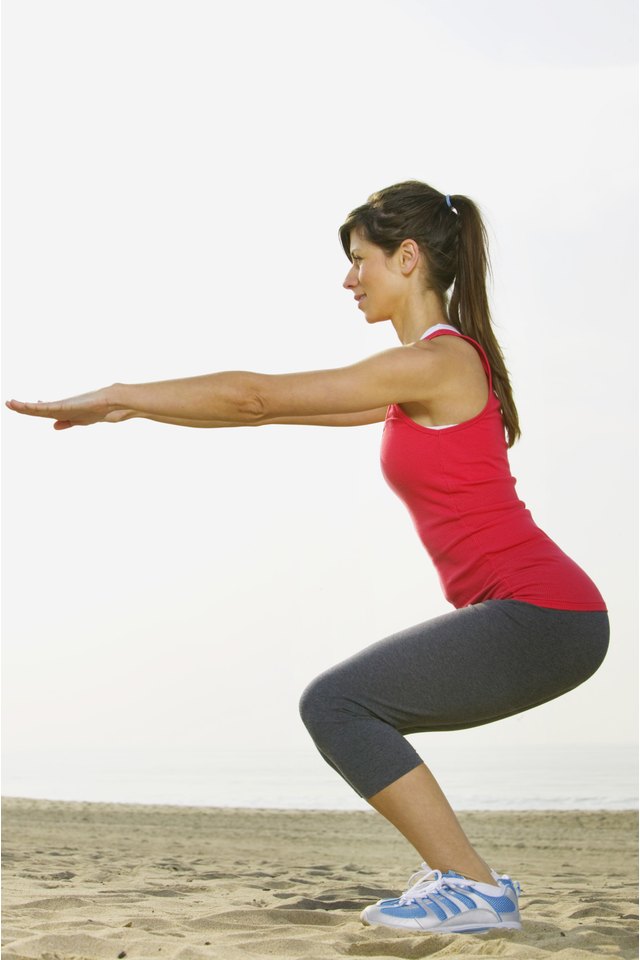
Squatting has the ability to make your butt bigger or smaller, depending on how you're squatting. More often than not, squatting will really just shape up your glutes, making them firmer instead of bigger or smaller. If you are losing body fat on top of performing squats, then your butt will likely shrink. If your glutes are building muscle, however, then your butt will appear larger.
Muscle Involvement
Squatting works your entire lower body. Your quadriceps, hamstrings, glutes and calves all have to work to perform a squat. If your feet are narrow, then the squat will target your outer hips as well. With a wider stance, your inner thighs will work harder. If you push into your heels as you stand up, this will target your glutes more efficiently
Body Weight vs. Weights
Body weight exercises are not as efficient in building muscle as exercises performed with weights. Using just body weight, though, will help improve muscle endurance and will still make you stronger. Doing body weight squats will help tone and build the muscle in your glutes, but doing weighted squats will help make your butt bigger.
Bigger Vs. Smaller
You can tailor your squats to your goals. If you would like a bigger butt, then do weighted squats two times a week. If you would like a smaller butt, focus largely on losing body fat by doing cardio and overall strength training, and incorporating squats to aid in developing a shapelier butt. Firmer, tighter muscles will typically appear slimmer and more toned.
Squat Form
A typical squat starts with feet shoulder-distance apart and toes pointing very slightly outward. Keeping your back straight and your head up, start to sit back, as if you were sitting in a chair. Your heels should remain flat and your thighs should traditionally come parallel to the floor, or lower. The lower you squat, the more muscle involvement you'll get.
Writer Bio
Jenna Morris began writing in 2010 for various websites. She holds a Bachelor of Fine Arts in graphic design from Columbia College Chicago and in 2007 she became a certified yoga instructor and NASM-certified personal trainer.