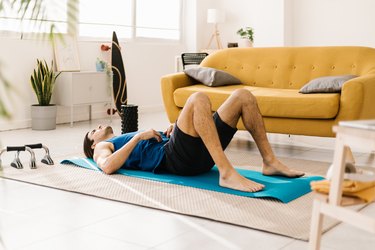
If you exercise regularly, there's a good chance you've skipped an occasional workout because you're just too tired to even stand up. Don't worry. Being too tired to exercise due to a hectic schedule, lack of sleep or less than adequate nutrition happens to all of us.
So, should you skip your workout to sleep, or should you power through your exhaustion and just get it over with?
Video of the Day
Video of the Day
Surprisingly, you might find that a trip to the gym for your favorite boot camp or spin class is just what your body needs. But the real answer depends on how well you've been sleeping lately.
There's a critical difference between feeling lazy and being profoundly mentally and physically exhausted or ill. Knowing the difference is key when it comes to deciding whether to go to the gym or get some much-needed shut-eye.
Below, we tackle the age-old question: Should I go to the gym if I'm tired or feel fatigued?
Benefits of Exercising When Tired
Should you exercise when you feel run down? Keep in mind that if you're just feeling a tad sleepy and listless (and you're not sleep deprived or ill), exercise can work wonders on your energy levels. Physical activity helps your body produce more endorphins, gives you more energy throughout the day, and helps you focus and work more efficiently.
How Exercise Boosts Energy
According to the Mayo Clinic, regular physical activity can boost your energy. One reason you notice an increase in energy from exercise is because it helps your cardiovascular system work more efficiently. This can lead to improvements in your health and an increase in energy levels.
Plus, when you exercise, your body releases the "feel good" hormone called serotonin — in response to increased activity. And when you commit to a long-term plan of regular exercise, you may find that you sleep better, according to Johns Hopkins Medicine, which means you're less likely to feel fatigued the next day.
How Exercise Helps Reduce Stress
Stress, fatigue and exercise all contribute to feeling too tired to work out. If you're tired from stress, a workout can help relieve your symptoms. A good workout can also help you feel more relaxed and full of energy.
In addition, the mental health benefits of exercise can help reduce stress, according to the Mayo Clinic, which may reduce your feelings of fatigue. As a helpful aside, exercise can also combat the sleep problems that often accompany stress.
Warning
If you habitually can't sleep or feel fatigued even when you've slept well, schedule an appointment with your doctor. Certain sleep disorders and chronic fatigue syndrome can have a profound impact on your energy levels throughout the day, and time at the gym rarely helps if you feel tired for these reasons and actually can exacerbate your tiredness.
When to Skip a Workout
Sometimes, a challenging cardio routine or other intense sweat session can be detrimental to your health. If you're truly sleep deprived and on the tired train, it may not actually be safe for you to exercise. If you're working out when you're super exhausted, you could risk getting careless and doing real harm to yourself.
According to a 2017 article in Current Sports Medicine Reports, getting sufficient sleep helps improve athletic performance, alertness and mood. In other words, if you haven't been getting the National Sleep Foundation's recommended seven to nine hours of sleep per night and you're feeling legitimately exhausted, it's probably best to skip your workout and try to catch up on your zzz's.
But if your feelings of tiredness stem from an overly full schedule, you might want to skip that session and give yourself permission to exercise tomorrow.
But before you make this a habit, remember that it doesn't mean you should stop exercising. Instead, adjust your calendar to make room for fitness in your day. Some helpful tips:
1. Work Out Early
When the time constraints of all of your daily responsibilities begin to compound near the end of the day, it's all too easy to place exercise on the back burner. After all, feeling too tired to work out after work — especially when you likely have a lot of things to care of at home — is common.
That's why, if it works for your schedule, exercising in the morning has the advantage. Getting it done as soon as you wake up means it's out of the way and you don't have excuses as far as stress and fatigue from your day.
As an added bonus, exercising first thing in the morning can help give you a burst of energy to start your day properly.
2. Sneak in Exercise
Exercise doesn't always have to take place in a formal setting. If you find that you're too tired to make it to the gym or exercise on your own, make a commitment to achieve more physical activity throughout the day through other means. Maybe you don't climb on the stair climbing machine but take the stairs at the office.
You may be too tired for the treadmill, but parking far away from the grocery store and walking briskly can help you reach your aerobic activity goals for the day. Give yourself a break by skipping a workout, but ensure that you don't allow yourself to become inactive all day.
And if your energy levels don't perk up, it might be time to talk with your doctor about any underlying health conditions that are causing you to feel tired.
What to Do Instead
If you're too tired for an intense, cardio-heavy workout, it's OK to turn to a light, low-impact, safe exercise that can still provide an energy boost. Yoga is one of the best workouts for when you're sleepy — it's low impact and you can still reap some serious health benefits like lowered blood pressure, reduced stress levels and improved emotional and mental wellness, according to Piedmont Healthcare.
Another great workout alternative is walking. A brisk 30-minute walk around your neighborhood has wonderful cardiovascular benefits. Walking "improves cardiac risk factors such as cholesterol, blood pressure, diabetes, obesity, vascular stiffness and inflammation, and mental stress," according to Harvard Health Publishing. Plus, breathing in the fresh air is a wonderful natural pick-me-up.
Tip
When you feel too tired to hop on the treadmill for a half hour or to take an hour-long aerobics class after work, opt for just 15 minutes of exercise. You may find that when the 15 minutes are up, you actually have the energy to finish your workout strong. If you don't, you at least got a shortened version of your workout into your schedule and you can try a full workout the next day instead.
The Bottom Line
You know your body better than anyone: If you're not getting quality sleep or you're sick, consider skipping your next gym session. Otherwise, working out when fatigued can help you feel more energized and ready to take on the day.
- Harvard Health Publishing: Your Steps to Health
- Current Sports Medicine Reports: "Sleep and Athletic Performance"
- National Sleep Foundation: "How Much Sleep Do We Really Need?"
- Piedmont Healthcare: "The health benefits of yoga"
- American Council on Exercise: "Increase Energy Levels and Cure Fatigue Through Exercise"
- Mayo Clinic: "Exercise: 7 benefits of regular physical activity"
- Johns Hopkins Medicine: "Exercising for Better Sleep"
- Mayo Clinic: "Depression and anxiety: Exercise eases symptoms"