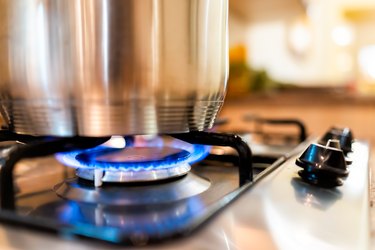
If you use a gas stove in your kitchen, chances are, it's powered by natural gas rather than propane.
"Propane is more portable, which is why it's used a lot for barbecues, camping stoves and food trucks," explains professional chef and former restaurant owner Sylvia Fountaine, the CEO and founder of Feasting at Home.
Video of the Day
Video of the Day
But, hook up a propane tank on your property, and you can use the propane to fuel your kitchen's range, Fountaine says.
If you're considering a new gas-powered stove, here's what you need to know.
What’s the Difference Between Gas and Propane?
First, some background on these types of gas:
Propane gas is a byproduct that occurs through the processing of natural gas, according to the Propane Education & Research Council. Propane is also sometimes referred to as liquefied petroleum gas (LPG).
In rural areas and in mobile homes, propane is a more common energy source as a natural gas hookup may not be available, per the National Energy Education Development (NEED). Typically, a home powered through propane will have a tank outside with up to a thousand gallons of liquid propane stored within, according to NEED.
Natural gas, in contrast, is made up of several gasses, primarily methane, according to the U.S. Energy Information Administration (EIA).
While natural gas is distributed through a centralized pipeline network, propane is almost always sold in tanks of various sizes.
4 Differences Between a Stove Using Natural Gas and Propane
1. Propane Delivers High Heat, Fast
"A propane stove can reach higher temperatures faster than natural gas," Fountaine says. But, she adds, "there's a catch: It all depends on the capabilities of your stove."
That is, your stove will only get as hot as it's designed to get, she says.
If you're used to natural gas and switch to propane, you might find that your pans heat up faster, Fountaine says. But other than that, you might not notice much of a difference at all, she says.
"In a practical sense, the cooking difference between propane and natural gas is insignificant," Fountaine says.
2. Natural Gas Is Likely More Familiar
"The real advantage to cooking with gas flame is that it is more common than propane stoves, so you are likely more accustomed to it," Fountaine says. That is, you know what size flame you need for everything from frying onions to reheating pasta sauce.
"The gas itself doesn't affect the cooking, but it can affect the technique of the cook if they are unfamiliar with either gas or propane," Fountaine says.
If you've used a propane-fueled cooking appliance, it's very likely happened outside. Most propane stoves are built for outdoor use, whether as grills or portable cook stoves.
3. Both Gas and Propane Tend to Be Cheaper Than Electric
In general, gas — whether propane or natural gas — is cheaper than electricity, Fountaine says.
But prices can fluctuate greatly based on where you live, the season and many other factors. And, while natural gas may look cheaper, keep in mind that propane is more efficient (that is, you'll need less of it), which could make it cheaper overall, per Santa Energy.
There's another advantage that both propane and natural gas provide: You don't need to be hooked up to the power grid, Fountaine says. If you live in an area with frequent electricity outages, this could be a big perk.
4. Natural Gas Is Easier and Offers More Options
Because it's more common for a gas stove to use natural gas, and not propane, you'll have more stove options available if you opt for natural gas, Fountaine says.
She recommends gas over propane, noting "most urban residential areas have a gas line installed already."
How Can You Know if Your Stove Uses Propane or Natural Gas?
Look at the manual that came with your appliance or check the manufacturer's label on the stove itself to see if it's intended for use with propane or natural gas, Fountaine says.
"If you look at the fuel jets, there is a size and a number stamped on them," she says — you can contact the manufacturer to find out if those numbers indicate that the stove is for use with propane or natural gas.
Stoves are not interchangeable with these two types of fuel.
"It is generally not recommended to use natural gas in a propane stove or vice versa, though conversion kits exist," Fountaine says. If you do want to use one of these kits, seek out an expert, Fountaine recommends. Converting your stove is not a DIY-type project.
Safety Considerations
"Both propane and natural gas can be hazardous to your health if there isn't proper ventilation installed above your home stove," Fountaine says.
In recent years, some cities, such as New York and Berkeley, have issued ordinances preventing gas stoves from being added to newly constructed buildings. That's due to increased awareness about the potential health risks associated with gas stoves — using them leads to the release of pollutants and are linked to a risk of developing asthma in children, per the California Public Interest Research Group.
If you are using a gas stove, always turn on your range hood while cooking, and if possible, opt for the back burners because the range hood exhausts this area better, according to the California Air Resources Board (ARB). If you don't have a hood, you can use wall or ceiling exhausts or open up windows and doors for better airflow, per the ARB.
Warning
Burning fuel (in anything, like a generator, a car or a stove) leads to carbon monoxide, which can make you ill or even be deadly, according to the Centers for Disease Control and Prevention (CDC). To keep yourself safe, install a carbon monoxide detector and schedule an annual service review of gas-burning appliances each year, per the CDC.
Choose What’s Right for You
"Whether you choose propane or natural gas will entirely depend on what is available in your area and what appliances are available for purchase," Fountaine says.
That might mean that urban dwellers will opt for natural gas, while people in more rural areas may choose propane, she says.
"The quality of cooking will depend a lot more on the techniques of the cook," Fountaine says — not the type of gas used. Her advice: "Focus on the features you want in an appliance, and what option will suit your budget including installing proper ventilation in your home."
- Propane Education & Research Council: "What is propane gas?"
- National Energy Education Development: "Propane"
- U.S. Energy Information Administration: "Natural gas explained"
- Santa Energy: "Propane Vs. Natural Gas: A Comparison For Homeowners"
- California Public Interest Research Group: "GAS STOVES: A HIDDEN HEALTH RISK IN PLAIN SIGHT"
- California Air Resources Board: "Indoor Air Pollution from Cooking"
- Centers for Disease Control and Prevention: "Carbon Monoxide Poisoning"
- American Petroleum Institute: Natural Gas