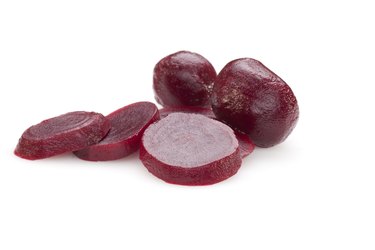
Seasonally, it's always better to buy fresh, but canned vegetables, like canned beets, also make a nutritious option, says the Academy of Nutrition and Dietetics. Canned beets are picked and packed when they are at their peak and retain much of their nutritional value. They may be high in sodium, however. Knowing the nutritional facts for canned beets can help you determine how they might fit into your healthy meal plan.
Low-Calorie Veggie
Video of the Day
Canned beets are a low-calorie vegetable, with 53 calories per 1-cup of sliced beets. Not only are canned beets low in calories, but they also have a large serving size. When it comes to feeling full, how much you eat counts more than the number of calories. If you're following a low-calorie diet for weight loss, canned beets make a healthy addition to your diet because they satisfy your hunger while helping you stay within your calorie limits.
Video of the Day
Carbs, Protein and Fat
Most of the calories in the canned beets come from its carbohydrate content. A 1-cup serving of canned sliced beets contains 12 grams of carbs, 1.6 grams of protein and 0.2 grams of fat. In addition to being a good source of carbs, the canned beets are also a good source of fiber, which is a type of carbohydrate your body cannot digest. A 1-cup serving of the sliced beets contains 3 grams of fiber. Getting more fiber in your diet might help lower your risk of diabetes and heart disease. It also keeps you feeling full, which might help those following a lower-calorie diet. The publication "Dietary Guidelines for Americans, 2010" recommends that women get 25 grams of fiber a day and men get 38 grams.
Vitamins and Minerals
Canned beets can help you meet some of your daily vitamin and mineral needs, including iron and folate. A 1-cup serving of sliced canned beets contains 3 milligrams of iron, meeting 17 percent of the daily value for iron. Iron is necessary for transporting oxygen throughout your body. Canned beets are also a good source of folate, meeting 13 percent of the daily value in a 1-cup serving. Women of childbearing age need adequate intakes of folate to prevent birth defects in their children.
High in Sodium
While canned beets are a good source of a number of nutrients that keep you healthy, they are also a source of sodium. A 1-cup serving of canned sliced beets contains 378 milligrams of sodium. High intakes of sodium increase your risk of high blood pressure, and it is recommended that you limit your intake to less than 2,300 milligrams a day, or less than 1,500 milligrams if you already have high blood pressure. The Academy of Nutrition and Dietetics says you might be able to reduce the amount of sodium in canned vegetables by 50 percent if you rinse them in water before eating.
BPA: The Endocrine Disruptor
As a canned food, the beets are a potential source of bisphenol A, or BPA, which is a synthetic form of estrogen that disrupts your hormonal system. Even small exposure to BPA might increase your risk of breast cancer, prostate cancer, type-2 diabetes and metabolic disorders, according to the Breast Cancer Fund, which recommends you limit your exposure by eliminating canned foods from your diet.
- Academy of Nutrition and Dietetics: What's Best? Fresh, Frozen or Canned Vegetables?
- Canned Food Alliance: Nutritional Comparison of Fresh, Frozen and Canned Fruits and Vegetables
- USDA National Nutrient Database for Standard Reference: Beets, Canned, Drained, Solids
- Centers for Disease Control and Prevention: Eat More, Weigh Less? How to Manage Your Weight Without Being Hungry
- U.S. Department of Agriculture & U.S. Department of Health and Human Services: Dietary Guidelines for Americans, 2010
- Office of Dietary Supplements: Iron
- Breast Cancer Fund: Bisphenol A (BPA)
- Office of Dietary Supplements: Folate