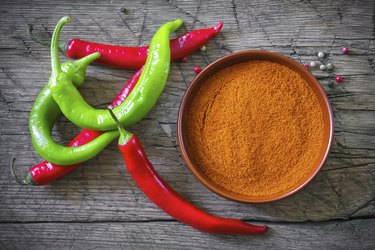
Your gallbladder is a small organ near your liver that stores, concentrates and releases bile into your small intestine. Bile is used to digest fat into fatty acids, which your body can utilize. Spicy foods can irritate an already-inflamed gallbladder or cause problems in people without gallbladders but it depends on the person. Spicy foods should not negatively affect healthy gallbladders, though your stomach may not react well to them. Consult with your doctor if you suspect a gallbladder problem or are experiencing pain or other symptoms from eating food, spicy or otherwise.
Your Gallbladder
Video of the Day
Your gallbladder is a hollow organ about the size of a kiwi found just below your liver on the right side of your abdomen. It receives bile salts from your liver via the hepatic duct and then concentrates it before releasing it into your duodenum, which is the initial part of your small intestines. Bile emulsifies fat to assist in its digestion. It is released when fatty food enters the digestive tract. This causes the secretion of cholecystokinin, which signals the gallbladder to contract slightly and push out an appropriate amount of bile, according to Sareen Gropper, author of "Advanced Nutrition and Human Metabolism." The medical community commonly believes that surgical removal of the gallbladder is usually easily tolerated.
Video of the Day
Gallbladder Symptoms
Due to poor dietary habits, obesity, hormonal changes, liver disease, alcoholism and other factors, your gallbladder can develop gallstones and become inflamed and painful. Gallstones are precipitates of bile and cholesterol that can clog ducts and cause dysfunction and symptoms, which sometimes require hospitalization and gallbladder removal, a procedure known as a cholecystectomy. Most gallbladder symptoms flare up after fatty or spicy meals or consumption of alcohol and include intense abdominal pain described as burning and sharp, according to the "Complete Guide to Symptoms, Illness and Surgery" by Dr. H. Winter Griffith. Gallbladder attacks often include bouts of nausea, vomiting and diarrhea.
Spicy Foods
Not all spices cause acidity or inflammation and some are even taken as anti-inflammatory remedies. For example, turmeric powder, often found in curry dishes, contains compounds helpful for some people with digestive problems and inflammatory conditions such as arthritis, according to "The New Healing Herbs" by Michael Castleman. However, everyone reacts differently to food; thus, some dishes containing red or black pepper can irritate some with gallbladder disease or others who have lost their gallbladders. Even if you tolerated spicy foods for many years, be cautious with them if you develop a gallbladder problem or have gallbladder surgery.
Recommended Diet
If you suspect a gallbladder problem, eliminating or reducing certain foods may help reduce your symptoms. If you suffer gallbladder attacks, avoid high-fat foods, spicy foods, refined carbohydrates, alcohol, caffeine and high amounts of dairy products. Instead, eat more fresh fruits and vegetables, whole grains and foods high in fiber, according to Phyllis Balch, author of "Prescription for Nutritional Healing." Be sure and discuss nonsurgical options for gallbladder problems with your primary care physician.