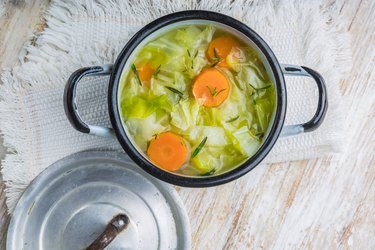
As you can probably guess from the name, the cabbage soup diet involves eating a lot of cabbage soup. The motive? Quick weight loss, of course. (What else could inspire such unfathomable zest for a decidedly bland vegetable?)
It's hard to pinpoint when and where this diet started, exactly, but a 1996 article in The Washington Post noted that it had been around for at least 15 years at that point, placing its inception somewhere in the early 80s or late 70s.
Video of the Day
Video of the Day
In the past, the diet was also referred to as the Sacred Heart Diet or the Mayo Clinic Diet, but it's not associated with either of those health care systems.
Like most fad diets, the cabbage soup diet is short-term and advocates claim it's an easy way to lose weight. But let's take a closer look at what the diet entails and some of the potential drawbacks.
Related Reading
How Does the Cabbage Soup Diet Work?
The original cabbage soup diet lasts for one week, during which you predominately eat cabbage soup, but you're also allowed small amounts of fruit, vegetables meat and brown rice, according to the Mayo Clinic.
If you stick to the diet over the course of a week, it's likely you'll lose weight because you're following a very low-calorie meal plan. Proponents of the diet claim you can lose up to 10 pounds in just seven days.
If that sounds too good to be true, you're right.
Why You Shouldn't Try the Cabbage Soup Diet
1. You'll Lose Mostly Water Weight, Not Fat
When you lose weight quickly over such a short period of time, it's mostly water weight. So while you might feel less bloated, you won't have lost any actual fat.
Our bodies naturally hold onto water in our muscles, or more specifically in our glycogen (energy) stores. When we're not eating enough calories to maintain our weight, we tap into those stores, which in turn releases that bound water, according to the Mayo Clinic.
What does this mean? As soon you go back to eating normally after a week, you'll gain back the water weight as your body replenishes its glycogen stores.
2. It's Too Low in Calories
The cabbage soup diet is low in calories as well as fat and requires you to be focused on what you're eating (and not eating), which may leave you cranky and craving other foods. You may also feel dizzy at times when eating at such a low-calorie level.
One thing the cabbage soup diet does have going for it is that it's centered around a really healthy food — cabbage.
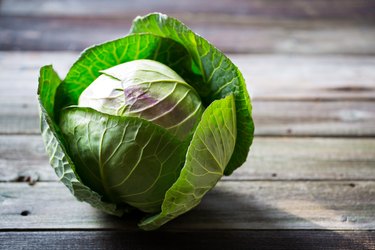
The Health Benefits of Cabbage
1. Supports Weight Loss
Like most vegetables, cabbage can support your weight-loss goals.
Vegetables for the most part are low in calories and fat and typically high in fiber. In fact, a September 2015 PLOS Medicine paper assessed the effect specific fruits and vegetables have on weight change and the researchers found that cruciferous vegetables, including cabbage, have an inverse relationship with weight, more so than leafy greens.
2. Packed With Nutrients
A cup of shredded cabbage has just 22 calories, per the USDA, but is an excellent source of vitamin K (56 percent Daily Value) and vitamin C (36 percent DV), and a good source of folate (10 percent DV). It also provides 2 grams of fiber.
Related Reading
3. Linked to a Lower Risk of Cancer
Cabbage belongs to the brassica family, which also includes Brussels sprouts, broccoli, cauliflower and kale. These veggies contain a compound called glucosinates, which some research has connected to a reduced risk of certain types of cancer (the research is not conclusive, though, according to the National Cancer Institute).
4 Healthy Cabbage Recipes to Try
All in all, cabbage is a great food to add to your weight-loss diet plan. Instead of cabbage soup, though, try these healthy, delicious recipes that showcase the nutrient-rich veggie.
1. Sweet and Sour Acorn Squash with Cabbage
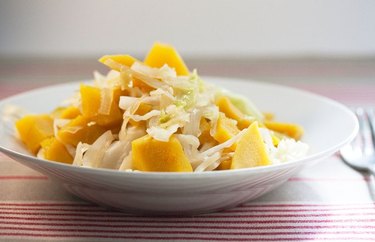
This recipe pairs cabbage with acorn squash, which is rich in beta-carotene. Observational studies suggest diets high in beta-carotene are associated with a reduced risk of cardiovascular disease, according to Oregon State University.
Get the Sweet and Sour Acorn Squash with Cabbage recipe and nutrition info here.
2. Curried Cabbage Pockets
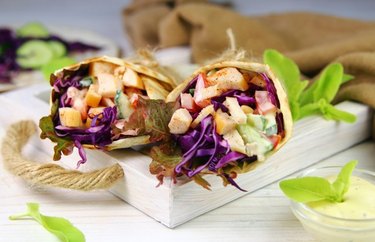
These pitas are pockets of goodness made up of cabbage, garbanzo beans, onion, olive oil and spices, but what's most impressive is that each pita packs 17 grams of fiber.
Most of us are falling way short of our daily fiber needs. In fact, nine out of ten Americans don't get enough fiber, according to a January 2017 study published the American Journal of Lifestyle Medicine.
These pockets, on the other hand, provide 68 percent of women's daily fiber needs and 47 percent of men's, according to the Academy of Nutrition and Dietetics.
Get the Curried Cabbage Pockets recipe and nutrition info here.
3. Grilled Tilapia Tacos with Red Cabbage Slaw
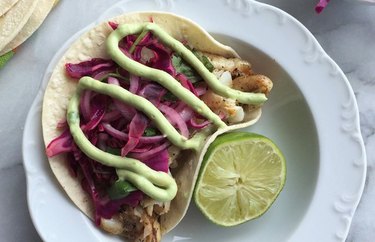
Red cabbage not only adds beautiful color to this otherwise pretty neutral palette, but it also offers up antioxidants, and more than any other type of cabbage at that.
A January 2014 analysis published in the Asian Pacific Journal of Cancer Prevention compared the various types of cabbage — Savoy, Chinese, green heads and red — and found that red cabbage had the greatest antioxidant content.
Get the Grilled Tilapia Tacos with Red Cabbage Slaw recipe and nutrition info here.
4. Crunchy Cabbage-Apple Salad with Tahini Ginger Dressing
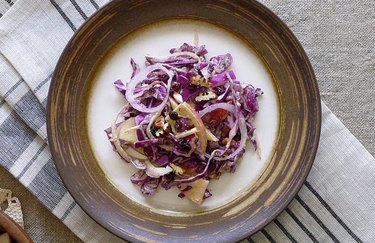
This dish pairs delicious flavors from a plethora of healthy ingredients, including apples, dried currants, pecans, olive oil, tahini, OJ, honey and ginger.
It's high in fat (23 grams per serving) but about 90 percent is the healthy, unsaturated type. Tahini, olive oil and pecans are all rich in these healthy mono- and polyunsaturated fats.
Get the Crunchy Cabbage-Apple Salad with Tahini Ginger Dressing recipe and nutrition info here.
- Washington Post: "The Cabbage Soup Diet"
- Mayo Clinic: "What is the Cabbage Soup Diet? Can it Help Me Lose Weight?"
- European Journal of Applied Physiology: "Relationship Between Muscle Water and Glycogen Recovery After Prolonged Exercise in the Heat in Humans"
- PLOS Medicine: "Changes in Intake of Fruits and Vegetables and Weight Change in United States Men and Women Followed for Up to 24 Years: Analysis from Three Prospective Cohort Studies"
- FoodData Central: "Cabbage, Raw"
- National Cancer Institute: "Cruciferous Vegetables and Cancer Prevention"
- Oregon State University: "Alpha-Carotene, Beta-Carotene, Beta-Cryptoxanthin, Lycopene, Lutein, and Zeaxanthin"
- American Journal of Lifestyle Medicine: "Closing America’s Fiber Intake Gap"
- Academy of Nutrition and Dietetics: "Easy Ways to Boost Fiber in Your Daily Diet"
- Asian Pacific Journal of Cancer Prevention: "Cabbage (Brassica Oleracea L. var. Capitata) Phytochemicals with Antioxidant and Anti-Inflammatory Potential.""
- Mayo Clinic: "Getting past a weight-loss plateau"