
The Best College Fastpitch Softball Bats
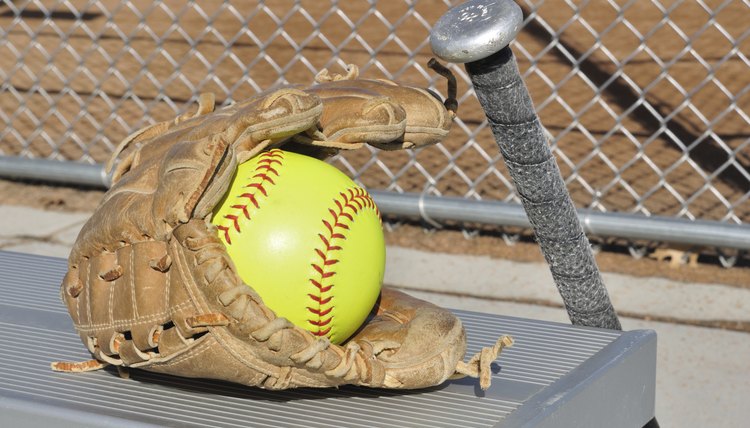
College players can't go to the plate with just any old bat. It not only needs to fit a player's swing and style, but it also needs to be the right size, shape and weight. At JustBats.com, Michele Smith, a two-time Olympic gold medal winner with the U.S. women's softball team, suggests players test out different kinds of bats to find the right one.
Rules of Composition
Aluminum bats used to be the standard for elite fastpitch players, but in the 21st century most use composite bats. As HomerunMonkey.com explains, composite bats are made from layered materials similar to carbon fibers.The site says it's easier for bat makers to achieve proper weight distribution with composite bats. They also have a large sweet spot, and less vibration than the aluminum versions.
Big and Small
Bats usually range from 30 to 34 inches. The best bat length depends to a large extent on a player's height and weight. A chart at HomerunMonkey.com offers general guidelines for players of different sizes. For example, a 5-foot-4 inch hitter who weighs 140 pounds is well-suited to a 32-inch bat. But other factors play a key part in determining the best bat length. For example, there is no substitute for the right feel, which a player can get from a bat that doesn't fit the general guidelines.
Power or Finesse
Fastpitch bats are either endloaded or balanced. As the website The Coach Reviews explains, an endloaded bat is designed for power hitters, with the weight distributed toward the barrel. Players who generate high levels of bat speed can use those to hit the ball harder and farther. Balanced bats over better control, which are best for players with average or below average bat speed. They're likely the best choice for slap hitters.
At the Drop of a Bat
Bat drop is measured by the bat's length minus the weight and expressed as a negative number. So a 32-inch bat that weighs 22 ounces has a drop of minus 10. But a player might not want a heavy bat, especially if she's a control hitter. A long and light bat, with a drop of minus 11, 12 or 13, is likely to be her best bet. Conversely, a power hitter likely is best suited to a heavy bat with a drop of minus 8 or 9.
References
Writer Bio
Jim Thomas has been a freelance writer since 1978. He wrote a book about professional golfers and has written magazine articles about sports, politics, legal issues, travel and business for national and Northwest publications. He received a Juris Doctor from Duke Law School and a Bachelor of Science in political science from Whitman College.