
How to Train for a 20K Bike Race
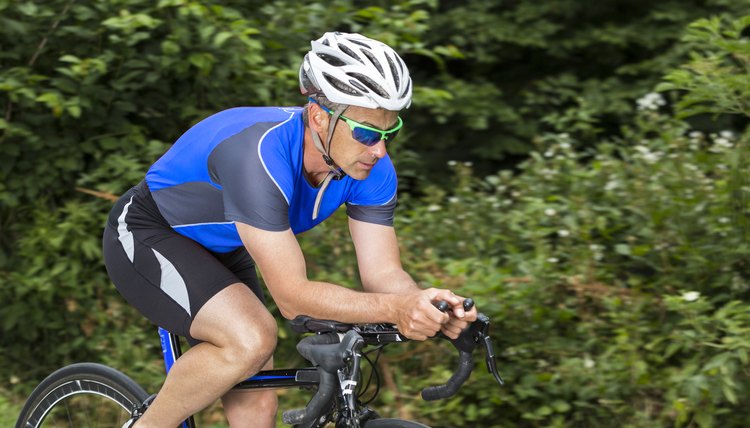
There are two typical events in which you'd be required to race 20 kilometers on a bike: a 20km time trial or the second event of a sprint triathlon. In both races, the goal is simply to perform the ride as quickly as possible. There may be some variation in terrain, as time trials are typically performed on flat, fast courses and triathlons can take place on a variety of terrain, but training plans for the two are relatively simple.
Base Training
Develop a solid cycling base to improve your leg strength and aerobic conditioning. If you've been regularly riding at least 20-kilometer distances at a time for several weeks, you may already be in relatively good shape. If you're new to the sport, invest in a base-building period to prevent injuries down the road. Slowly increase your weekly mileage until you get to the point where you're able to comfortably ride 20 to 30 kilometers at a time, at least three to four days a week.
The Element of Speed
With an established base, you're ready to move on to improving your speed. If you're training for a time trial, speed workouts should be performed three to four days a week, with recover rides and cross training in between. If you're prepping for a sprint tri, you'll have to share your saddle time with swimming and running workouts, so aim to perform speed work on the bike once or twice a week. Plan to spend about 12 weeks preparing for your 20k, with workouts four to six days a week, ranging from 20 to 60 minutes in length.
Speed Workouts
Start with speed workouts that are about 20 minutes in length, and systematically increase the duration of these sessions over your 12-week training program. For example, your first speed workout may include a five-minute warm-up, followed by five minutes of riding at a moderate effort and five minutes at a hard, steady pace. Cool down with five minutes of easy riding. Slowly increase the length of time you spend riding at moderate and hard levels over time and begin to integrate short bursts of maximum, all-out efforts, such as one-minute sprints.
Cross Training
If you're a triathlete, training for the different events of your sport causes you to naturally cross-train, which is great for recovery and improving overall performance on the bike. If you're a time-trial cyclist, you'll need to make an effort to include cross-training activities, such as swimming and running, a couple days a week. Both triathletes and trial racers should include resistance exercises in their training regimen. These workouts can be focused on developing lower-body strength, but emphasis on core, shoulders and back will also help you improve as a cyclist. Try to squeeze in two to three weight-training workouts a week, emphasizing lower weights and higher repetition ranges to avoid excessive muscle gains.
Writer Bio
Jessica Bell has been working in the health and fitness industry since 2002. She has served as a personal trainer and group fitness instructor. Bell holds an M.A. in communications and a B.A. in English.