Food to Avoid While Taking Cialis
Cialis, generic name tadalafil, is a medication prescribed for the treatment of erectile dysfunction in men. Because the medication helps to increase blood flow, it also can be effective reducing symptoms associated with pulmonary artery hypertension including reducing dizziness, shortness of breath and tiredness. While Cialis offers benefits to those taking it, it is important to be aware of foods that could cause adverse reactions when taking it.
If you are experiencing serious medical symptoms, seek emergency treatment immediately.
Grapefruit
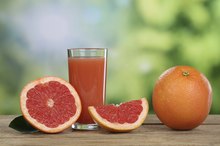
While enjoying a daily glass or half-slice of grapefruit in the morning can be a way to infuse vitamin C into your diet, grapefruit can have harmful effects when you are taking Cialis. This is because grapefruit interferes with an enzyme that is responsible for breaking down your medication. Without the enzyme, Cialis remains in the body longer than intended. This increases the medication’s absorption, which can have toxic effects on the body.
- While enjoying a daily glass or half-slice of grapefruit in the morning can be a way to infuse vitamin C into your diet, grapefruit can have harmful effects when you are taking Cialis.
- This increases the medication’s absorption, which can have toxic effects on the body.
Considerations
Grapefruit & Celexa
Learn More
Because grapefruit juice and Cialis can affect people differently, speak to your physician about the amount of grapefruit juice or grapefruit you typically consume in your daily diet. If your physician advises against drinking grapefruit juice, remember that it takes about 72 hours for grapefruit to leave your system. Taking Cialis before this time has passed after you have consumed grapefruit can cause side effects.
Alcohol
Drinking alcohol while taking Cialis can lead to adverse side effects. Cialis is a blood vessels dilator as is alcohol. When you take Cialis and drink alcohol, your blood vessels can open enough to significantly decrease your blood pressure. This may depend upon the amount of alcohol you are consuming -- alcohol in a moderate amount of about one drink may not interfere with Cialis. Talk to your physician about taking precautions best for your overall health. If you do drink alcohol and observe signs like faster heart rate, dizziness and headache, discontinue alcohol use and see your physician if your symptoms worsen.
- Drinking alcohol while taking Cialis can lead to adverse side effects.
- When you take Cialis and drink alcohol, your blood vessels can open enough to significantly decrease your blood pressure.
Warning
How Alcohol Affects Norvasc
Learn More
While alcohol and grapefruit are two examples of food interactions with Cialis, they are not the only substances that can interact negatively with the medication 1. There are over 200 potential drug interactions with Cialis, meaning it is important to talk with your physician about all vitamins, supplements and herbal medications you may be taking. Examples of medication interactions include taking Cialis with erythromycin, ketoconazole, nitrates, rifampin and doxazosin.
Related Articles

Grapefruit & Celexa
Learn More

How Alcohol Affects Norvasc
Learn More

Can You Eat Grapefruit While Taking Crestor?
Learn More

The Side Effects of Lexapro & Grapefruit
Learn More

Grapefruit & Augmentin
Learn More

Is Ginkgo Biloba Safe While Drinking Alcohol?
Learn More

Does Grapefruit Juice Affect Ramipril?
Learn More

Can I Drink Grapefruit Juice With Wellbutrin?
Learn More

The Effects of Grapefruit on Synthroid
Learn More
Does Drinking Grapefruit Juice Lower Blood Pressure?
Learn More
References
- Drugs.com; Cialis (Tadalafil) Alcohol & Food Interactions; 2011
- PDR Health; Cialis; 2011
- Hatzimouratidis K. A review of the use of tadalafil in the treatment of benign prostatic hyperplasia in men with and without erectile dysfunction. Ther Adv Urol. 2014;6(4):135-47. doi:10.1177/1756287214531639
- Nimeh T, Magnan B, Almallah YZ. Benign Prostatic Hyperplasia: Review of Modern Minimally Invasive Surgical Treatments. Semin Intervent Radiol. 2016;33(3):244-50. doi:10.1055/s-0036-1586148
- Glina S, Roehrborn CG, Esen A, et al. Sexual function in men with lower urinary tract symptoms and prostatic enlargement secondary to benign prostatic hyperplasia: results of a 6-month, randomized, double-blind, placebo-controlled study of tadalafil coadministered with finasteride. J Sex Med. 2015;12(1):129-38. doi:10.1111/jsm.12714
- Mysore V. Finasteride and sexual side effects. Indian Dermatol Online J. 2012;3(1):62-5. doi:10.4103/2229-5178.93496
- Fode M, Sønksen J, McPhee SJ, Ohl DA. Disorders of the Male Reproductive Tract. In: Hammer GD, McPhee SJ. eds. Pathophysiology of Disease: An Introduction to Clinical Medicine, Seventh Edition. New York, NY: McGraw-Hill; 2013.
Writer Bio
Rachel Nall began writing in 2003. She is a former managing editor for custom health publications, including physician journals. She has written for The Associated Press and "Jezebel," "Charleston," "Chatter" and "Reach" magazines. Nall is currently pursuing her Bachelor of Science in Nursing at the University of Tennessee.