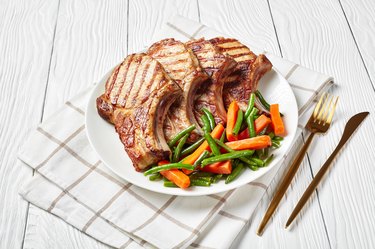
Bacon, ham and pork chops make for tasty meals, but for some people, pig products can cause stomach pain.
If you regularly experience stomach cramps or diarrhea after eating pork, it's possible you have a food allergy or intolerance. Another possibility: The meat you ate may have been undercooked.
Video of the Day
Video of the Day
Signs of Pork Allergy, Causes and Symptoms
According to Food Allergy Research & Education, about 32 million Americans have food allergies. While the most common culprits of food allergies are wheat, dairy, nuts and soy, it's possible (though relatively rare) to be allergic to pork. The American College of Allergy, Asthma & Immunology (ACAAI) reports that the number of pork allergy cases is rising, likely due to better recognition and diagnosis.
Symptoms of a pork allergy are similar to those of any other food allergy. Shortly after eating pig products, someone with an allergy may experience:
- diarrhea
- stomach cramps
- nausea
- vomiting
- tingling or itching in the mouth (called oral allergy syndrome)
- hives
- mouth swelling
- anaphylaxis — a life-threatening reaction resulting in the inability to breathe
People with a pork allergy may also find that the severity of symptoms depends on how the pork was prepared.
"Fresh (undercooked) pork meat or dried and smoked pork products tend to cause more reactions, while well-cooked pork meat causes fewer reactions," says Niket Sonpal, MD, a gastroenterologist in New York City.
If you suspect you're allergic to pork, talk to your doctor or allergist. They can perform blood and skin prick tests to determine whether a pork allergy is behind your symptoms, per the ACAAI.
What Is Pork Intolerance, Causes and Symptoms
While an allergic reaction to pork will generally be severe and near-immediate, an intolerance typically comes on a bit differently.
"Allergies occur when the body reads a component of a food as a dangerous substance and releases chemicals in response that give you the symptoms of an allergy," Dr. Sonpal says. "Intolerances have more to do with the gut and the inability of your gut to process the food."
For this reason, an intolerance to pork won't result in hives or anaphylaxis. However, with a pork intolerance, you may have the following symptoms, according to the Cleveland Clinic:
- diarrhea
- stomach pain
- heartburn
- gas
- bloating
- digestive upset
Diagnosing food intolerances isn't always an exact science. "Because the body's symptoms overlap with other conditions and illnesses, it can sometimes be difficult to diagnose a hypersensitivity to a certain food," Dr. Sonpal says.
To shed light on your situation, he recommends keeping a diary of the foods you've eaten, as well as your symptoms.
Another helpful tool for diagnosing a pork intolerance is an elimination diet. "We refrain from consuming the suspected food — in this case, pork — for a period between 2 to 8 weeks," Dr. Sonpal says. "If symptoms subside, this can be an indication that there is a food intolerance to pork. You can then introduce a small portion of pork into your diet and observe the effects to confirm the intolerance."
While you can undertake an elimination diet on your own, experts say it's best to do so with the guidance of a doctor or dietitian.
Pork and Food Poisoning, Causes and Symptoms
When diarrhea or stomach cramps become a pattern after eating pork, it's logical to consider an allergy or intolerance. However, if you experience these symptoms just once, the more likely culprit is food poisoning from undercooked pork.
Trichinella is a type of roundworm often found in pig meat. When pork isn't cooked to the internal temperature of 145 degrees Fahrenheit or higher, these parasites can survive, causing the following symptoms:
- diarrhea
- nausea
- stomach pain
- fatigue
According to the Mayo Clinic, you could experience more severe side effects, and it takes about a week after eating undercooked pork for these symptoms to appear:
- high fever
- muscle pain and tenderness
- swelling of the eyelids or face
- weakness
- headache
- sensitivity to light
- pink eye
If you get food poisoning from pork, it doesn't mean you can never eat it again. Just be sure to do so safely, cooking it to an appropriate temperature.
Related Reading
- Food Allergy Research & Education: "Living With Food Allergies"
- American College of Allergy, Asthma & Immunology: "Meat Allergy"
- Niket Sonpal, MD, gastroenterologist, assistant clinical professor, Touro College of Medicine, New York City
- Mayo Clinic: "Trichinosis"
- Cleveland Clinic: "Food Problems: Is It an Allergy or Intolerance"
Is this an emergency? If you are experiencing serious medical symptoms, please see the National Library of Medicine’s list of signs you need emergency medical attention or call 911.