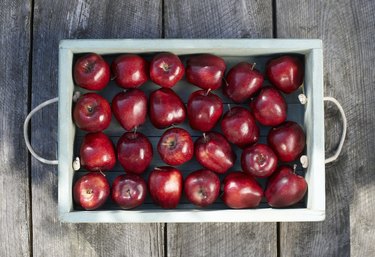
Apples are one of the most nutritious foods you can eat, full of fiber to improve your digestive health and antioxidants that can lower your risk of heart disease. But all those benefits don't do you any good if you often find yourself thinking: Apples make my stomach hurt after I eat them.
The most likely cause of your stomach pain is an allergy or fructose malabsorption. If the former is true, you'll have to give up the fruit; if it's the latter, you may still be able to eat small amounts.
Video of the Day
Video of the Day
Before you make changes to your diet, speak to your doctor about your stomach pains. Read on to learn more reasons why apples are hard to digest.
Read more: 6 Pros and Cons to Eating an Apple a Day
Allergy to Apples
Although a wide variety of fruits can cause reactions in people, apples are among the most common culprits, according to the University of Nebraska-Lincoln website. Apples may contain several different allergens from varying classes of food allergens, so symptoms will vary from individual to individual.
Oral symptoms including itchy and swollen lips, mouth and throat are most common, but stomach pain is also a common symptom. Allergy symptoms tend to appear quite quickly after the food is ingested, within minutes or an hour or two, according to the Food Allergy Research and Education (FARE) website.
How to Manage Apple Allergies
Your doctor can determine whether you have an allergy to apples. If your stomach pain is due to an allergy, you have to stop eating apples. A food allergy is an immune system reaction to a normally harmless substance that has been identified as a threat. In addition to stomach pain, food allergies can cause other symptoms that can be severe and even life-threatening, such as trouble swallowing and obstruction of air passages.
According to the FARE website, symptoms may be less or more severe on different occasions; although you only experience a mild bout of stomach pain after eating an apple last month, your next attack could be more severe. Occasionally, people who are allergic to raw apples can eat cooked apples because heat destroys the allergens.
Malabsorption of Fructose
Fructose is a sugar found naturally in fruits and other foods. It's also widely used in food processing to add sweetness. Some people experience stomach pain after consuming too much of this substance in whole and processed foods because their body is unable to absorb it.
This condition is referred to as fructose malabsorption, which isn't the same as fructose intolerance — an inherited condition often diagnosed in infancy. Its cause is unknown, but several factors may contribute, including bacterial problems in your gut, inflammation and stress.
Dietary Strategies for Malabsorption
Fructose malabsorption is not life-threatening, but it can be uncomfortable and even cause depression in some people. Therefore, it's important to get a diagnosis from your doctor. Having a fructose malabsorption disorder does not mean you have to cut out apples from your diet or all fructose-containing foods. You may be able to eat a few apple slices at a time, or you may find that even a little bit causes problems.