Although most whole meats contain few carbohydrates, there are many processed and pre-prepared meat products that contain carbs. If you are curious about a certain meat carbohydrate amount, read on.
Low-carbohydrate diets, as explained by the Harvard T.H. Chan School of Public Health, can help with weight loss and maintaining weight loss and can also lower triglycerides. If you are interested in a low-carbohydrate diet and want to be conscious of the carbs you are consuming and which high-carb foods to avoid, being aware of how the macronutrient levels change depending on how they are processed and what is added to them is important to know.
Video of the Day
Video of the Day
Read more: Negative Side Effects of a Low-Carb Diet
Does Chicken Have Carbohydrates?
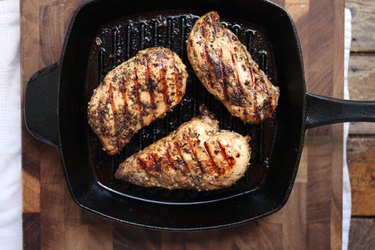
Chicken breast without the skin is an extremely lean, high protein food. It contains 82 percent protein and 18 percent fat with zero carbohydrates. This equates to 267 calories, 54.5 grams of protein and 5.5 grams of fat in a typical 6-ounce serving. Whole chicken breast provides plenty of vitamins and minerals such as iron, magnesium, potassium, selenium and vitamin B12.
If you venture towards deli-style chicken however, the carbohydrates increase slightly. A popular brand of honey glazed deli chicken breast contains 15 percent carbohydrates. In a 200 calorie, 6-ounce serving, this provides 7.9 grams of carbohydrates, 2.8 grams of fat and 36.4 grams of protein. Similarly, mesquite flavor deli chicken breast contains 11 percent carbohydrates, while rotisserie seasoned sliced chicken breast contains 12 percent.
Read more: The "Do Not Eat List" For Low-Carb Diets
The amount of carbohydrates in chicken meat increases drastically when breading is added. In breaded chicken tenders that you would cook at home, the carbohydrates are higher than the protein content at 28 percent and 26 percent respectively. In a 6-ounce serving, they contain 428 calories, 21.9 grams of fat, 29.9 grams of carbohydrates and 27.8 grams of protein. If you are aiming to keep your carbohydrates low, this may be one of the high-carb foods to avoid.
Does Pork Have Carbohydrates?
Pork, just like chicken, is free of carbohydrates in its whole and natural form. Pork tenderloin, for example, is 77 percent protein and 23 percent fat. A 6-ounce, 243 calorie serving provides 6 grams of fat and 44.5 grams of protein.
Pork tenderloin provides 37 percent of your daily value of zinc in the same 6-ounce sized portion. It also contains potassium, iron, magnesium and plenty of vitamin B12. Cured ham and ham roasts are similar, providing plenty of protein with no carbohydrates.
Beware of choosing pork tenderloins packaged with sauces. For instance, teriyaki-style pork tenderloin contains 16 percent carbohydrates, resulting in 11 percent of your daily sugar amount in a 6-ounce serving. You should also be aware of products with a lot of processing, such as ham salad spread. This spread contains 20 percent carbohydrates, resulting in 18 grams in a 6-ounce serving.
Does Beef Have Carbohydrates?
Once again, beef in its whole natural form is free of carbohydrates. A lean strip steak is high in zinc, iron and potassium while providing 90 percent of your daily value for B12 in a 6-ounce, 199 calorie serving. It contains 79 percent protein and 21 percent fat, making it a fantastic choice for those concerned about carbs in meat.
Ground beef is similar in nutrients, but typically contains a higher percentage of fat than strip steak, depending on the ratio you buy. A broiled 93 percent lean patty contains 57 percent protein. If you are making hamburgers at home, remember that a typical hamburger bun is mostly carbohydrates, containing approximately 25 grams of carbohydrates depending on the brand you buy.
Fast-food hamburgers are not as low in carbohydrates or fats as even a homemade burger. A typical single patty fast food hamburger consists of 39 percent carbohydrates, providing 27.3 grams of carbohydrates.
Other processed beef products vary. Regular deli-style roast beef is very low in carbohydrates, with only 3 percent carbohydrates, making it a great choice for people concerned with meat carbohydrate amount. Meanwhile, beef jerky contains 11 percent carbs, depending on the brand. This increases when flavor styles like teriyaki contain added sugars.
Read more: Healthy Low-Carb Eating Plan
How to Eat Low Carb
To make a meal low in carbohydrates, simply choose one of the whole, natural cuts of meat, along with plenty of vegetables and some healthy fats. Amounts will depend on the type of low-carb diet you are on and how many calories you eat.
The Mayo Clinic recommends eating plenty of protein and fats when you are limiting carbs. A typical low-carb diet, they say, contains between 20 to 60 grams of carbohydrates, providing 80 to 240 calories.
Keep in mind, the Mayo Clinic cautions, that the Dietary Guidelines for Americans recommends 45 to 65 percent of your daily calorie intake come from carbohydrates. Speak to your doctor before beginning any weight loss diet, especially if you live with health concerns such as heart disease or diabetes.
Warning
Consult a doctor before beginning any weight loss diet.
- My Food Data: "Nutrition Facts for Lean Chicken Breast (Cooked)"
- My Food Data: "Nutrition Facts for Oscar Mayer Chicken Breast (Honey Glazed)"
- My Food Data: "Nutrition Facts for Chicken Breast Fat-Free Mesquite Flavor Sliced"
- My Food Data: "Nutrition Facts for Chicken Breast Deli Rotisserie Seasoned Sliced Prepackaged"
- My Food Data: "Nutrition Facts for Chicken Breast Tenders Breaded Cooked Microwaved"
- My Food Data: "Nutrition Facts for Roasted Pork Tenderloin"
- My Food Data: "Nutrition Facts for Hormel Always Tender Pork Tenderloin Teriyaki-Flavored"
- My Food Data: "Nutrition Facts for Ham Salad Spread"
- My Food Data: "Nutrition Facts for Broiled Ground Beef Patty (93% Lean)"
- My Food Data: "Nutrition Facts for Lean Grass Fed Beef Strip Steak"
- Harvard T.H. Chan School of Public Health: "Low-Carbohydrate Diets"
- My Food Data: "Nutrition Facts for Pepperidge Farm Hamburger Bun"
- My Food Data: "Nutrition Facts for Fast Food Hamburger"
- My Food Data: "Nutrition Facts for Roast Beef Deli Style Prepackaged Sliced"
- My Food Data: "Nutrition Facts for Snacks Beef Jerky Chopped and Formed"
- Mayo Clinic: "Low-Carb Diet: Can It Help You Lose Weight?"
- USDA: "Dietary Guidelines for Americans, 2015-2020"