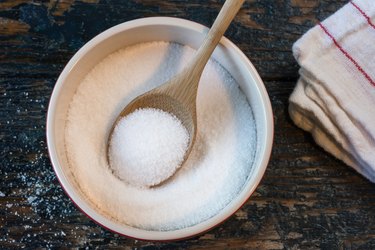
Although the federal government's dietary guidelines say you should keep salt in your diet to less than 2,300 milligrams a day if you're generally healthy, the idea that salt directly causes high blood pressure for healthy people is not a hard-and-fast rule.
"Most healthy people do not need a low-salt diet," says Tamanna Singh, MD, a cardiovascular medicine specialist at the Cleveland Clinic. "Salt is important for active healthy people, especially if they exercise frequently and lose salt through sweating."
Video of the Day
Video of the Day
Still, that doesn't mean you should eat as much salt as you want.
"We still recommend avoiding high-salt foods, and we recommend limiting salt for people with high blood pressure," says Julia Zumpano, RD, a registered dietitian based in Cleveland, Ohio. "For people on a healthy diet, like the Mediterranean diet or a whole foods diet, we don't talk about restricting salt."
Related Reading
The Link Between Diet and Blood Pressure
"Alcohol and caffeine may cause a direct and immediate rise in blood pressure, but foods do not affect your blood pressure quickly. What you need to avoid to prevent hypertension is gaining weight from a diet high in fat and sugar," Zumpano says.
Some people can eat salt with no effect on their blood pressure, but other people may be salt sensitive, according to the Cleveland Clinic. People who are salt sensitive can have increased blood pressure over time because of the way salt affects their kidneys.
Your kidneys need to filter your blood, and for some people, eating too much salt makes their kidneys have to work harder. Over time, this can lead to a buildup of fluid in the blood, and that can cause high blood pressure. Your risk for salt sensitivity increases if you are Black, older or have overweight or obesity, per the Cleveland Clinic.
Salt restriction and a low-salt diet are still important for some people, Zumpano, particularly if you:
- Already have high blood pressure
- Retain fluid (edema) in your legs and ankles
- Have kidney disease
If you have any of these conditions, you should talk to your doctor about how much salt is best in your diet.
The belief that you should drink plenty of red wine because wine is heart-healthy is a myth, according to the American Heart Association. The truth is drinking any alcohol regularly or heavily can raise your blood pressure. Experts recommend limiting alcohol intake to one to two drinks a day.
Related Reading
Other Ways to Manage Blood Pressure
Aim to limit salt to 2,300 milligrams per day. Keep in mind about three-fourths of the salt in your diet comes from processed food and restaurant food. The salt you add to food at the table only accounts for 5 to 10 percent of your intake, according to the U.S. Food & Drug Administration.
To lower your risk for high blood pressure and heart disease, the National Heart, Lung, and Blood Institute (NHLBI) recommends getting:
- More vegetables, fruits and whole grains
- More low-fat dairy, fish, poultry, beans, nuts and vegetable oils
- Fewer foods that are high in saturated fat from animal sources
- No tropical oils like coconut oil or palm oil
- Few sugar-sweetened foods or drinks
In addition to those diet tips, the NHLBI recommends:
- Getting regular exercise
- Maintaining a healthy weight
- Limiting alcohol
- Managing stress
- Quitting smoke
- Getting enough sleep
"For most healthy people, salt does not have a direct effect on blood pressure," Dr. Singh says. "For these people, a healthy lifestyle and a diet that avoids processed foods and saturated fats are more important than a low-salt diet."
Was this article helpful?
150 Characters Max
0/150
Thank you for sharing!
Thank you for your feedback!
Is this an emergency? If you are experiencing serious medical symptoms, please see the National Library of Medicine’s list of signs you need emergency medical attention or call 911.