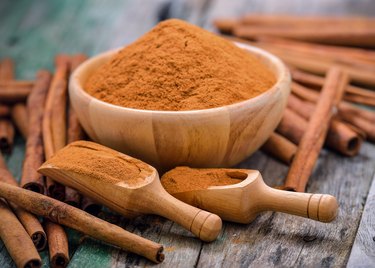
Cinnamon is the warming spice that tastes so wonderful in apple pies, aromatic curries and, of course, naughty-but-nice cinnamon rolls. The spice has purported health benefits, too. However, too much cinnamon can cause problems, so it pays to understand how much is harmful and when to go easy.
Tip
Large amounts of some cinnamon preparations may be bad for the liver and for those on blood-thinning drugs. However, normal dietary use of the spice is safe for most people.
Video of the Day
As the National Center for Complementary and Integrative Health (NCCIH) explains, there are different types of cinnamon, derived from the bark of cinnamon trees. Chinese "cassia" is the most common type of cinnamon sold in North America. Sri Lankan "Ceylon cinnamon — sometimes called true cinnamon — is more common in other countries.
Video of the Day
The Benefits of Cinnamon
The NCCIH says that that studies in humans don't support using cinnamon for any health condition, but acknowledge that the spice has a long history of use in traditional medicine. One area that is currently being looked at in a NCCIH-funded study is whether cinnamon might have an impact on processes involved in multiple sclerosis.
A number of studies have looked at cinnamon and blood sugar control. Taken collectively, these studies seem to indicate a benefit for people with high blood sugar. For example a December 2016 review in the Journal of the Academy of Nutrition and Dietetics suggests cinnamon and its extracts improve glycemic control in people with Type 2 diabetes.
In addition, a November 2017 review in the Journal of Lipidology showed cinnamon supplementation reduced levels of cholesterol and triglycerides in the blood.
Coumarin Levels in Cinnamon
According to the NCCIH, a chemical called coumarin, which is found in varying amounts in different preparations of cassia cinnamon, might cause or worsen liver disease. Cinnamon rarely contains enough coumarin to be toxic, but for those with liver problems, taking large amounts could potentially worsen their condition.
People on warfarin and similar blood-thinning drugs should also take care with cinnamon — according to a report in the June 2015 issue of Pharmacognosy Research, high levels of coumarin from cassia cinnamon can affect blood clotting in those taking these anticoagulants.
An April 2019 review in Clinical Nutrition reported that the most common side effects from cinnamon consumption include gastrointestinal symptoms and allergic reactions. Adverse effects were temporary and resolved themselves naturally.
How Much is Too Much?
There aren't any official guidelines dictating how much is too much cinnamon, but the Mayo Clinic advises to check with your doctor before taking any supplement, including cinnamon supplements, to make sure they're safe for you and won't interfere with any prescription medications.
The Cleveland Clinic adds that if you want to add cinnamon to your diet, the best way is to use it as a food. They recommend sprinkling cinnamon on oatmeal or cook with about one-half teaspoon to one teaspoon of the powder daily.
If you are worried about coumarin levels, seek out Ceylon cinnamon to be on the safe side. For example, a June 2018 study in Scientific World Journal found this variety of cinnamon to be coumarin-free. Ceylon cinnamon sticks lend themselves well to making a cinnamon tea.
On a related note, be leery of the "Cinnamon Challenge." This dare involves people, often children, trying to eat a spoonful of ground cinnamon in under 60 seconds for "fun" without drinking anything alongside. The May 2013 issue of Pediatrics warns the stunt has a high likelihood of damaging the lungs and therefore should be avoided.
- NCCIH: "Cinnamon"
- Journal of the Academy of Nutrition and Dietetics: "Do Cinnamon Supplements Have a Role in Glycemic Control in Type 2 Diabetes? A Narrative Review"
- Journal of Lipidology: "The Effects of Cinnamon Supplementation on Blood Lipid Concentrations: A systematic Review and Meta-Analysis"
- Clinical Nutrition: "Cinnamon: A Systematic Review of Adverse Events"
- Mayo Clinic:"Diabetes treatment: "Can Cinnamon Lower Blood Sugar?"
- Cleveland Clinic: "Can Taking Cinnamon Supplements Lower Your Blood Sugar?"
- Scientific World Journal: "Assessment of Coumarin Levels in Ground Cinnamon Available in the Czech Retail Market"
- Pediatrics: "Ingesting and Aspirating Dry Cinnamon by Children and Adolescents: The “Cinnamon Challenge”"
- Pharmacognosy Research: "Cinnamon: Mystic Powers of a Minute Ingredient"