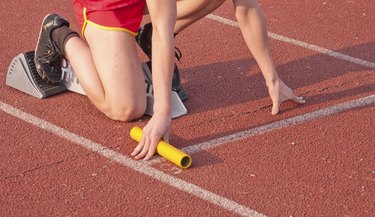
Sprinting is an intense anaerobic workout that recruits more muscle fibers than traditional light or moderate aerobic cardio workouts. Because of this, sprinters often exhibit more muscular, powerful physiques than distance runners. It's impossible to say how long it will take to get ripped doing sprints, but the practice can help you reach your fitness goals by building muscle and burning calories.
Intensity of Sprinting
Video of the Day
The most accurate way to measure exercise intensity is to keep track of your heart rate during a workout. When you exceed 80 percent of your maximum heart rate, you've entered into the anaerobic energy zone. Sprinting falls into this category because it requires intense muscle contractions that can only be fueled through the immediate breakdown of glycogen stores. Oxygen simply isn't enough to keep you going during a sprint.
Video of the Day
Extreme Calorie Burn
The higher your heart rate during exercise, the more calories you'll burn during your workout. If you want to get ripped, you need to strike a balance between building muscle and burning fat. Since you can't sprint for long periods of time, the number of calories you burn during exercise is limited. Luckily, sprinting and other high-intensity forms of training kick off a lengthy period of post-exercise calorie burn, colloquially referred to as an "afterburn effect." In fact, up to 95 percent of the total calories burned from sprinting may occur after you leave the track, according to Dr. Christopher Scott, PHD, an exercise physiology professor at the University of Southern Maine.
Effect on Muscles
Sprinters contract their muscles maximally to reach top speeds, resulting in muscle activation that surpasses most other forms of training. One of the processes that kicks off increased calorie-burn numbers and muscle growth is known as hypertrophy. This process of muscle regeneration occurs when there is damage to satellite cells in the muscle tissue as a result of intense muscle contractions. Additionally, anaerobic training causes your body to ramp up testosterone and growth hormone production, increasing your chances of getting ripped over time.
Cautions and Considerations
The same aspects of sprinting that make it so effective for muscle growth, power and speed also make it a difficult exercise to do with regularity. Since your muscles require time to rest and recover following a sprint, you shouldn't do it on consecutive days. Additionally, you need to round out your training routine with a balanced diet and nutrition program if you want to get as ripped as possible. If you don't consume enough calories, your body may burn muscle when it runs out of fat reserves after an intense workout. Eat something light before you train and eat foods rich in protein following a workout to give your body the building blocks necessary for new muscle.
- Brian Mac Sports Coach: Heart Rate Training Zones
- Scientific American: Why Does Lactic Acid Build Up in Muscles? And Why Does it Cause Soreness?
- BuiltLean.com: Afterburn Effect -- Burn 500+ Calories from 10 Minutes of Exercise?
- MuscleProdigy.com: Sprinting vs. Jogging- The Great Debate
- ScoobysWorkshop.com: Does Cardio Burn Muscle?