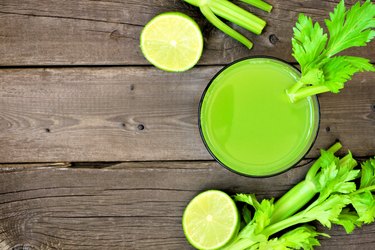
Science makes it clear that there's no single "magic bullet" ingredient for losing body fat — so a celery juice diet doesn't guarantee you results beyond any other diet. But making celery a part of your diet, whether whole or in juice form, can boost your weight-loss efforts.
The Case for Eating Celery
Video of the Day
Although it might not be a "magic" weight-loss food, celery has some good things going for it. According to the USDA, a cup of diced celery has only 19.2 calories while containing a whopping 115 grams of water and almost 2 grams of fiber.
Video of the Day
An analysis published in the September 2015 issue of PLoS Medicine found that increasing fruit and vegetable intake was linked to notable decreases in weight, with the greatest weight loss coming from vegetables that are high in fiber and low in glycemic load.
Although celery wasn't ranked as one of the highest-fiber vegetables, it does have a low glycemic load. It also contains notable amounts of calcium, magnesium, phosphorus, potassium, beta carotene and lutein, along with trace amounts of multiple B vitamins.
All this means that celery can be a meaningful, healthful addition to your meals or a stand-alone snack on its own.
Celery Juice for Weight Loss?
What about consuming celery in juice form? Juices are a quick, easy way to get more vegetables into your diet. But if you buy them, they also require good label-reading skills because many commercial juices have been strained to remove the pulp — also known as the fiber that helps make those foods so healthy.
So if you're drinking a commercial celery juice with no pulp, you're missing out on a lot of the benefits from this healthy vegetable. And even if you run the celery through your own juicer, all the pulp that gets "stuck" in the juicer represents fiber you're missing out on.
If you really prefer drinking your fruits and veggies, take a tip from the Mayo Clinic and put your celery through a blender instead. You'll get all the nutritional benefit of the celery with none of the chewing — and if you don't particularly like celery's taste, you can add in other water-rich fruits and vegetables, such as spinach, cucumber, apples, and even a dash of cayenne pepper or lemon juice for extra flavor.
Read more: 10 Ways to Stay Fit and Healthy
Some Special Considerations
Although celery can be very good for you, it does come with a few caveats. In an interview with UC Davis Health, UC Davis senior dietitian Marie Barone notes that celery contains substances called oxalates, which may cause problems for people who tend to get certain types of kidney stones. She also points that although there are many claims about celery juice reducing inflammation, there is no conclusive scientific proof of this.
Does that mean you shouldn't drink celery juice or, if you're really hardcore, try drinking boiled celery water for weight loss? Not at all, as long as you don't have any medical contraindications or allergies that might keep you from safely consuming celery.
Just keep in mind that a single fruit, vegetable or grain is never the key to successful long-term weight loss. Instead, your weight-loss success hinges on making a string of lifestyle decisions that set you up for success.
Adding more celery to your diet can be one of them, but you should also focus on incorporating other non-starchy, fiber-rich vegetables into your meals, along with plenty of colorful fruits, fiber-rich whole grains and high-quality sources of lean protein. These key elements of a healthy diet help set you up to burn more calories than you take in, especially if you boost your physical activity too.
Ultimately, that very practical balance of more calories out than in is the real key to losing weight and keeping it off over time.
- FoodData Central: "Celery, Raw"
- PLoS Medicine: "Changes in Intake of Fruits and Vegetables and Weight Change in United States Men and Women Followed for Up to 24 Years"
- Mayo Clinic: "Is Juicing Healthier Than Eating Whole Fruits or Vegetables?"
- UC Davis Health: "Celery Juice: Are the Benefits Real?"
- Health.gov: "Key Elements of Healthy Eating Patterns"