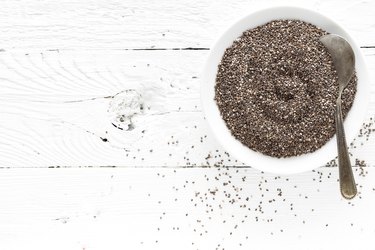
Chia seeds are taking the world by storm. Despite its small size, this superfood is loaded with fiber, protein and heart-healthy fats. It's a perfect addition to vegan and vegetarian diets — and it might even help you lose a few pounds. Most claims about chia seeds are based on anecdotal evidence, though, so what's true and what's hype?
Tip
One serving of chia seeds is 1 ounce or two tablespoons. These tiny seeds are loaded with fiber and may cause digestive discomfort when consumed in excess. Soak them in water or fresh fruit juices — they will absorb the liquid and increase in volume, filling you up quickly.
Video of the Day
What Are Chia Seeds?
These tiny seeds have been used as food and medicine for over 5,500 years. They are harvested from Salvia hispanica, a flowering plant that belongs to the Lamiaceae family. What makes them stand out is their unique nutritional profile.
Video of the Day
According to a review published in the journal Roczniki Panstwowego Zakladu Higieny in March 2017, dietary fiber accounts for 23 to 35 percent of their content. Furthermore, these seeds are about 31 to 34 percent fat, 16 to 26 percent protein and 37 to 45 percent carbs. They also provide essential vitamins and minerals as well as potent antioxidants and bioactive compounds.
The dietary fats in chia seeds are mostly polyunsaturated fatty acids (PUFAs), such as omega-3 and omega-6. As the American Heart Association (AHA), points out, these nutrients may protect against cardiovascular problems and lower bad cholesterol levels.
The AHA recommends replacing trans and saturated fats with monounsaturated and polyunsaturated fatty acids to keep your heart healthy. Avocado, nuts, seeds, sesame oil and olive oil are all good sources of monounsaturated fats.
Chia seeds also deliver more protein per serving than barley, rice and oat seeds. They are rich in glutamic acid, an amino acid that supports brain health and serves as a neurotransmitter. Arginine, lysine, histidine, leucine and valine are some of the most abundant acids in chia seeds. These nutrients are the building blocks of protein and play a key role in hormone production, metabolic function and cardiovascular health.
In addition to protein, carbs and fat, these seeds boast high antioxidant levels. They provide large doses of beta-sitosterol, quercetin, kaempferol, polyphenols and vitamin E. Antioxidants scavenge oxidative stress and protect your cells from free radical damage, which is a major risk factor for diabetes, cancer, heart disease and neurodegenerative disorders.
Nutritional Value and Serving Size
Now that you know more about chia seeds, you may be wondering what a serving size looks like. The answer might surprise you: One serving is only 1 ounce or two tablespoons, as the International Food Information Council Foundation notes. It may not seem much, but there's a catch.
After ingestion, these tiny seeds form a gel-like substance in the stomach, filling you up quickly. Due to their high fiber content, they absorb up to 15 times their weight in liquid, as reported in an October 2015 review in the Journal of Food Science and Technology. The fiber in chia seeds increases stool volume and keeps you regular. Plus, it promotes satiety and curbs hunger.
Despite its relatively small size, one serving of chia seeds offers large doses of protein, B-complex vitamins, magnesium, calcium and zinc. Just two tablespoons provide the following nutrients:
- 138 calories
- 4.6 grams of protein
- 11.9 grams of carbs
- 8.7 grams of fat
- 9.8 grams of fiber
- 14 percent of the DV (daily value) of calcium
- 12 percent of the DV of iron
- 12 percent of the DV of zinc
- 23 percent of the DV of magnesium
- 2 percent of the DV of potassium
- 15 percent of the DV of thiamin
- 16 percent of the DV of niacin
- 1 percent of the DV of vitamin E
A single serving of chia seeds boasts about 44 percent of the daily recommended intake of tryptophan, 40 percent of the recommended daily intake of cystine and 33 percent of the daily recommended amount of phenylalanine. These amino acids serve different roles in your body and have unique characteristics.
Tryptophan, for example, serves as a precursor for serotonin, melatonin and other bioactive compounds. It also supports growth and development, increases protein synthesis and promotes mental health.
According to a research paper published in Neuroscience & Biobehavioral Reviews in May 2016, this amino acid modulates social behavior due to its ability to raise serotonin levels in the brain. Furthermore, a large study published in the European Journal of Clinical Investigation in March 2015 has linked low tryptophan levels to a higher risk of death in people with heart disease.
Chia seeds also contain large doses of phenylalanine, an essential amino acid. The human body needs this compound to produce signaling molecules, proteins and neurotransmitters.
Chia Seeds and Weight Loss
From smoothies and shakes to meal replacement formulas, chia seeds are used in thousands of products for dieters. You've probably seen delicious-looking protein bars and chia desserts popping up in your Facebook feed. This food is marketed as a natural weight loss aid that melts away fat and keeps you lean. Unfortunately, there is little evidence that it lives up to the claims.
Most studies conducted on chia seeds and their role in weight management are small and inconclusive.
For example, a clinical trial published in the journal Nutrition, Metabolism & Cardiovascular Diseases in December 2016 found that people with overweight, obesity and diabetes who ate chia seeds daily for six months experienced a significant reduction in body weight, waist circumference and inflammatory markers. While these results seem promising, the study had only 77 participants, and more research is needed to confirm the weight loss benefits.
As the Harvard T.H. Chan School of Public Health points out, animal studies indicate that these seeds promote weight loss. However, these findings don't necessarily apply to humans, though.
Chia seeds may, however, help you stick to your diet and improve appetite control. This functional food is chock-full of fiber, leading to greater satiety. When consumed as part of a healthy diet, dietary fiber can facilitate weight loss.
Are Chia Seeds Safe?
Despite their potential benefits, chia seeds can cause severe adverse reactions when consumed in excess. First of all, they are high in fiber. Eating too much fiber can lead to digestive distress, constipation or diarrhea, abdominal pain, bloating and mineral deficiencies. Secondly, these seeds absorb large amounts of water and may cause esophageal obstruction, a life-threatening condition.
To stay safe, stick to one serving of chia seeds per day. Soak them in water, fruit juice, smoothies, almond milk or other liquids before consumption. Add them to soups, oatmeal, puddings and even sauces to get more nutrients in your diet.
Experiment with chia seed recipes, from energy balls and homemade granola to chia seed muffins, chia coconut pudding and chia crackers. You can also add chia seeds to protein shakes. This combo will fill you up quickly and curb hunger instantly.
- Roczniki Panstwowego Zakladu Higieny: "Chia Seeds (Salvia hispanica): Health Promoting Properties and Therapeutic Applications – A Review"
- American Heart Association: "Polyunsaturated Fat"
- American Heart Association: "Monounsaturated Fat"
- University of Rochester Medical Center: "Glutamic Acid"
- NCBI: "Free Radicals: Properties, Sources, Targets, and Their Implication in Various Diseases"
- Food Insight: "Chia Seeds for Health: The Tiny Superfood?"
- NCBI: "Nutritional and Therapeutic Perspectives of Chia (Salvia hispanica L.): A Review"
- Joslin.org: "How Does Fiber Affect Blood Glucose Levels?"
- USDA: "Chia Seeds"
- USDA: "Nutrition Facts for Chia Seeds"
- International Journal of Tryptophan Research: "Analysis, Nutrition, and Health Benefits of Tryptophan"
- NCBI: "Tryptophan Supplementation Modulates Social Behavior: A Review"
- NCBI: "Low Serum Tryptophan Predicts Higher Mortality in Cardiovascular Disease"
- PubChem: "Phenylalanine"
- Nutrition, Metabolism & Cardiovascular Diseases: "Salba-Chia (Salvia hispanica L.) in the Treatment of Overweight and Obese Patients With Type 2 Diabetes: A Double-Blind Randomized Controlled Trial"
- Harvard T.H. Chan School of Public Health: "Chia Seeds"
- Annals of Internal Medicine: "Single-Component Versus Multicomponent Dietary Goals for the Metabolic Syndrome: A Randomized Trial"
- Duke.edu: "Fiber-How"
- Case Reports in Internal Medicine: "Watch It Grow: Esophageal Impaction With Chia Seeds"