Cheese is a staple in diets across the planet -- but in the dieting world -- it's often pegged as off limits. This is partly because of cheese's saturated fat content. Growing evidence shows, however, that even though cheese has a moderate amount of saturated fat, it provides a variety of health benefits that make it worth including in a diet. Of course, if you're trying to lose weight, you'll have to be choosier with your cheeses and also to watch your portion sizes.
Health Benefits of Cheese
Video of the Day
Cheese is often praised for its high calcium content. In fact, it's the number two source of dietary calcium in the American diet – but it offers so much more than that. Cheese is also rich in protein and phosphorus, and is naturally gluten-free. Natural cheese is made from four basic ingredients: milk, salt, enzymes and a live culture -- or probiotic -- which can help digestion and gut health. Cheese is often high in sodium, though, so if you're on a low-sodium diet, you may have to restrict your intake of cheese.
Video of the Day
Cottage Cheese
Cottage cheese often finds its way onto dieters' plates – and for good reason. It's rich in protein, which helps keep you full and low in fat and calories. A 1/2 cup of low-fat cottage cheese contains only 81 calories and 1 gram of fat, with 14 grams of protein. Cottage cheese has a neutral flavor that makes it a versatile choice. For breakfast, you can add fruit and cinnamon to your cottage cheese, or for a savory lunchtime side, you can chop up cucumbers, peppers and carrots, and mix those into your cottage cheese. Be choosy with cottage cheese, though. The full-fat varieties can contain five times as much fat as the low-fat and nonfat versions. The only drawback with cottage cheese is its sodium content, around 460 milligrams -- 20 percent of your daily total -- in a 1/2-cup serving.
Feta Cheese
Traditional Greek feta cheese is made from sheep or goat's milk, but the feta you find in America usually comes from cow's milk. Feta has fewer calories than other cheeses, only 75 calories per ounce, so it's a good choice for dieters. Another reason feta is a good choice is that it has a rich flavor and a little goes a long way. It's high in sodium, though – 1 ounce contains 260 milligrams – so go easy with the feta and make sure to drink plenty of water on the days you eat feta.
Mozzarella Cheese
Mozzarella cheese gets a bad rap because it's the number one choice on pizzas, but mozzarella can actually be a part of any diet. Mozzarella cheese sticks – not the fried mozzarella ones– also make a quick, easy snack that can help keep you on track throughout the day. A single stick of low-fat mozzarella cheese has only 80 calories, and provides 7 grams of protein. Mozzarella is available in full-fat and part-skim mozzarella. When you're on a diet, choose part-skim mozzarella, which has less fat and fewer calories than full-fat mozzarella. Both kinds have about 200 milligrams of sodium per ounce.
Parmesan Cheese
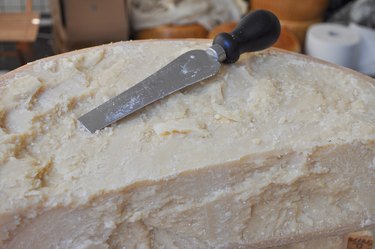
What makes Parmesan cheese so great for dieters is that it has a strong taste. You only need a sprinkle or two to get that salty, nutty flavor Parmesan is known for. You can toss it into salads or soups for an extra kick – and a tablespoon only contains 21 calories and has fewer than 1.5 grams of fat, plus 90 milligrams of sodium.
The Worst Cheese Choices for Dieters
Just as some cheeses are better choices for dieters, others are those you should steer clear of when dieting. An example of this is blue cheese, which contains 8 grams of fat and 100 calories, per one-ounce serving. Goat cheese contains 103 calories and almost 9 grams of fat per ounce, and cream cheese has almost 10 grams of fat and 99 calories per ounce. It's also a good idea to avoid specialty cheeses such as Gruyere, which contains 117 calories and just over 9 grams of fat per ounce, and fontina, which has 110 calories and almost 9 grams of fat per 1-ounce serving.
Cheese sometimes has a bad reputation as a high-fat food. The Center for Science in the Public Interest states that a diet high in cheese is partly the cause of cardiovascular disease in the United States. Cheese also has many nutritional benefits, however, as it is a good source of calcium and protein. Choosing the right type of cheese can help limit your total fat consumption.
Watch the Fat Content
Full-fat cheeses are often high in saturated fats, making them an unhealthy inclusion in a daily diet. But regularly consuming low-fat cheeses and saving higher-fat cheeses for special occasions can be a healthier option. For example, light cream cheese or cottage cheese are naturally lower in fat. Eating these more often than higher-fat varieties, such as blue cheese or Parmesan, means you'll limit your consumption of saturated fat and moderate your risk of heart disease.
Calcium-Rich Choices
All cheeses are good sources of calcium, an essential mineral. Calcium keeps your bones and teeth healthy while helping your body's nerves send signals. Choosing the right type of cheese can help you meet your daily calcium requirement without having to eat large quantities of cheese. A 50-gram serving of Brie cheese has only 92 milligrams of calcium, while the same size serving of Swiss cheese has 480 milligrams. In some cases, low-fat alternatives contain more calcium than their full-fat counterparts. A 1/4-cup serving of partly skimmed ricotta has 136 milligrams of calcium, while the same size serving of full-fat ricotta has only 103 milligrams.
Choosing for Flavor
A flavorful cheese means you can use less cheese when cooking and still get the same amount of flavor. With high-flavor cheeses, a small bit can go a long way to providing richness and taste to a dish. Cheeses such as Parmesan and Asiago can be used in small quantities for dishes, such as stews, pasta sauces and soups, where they will provide a significant addition in flavor with only a small serving size.
Raw Vs. Pasteurized
Made from unpasteurized milk, raw-milk cheeses are legally available for sale in some states if they have been aged a minimum of 60 days. But the Food and Drug Administration does not recommend raw-milk cheese for pregnant women, children or those with compromised immune systems. According to Macalester College, proponents of raw-milk cheese argue that the food is safer than many make it out to be because the cheeses are produced on a smaller scale. Macalester notes that raw-milk cheeses contain potentially beneficial pathogens, which are otherwise killed off during the pasteurization process. Raw-milk cheeses, in general, have a deeper, more complex flavor, so you may reap the added benefits of eating less cheese, leading to lower fat and calorie intake.
- Berkeley Wellness: The Health Benefits of Cheese
- Diabetes New Zealand: Healthy Cheese Choices
- National Dairy Council: Cheese and Nutrition
- AuthorityNutrition.com: Cheese 101: Nutrition Facts and Health Benefits
- USDA National Nutrient Database for Standard Reference: Cheese, Cottage, Lowfat, 1% Milkfat
- USDA National Nutrient Database for Standard Reference: Cheese, Feta
- USDA National Nutrient Database for Standard Reference: Cheese, Parmesan, Grated
- USDA National Nutrient Database for Standard Reference: Cheese, Blue
- USDA National Nutrient Database for Standard Reference: Cheese, Cream
- USDA National Nutrient Database for Standard Reference: Cheese, Goat, Semi-Soft Type
- USDA National Nutrient Database for Standard Reference: Cheese, Gruyere
- USDA National Nutrient Database for Standard Reference: Cheese, Fontina