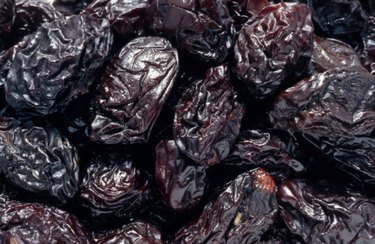
Food passes from your mouth to your stomach through a muscular tube called the esophagus. A one-way valve at the junction of your esophagus and stomach normally keeps food and stomach acid from regurgitating into your esophagus. A faulty gastroesophageal valve leads to acid reflux, which typically occurs after eating and causes heartburn. Although certain foods and eating habits aggravate the condition, prunes are a healthful and safe food to include in your diet if you have acid reflux.
Keep It Small
Video of the Day
Overfilling your stomach creates internal pressure that may provoke acid reflux. Occasional acid reflux is common, but persistent reflux that occurs more than twice a week is considered gastroesophageal reflux disease, or GERD, which can eventually lead to more serious health problems. Eating frequent small meals and snacks instead of three large meals helps prevent overextension of your stomach and acid reflux. Because prunes are a dried fruit, a quarter-cup counts as a half-cup serving of fruit. Similarly, a half-cup of prunes counts as a 1-cup serving of fruit. You may want to consider eating prunes as a snack rather than an add-on to a meal to prevent overfilling your stomach.
Video of the Day
Body Position
Gravity can be your best friend or worst enemy when you are living with acid reflux. An upright position helps keep food and stomach acid from refluxing into your esophagus. After you eat prunes or other food, stay upright to give the food time to pass into your small bowel. Avoid lying down to nap, read or watch television after eating.
Timing
In addition to spacing your meals and snacks throughout the day, avoid eating prunes or other foods within three hours of your bedtime. This helps prevent nighttime acid reflux and heartburn by giving your stomach time to empty before lying down to sleep. If you have slow gastric emptying, you may need a longer period without eating before going to bed.
Beneficial Nutrients
Prunes provide you with an array of healthful nutrients, including iron, potassium, calcium and vitamin A. This dried fruit is also rich in dietary fiber, providing you with approximately 11 g in six whole prunes. Sorbitol and the natural laxative dihydrophenylisatin combined with the fiber in prunes help promote regular bowel movements.
Tips
High-fat foods delay stomach emptying, which can increase the likelihood of you experiencing acid reflux symptoms. In addition to avoiding fatty foods, weight loss may help control acid reflux symptoms if you have overweight or obesity. Sugar-free, non-mint chewing gum can reduce reflux-related heartburn by promoting saliva production, which rinses stomach acid from your esophagus. Avoid alcohol, which irritates and inflamed esophagus. If you have persistent or recurrent heartburn, see your doctor to determine the cause.
- American College of Gastroenterology: Heartburn or Gastroesophageal Reflux Disease (GERD)
- Jackson Siegelbaum Gastroenterology; Gastroesophageal Reflux Disease Diet; Frank W. Jackson, M.D.; 2008
- ChooseMyPlate.gov: What Counts as a Cup of Fruit?
- University of Illinois at Urbana-Champagne McKinley Health Center; The GERD Diet; April 2008
- Sunsweet: Whole Prunes Nutrition Snapshot
- National Digestive Diseases Information Clearinghouse; Heartburn, Gastroesophageal Reflux;
Is this an emergency? If you are experiencing serious medical symptoms, please see the National Library of Medicine’s list of signs you need emergency medical attention or call 911.