
Reasons Why Cheerleading Is a Sport
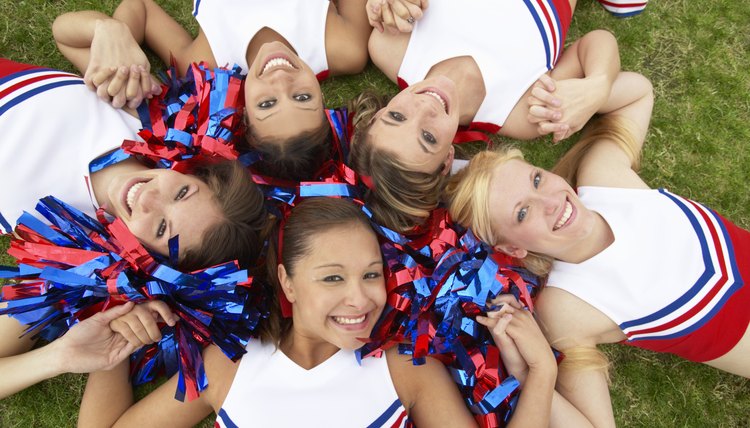
With the rise of cheerleading competitions that focus more on athletic activity and less on hyping up a crowd, the debate on cheer being a sport is more intense than ever. Many cheer teams no longer cheer for a specific sports team and instead compete as their own sport. In 2021, the Olympics officially recognized cheerleading as a sport, igniting discussion as to whether cheer is a sport. With the days of pompoms and hand claps long over, here are the top reasons why cheerleading meets the definition of a sport.
Physical Exertion
There is no question that competitive cheer requires lots of hard work and physical activity. “All-star” teams incorporate dance, tumbling and gymnastics to create performance routines. "Stunting" is a particular cheerleading activity that involves cheerleaders sitting, standing or squatting on others, such as in pyramids and basket tosses. These stunts require strength, stamina, acrobatics and timing, the kind of things you’d see football players use during a football game. An example of this can be seen at the NCAA’s University of Alabama. All cheerleaders must be able to do a standing back handspring and a standing back tuck, which is a flip with no hands, in order to be a part of the cheer squad. However, these moves can be performed anywhere from the pro level to high school.
Teamwork
Just like any other competitive sport, cheerleading involves a lot of teamwork. Cheerleading teams must work together on their cheerleading routine and every person must collaborate to make sure it doesn’t fail. Not only that but stunts, like pyramids and basket tosses, require every person to be a key contributor. Cheerleading can be a dangerous sport because if one person doesn’t hit their marks, cheerers can suffer concussions or other injuries from falling.
Training
In order to gain and maintain those skills, a competitive cheerleading squad must train as hard as any other baseball, basketball or football team. Collegiate-level school cheerleaders report spending as much time practicing as their peers in other varsity sports. In addition to attending cheer practice to practice stunting, tumbling, and dancing, cheerleaders must also weight lift and work out several times a week. This is to prevent catastrophic injuries from being out of shape or from a lack of strength.
Coaching
Competitive cheerleading is directed by a coach, much as other team sports are directed by a coach or coaching staff. The coach will direct the routines, supervise training and motivate her charges to compete at their highest level. Coaches are trained not only in supervising stunting but in safety as well. Some coaches are highly sought-after; the University of Oregon's Felecia Mulkey, for example, was recruited after a nationwide search.
Competition
For an activity to truly be considered a sport, it must involve competition against others. In competitive cheerleading, squads compete against each other in a head-to-head fashion and are evaluated according to a standardized set of rules. This point is the real bone of contention when it comes to questions about cheerleading as a sport. Many squads still primarily exist to support other sports teams. However, there is a governing body known as the International Cheer Union that helps to set up national championships and give a clear set of rules for competitive cheer. There are other smaller groups that do this but the ICU is the one recognized by teams like USA cheer and more.
References
Resources
Writer Bio
Lori A. Selke has been a professional writer and editor for more than 15 years, touching on topics ranging from LGBT issues to sexuality and sexual health, parenting, alternative health, travel, and food and cooking. Her work has appeared in Curve Magazine, Girlfriends, Libido, The Children's Advocate, Decider.com, The SF Weekly, EthicalFoods.com and GoMag.com.