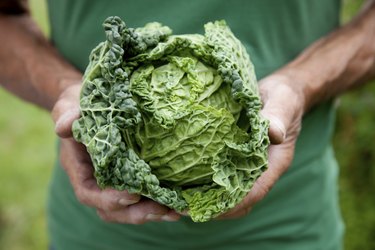
Cabbage is a nutritious addition to a balanced diet. In certain cases, though, cabbage can cause stomach pain and other digestive issues.
First, the good news: Cabbage is packed with nutrients like fiber, vitamin C and potassium, according to the Cleveland Clinic. Including cabbage and other cruciferous veggies (like broccoli, Brussels sprouts and arugula) in your diet can also help lower your risk for developing conditions like cancer.
Video of the Day
Video of the Day
But sometimes eating cabbage can lead to an upset stomach or gas. Here are the reasons why that can happen (and how to deal with it).
1. It Can Be Hard to Digest
If you regularly experience cabbage-induced stomach pain, that may be because cabbage is hard to digest.
But why does cabbage give you gas, exactly? The leafy green contains a complex sugar called raffinose, which can be difficult to digest and cause gas, bloating and stomach pain as your body breaks it down, according to John Hopkins Medicine. Other high-raffinose foods that give you gas include:
- Beans
- Brussels sprouts
- Broccoli
- Asparagus
- Whole grains like brown rice and whole-wheat bread
Another reason for cabbage-related gas pain is the vegetable's high fiber content: One cup of raw chopped cabbage has approximately 2.2 grams of fiber, according to the USDA.
While fiber is an essential nutrient that supports good digestion, eating too much too quickly can lead to gas, bloating and cramping, per the Mayo Clinic.
Fix it: To avoid gas from excess fiber, slowly work cabbage and other high-fiber foods into your regular diet over the course of a few weeks, according to the Mayo Clinic.
Cooking raw cabbage can also help offset some digestive troubles, per a still-relevant October 2009 review in Cold Spring Harbor Symposia on Quantitative Biology.
Note: For some, even cooked cabbage is hard to digest — if you find it gives you digestive issues, limit or avoid the vegetable.
2. It's Contaminated
Now you know that cabbage does cause gas for some. But if your cabbage stomach pain is accompanied by symptoms like diarrhea or vomiting, you may have food poisoning, per the U.S. National Library of Medicine (NLM).
Raw cabbage (and other raw foods, for that matter) that has not been properly washed, packaged or cooked can contain harmful bacteria such as salmonella, staphylococcus or E. coli, which can lead to foodborne illness, according to the NLM.
Food poisoning symptoms can also include:
- Cramping
- Gas
- Bloating
- Nausea
- Fever
- Chills
- Overall weakness
So, if you have nausea and bloating after eating cabbage, consider that it might be food poisoning causing these symptoms.
Fix it: Avoid foodborne illness by thoroughly washing your hands, utensils, surfaces and foods, per the NLM.
Here's exactly how to wash vegetables. Using a salad spinner ($24.99, Amazon.com) can help ensure cabbage is getting clean.
Cooking your food and refrigerating perishable dishes can also help prevent food poisoning.
3. You Have an Underlying Digestive Disease
If you have an underlying digestive disorder like irritable bowel syndrome or SIBO, eating difficult-to-digest foods may lead to unpleasant symptoms like gas, bloating, nausea or heartburn, according to the Cleveland Clinic.
Indeed, cruciferous veggies like cabbage are more likely to cause gas, according to the International Foundation for Gastrointestinal Disorders.
Fix it: Visit your doctor to diagnose and treat your digestive condition. They can help you determine which foods are best for you and which to avoid to prevent stomach pain and other symptoms. If you have blood in your stool, visit your doctor right away, per the Cleveland Clinic.
Cabbage Can Also Benefit Digestion
Reading about the potential for eating cabbage to give you a stomachache (and other digestive woes) might make you think you're better off avoiding it. But unless your body can't tolerate it, keep in mind the many nutritional benefits of cabbage, including its potential to fight inflammation and lower LDL (aka "bad") cholesterol, per the Cleveland Clinic.
Plus, cabbage can also be good for your digestion, helping you have regular bowel movements thanks to insoluble fiber, according to the Cleveland Clinic. It's particularly beneficial for your digestive system when you eat fermented cabbage (think: kimchi and sauerkraut) since that helps power good-for-you bacteria in your gut, per the Cleveland Clinic.
When to Talk to a Doctor
For most people, digestive woes due to eating cabbage will pass quickly. But that's not always the case, and there are some scenarios where you should speak to your health care provider.
For instance, talk to your doctor if you have food poisoning that causes diarrhea for more than five days, have bloody stools or can't keep fluids down, per the NLM.
Plus, if you suspect you have a digestive condition, such as IBS, then a visit to the doctor is in order, so you can diagnosis and treat the condition, and know if cabbage is on a no-go list for you.
- Johns Hopkins Medicine Health Library: "Gas in the Digestive Tract"
- U.S. National Library of Medicine: "Food Poisoning"
- USDA: "Cabbage, Raw"
- Cleveland Clinic: "Are Your Digestion Troubles Irritable Bowel Syndrome?"
- International Foundation for Gastrointestinal Disorders: "Tips on Controlling Gas"
- Cleveland Clinic: "What Are Cruciferous Vegetables — and Why Are They So Good for You?"
- Mayo Clinic: "Dietary fiber: Essential for a healthy diet"
- U.S. National Library of Medicine: "Preventing food poisoning"
- Cold Spring Harbor Symposia on Quantitative Biology: "Cooking and the human commitment to a high-quality diet"
- Cleveland Clinic: "8 Health Benefits of Cabbage"