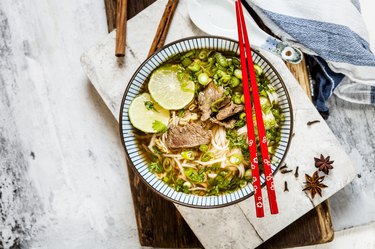
Finding a gluten-free alternative to pasta noodles can be both challenging and exciting. One option you may want to try is mung bean noodles, also called cellophane noodles, which are commonly consumed in Chinese cuisine. In America, this noodle alternative is growing in popularity.
Tip
Mung bean noodles can be used in gluten-free cooking. They share properties of the mung bean but are still considered processed. You receive more nutrients and benefits when consuming whole mung beans.
Video of the Day
Like all noodle alternatives, such as brown rice pasta and red lentil pasta, mung bean noodles are derived from a whole food. However, they are dehydrated and strung together from mung bean starch. This makes them a processed food. During the process of making mung bean noodles, some nutrients are lost.
Video of the Day
Mung bean noodles may be a better alternative to traditional noodles, especially for people with gluten allergies or celiac disease, though they are not as nutritious as the mung beans from which they are derived. Though they are somewhat processed, mung bean noodles do not contain many added ingredients.
What are Mung Bean Noodles?
Mung bean noodles have multiple names, including cellophane noodles and glass noodles. They get these names from their transparent appearance. To make mung bean noodles, mung bean starch is extracted, dehydrated and formed into a noodle shape.
Despite looking spongy and soft to the touch, cooked mung bean noodles are firm like cooked wheat noodles. Their texture makes them a suitable alternative to semolina wheat pasta. In Chinese cuisine, cellophane noodles are used in stir fries and noodle dishes.
Mung bean noodles tend to have simple ingredient lists. Depending on the brand or manufacturer, mung bean noodles and water may be the only ingredients.
Read more: Is It Safe to Eat Bean Sprouts Raw?
Glass Noodles Nutrition Facts
Mung bean noodles are advertised as a healthier alternative to traditional pasta. People who follow a gluten-free diet use them in noodle dishes. Cellophane noodles are also advertised as a high-protein, low-carb option. However, glass noodles nutrition facts do not support these claims.
According to the USDA, 1 cup of cooked mung bean noodles contain the following nutrition facts:
160 calories
0.019 grams of fat
39.3 grams of carbohydrates
0.19 grams of fiber
0.076 grams of protein
4.7 percent daily value (DV) of iron
Glass noodle calories are similar to other types of noodles at 160 calories per cup, which does not include any other ingredients, such as broth, tofu and vegetables. Since the mung bean starch is extracted, cellphone noodles are high in carbohydrates.
In comparison, 1 cup of cooked mung beans contain the following nutrition facts per the USDA:
- 212 calories
- 0.8 grams of fat
- 38.7 grams of carbohydrates
- 14.2 grams of protein
- 15.4 grams of fiber
- 23 percent DV of magnesium
- 16 percent DV of iron
Glass noodles' nutrition is lower in protein, fiber and other vitamins and minerals, which tends to happen in foods that are processed.
Mung Bean Noodles Benefits
People with gluten intolerance or celiac disease can benefit from eating mung bean noodles as they are a suitable replacement for pastas containing gluten and wheat. In social situations or to satisfy pasta cravings, mung bean noodles are a safe option for people with gluten and wheat restrictions.
Depending on your goals and portion size, the glass noodles' calories can help you lose or gain weight. Consuming 160 calories per cup may seem high or low to some people. As long as you implement a caloric deficit or surplus, you will likely meet your weight loss or weight gain goals, respectively.
Mung bean noodles are also a good source of iron. One cup contains roughly 5 percent of your daily iron needs. According to Cleveland Clinic, beans and legumes are good plant sources of dietary iron. If you are at risk of iron deficiency or anemia, mung bean noodles may help you boost your dietary iron intake.
Should You Eat Glass Noodles?
Mung bean noodles are not associated with any negative risks. People with allergies to legumes should not consume mung beans or mung bean products. People with irritable bowel syndrome (IBS) may want to avoid mung bean noodles, which contain FODMAPs, known to cause digestive discomfort.
Pregnant women should avoid sprouted mung bean noodles. According to the Academy of Nutrition and Dietetics, pregnant women should avoid all raw sprouts, including those from mung beans and products made from sprouted mung beans. Noodles made from non-sprouted mung beans should be safe for pregnant women.
If you are following a calorie-restricted diet, you should take the calories of mung bean noodles into consideration. If increasing your caloric intake is your goal, mung bean noodles can help get you there. Gluten-free mung bean noodles may also be beneficial for people looking for a noodle alternative.