Herbal Remedies for Leukemia
Leukemia is a type of cancer that affects your blood vessels, such as the lymphatic system and bone marrow. Symptoms include fever or chills, weight loss, fatigue, easy bleeding, red spots on the skin, bone pain and sweating. Treatment can include chemotherapy, radiation therapy and stem cell transplant. Certain herbal remedies may also help treat leukemia. You should consult your doctor before starting any herbal remedies. In addition, you should not replace other forms of treatment with herbal remedies.
If you are experiencing serious medical symptoms, seek emergency treatment immediately.
Milk Thistle
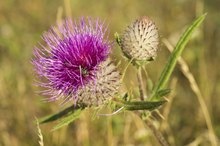
Milk thistle is a herb that originates from the Mediterranean region. This herb is commonly used for ailments of the liver, and it may also help decrease growth of certain types of cancer. According to the National Center for Complementary and Alternative Medicine, this herb is also being studied for its benefit in patients with leukemia and chemotherapy-related damage to the liver. Studies are ongoing and no evidence is established at this time.
- Milk thistle is a herb that originates from the Mediterranean region.
- This herb is commonly used for ailments of the liver, and it may also help decrease growth of certain types of cancer.
Korean Red Ginseng
Herbal Cancer Treatments for Lymphoma
Learn More
Korean Red Ginseng is a herbal remedy that may be beneficial in treating and managing leukemia. A study published in the 2008 Journal of Ethnopharmacology examined how this herb can inhibit telomerase activity and cause apoptosis in human leukemia cells 2. These two actions can benefit the management and slowed progression of cancerous cells. According to their findings, this herb may be beneficial if you have leukemia.
- Korean Red Ginseng is a herbal remedy that may be beneficial in treating and managing leukemia.
- These two actions can benefit the management and slowed progression of cancerous cells.
Turmeric
Myeloproliferative disorders are a group of conditions that lead blood cells to abnormally grow within blood vessels. One of these conditions is chronic myelogenous leukemia, a type of leukemia in which the bone marrow synthesizes abnormal white blood cells in your bone marrow. Some herbs may be used for these disorders in order to help strengthen your body's defense systems. One herb that has been used is turmeric. The University of Maryland Medical Center indicates that a dose of 300 mg, three times/day, may reduce pain and inflammation associated with leukemia symptoms.
- Myeloproliferative disorders are a group of conditions that lead blood cells to abnormally grow within blood vessels.
- One of these conditions is chronic myelogenous leukemia, a type of leukemia in which the bone marrow synthesizes abnormal white blood cells in your bone marrow.
Olive Leaf
Causes of High MPV Blood
Learn More
Another herb that may be used in the treatment of leukemia is olive leaf, also called olea europaea. The UMMC says that a standardized extract of 250 to 500 mg, for one to three times a day, may offer you anti-cancer effects and increased immune support. By boosting your immune strength, you may be better able to fight infection and illness or other symptoms of leukemia.
Related Articles

Herbal Cancer Treatments for Lymphoma
Learn More
Causes of High MPV Blood
Learn More

Herbs to Increase White Blood Cells
Learn More
Herbs for Liver Cysts
Learn More
Lapacho Tea Benefits
Learn More
Herbs for Spinal Stenosis
Learn More
Supplements for a Low White Blood Cell Count
Learn More
Medications That Boost White Blood Cells
Learn More

What Are the Causes of Low Platelets & Low White Blood Cells?
Learn More

What Are the Benefits of Hydrangea Root Herb?
Learn More
References
- MayoClinic.com: Leukemia
- Pubmed.gov: "Journal of Ethnopharmacology": Korean Red Ginseng Extract Induces Apoptosis And Decreases Telomerase Activity In Human Leukemia Cells; SE Park. et al.; 2009
- Cano RLE, Lopera HDE. Introduction to T and B lymphocytes. In: Anaya JM, Shoenfeld Y, Rojas-Villarraga A, et al., editors. Autoimmunity: From Bench to Bedside [Internet]. Bogota (Colombia): El Rosario University Press; 2013 Jul 18. Chapter 5. Available from: https://www.ncbi.nlm.nih.gov/books/NBK459471/
- Cingam SR, Koshy NV. Cancer, Acute Promyelocytic Leukemia (APL, APML) [Updated 2019 Aug 4]. In: StatPearls [Internet]. Treasure Island (FL): StatPearls Publishing; 2019 Jan-. Available from: https://www.ncbi.nlm.nih.gov/books/NBK459352/
- Dotson JL, Lebowicz Y. Myelodysplastic Syndrome. [Updated 2019 Jan 10]. In: StatPearls [Internet]. Treasure Island (FL): StatPearls Publishing; 2019 Jan-. Available from: https://www.ncbi.nlm.nih.gov/books/NBK534126/
- PDQ Adult Treatment Editorial Board. Adult Acute Myeloid Leukemia Treatment (PDQ®): Health Professional Version. 2019 Feb 8. In: PDQ Cancer Information Summaries [Internet]. Bethesda (MD): National Cancer Institute (US); 2002-. Available from: https://www.ncbi.nlm.nih.gov/books/NBK65996/
- Centers for Disease Control and Prevention. Leukemia. Updated 06/12/18. https://www.cdc.gov/cancer/leukemia/index.htm
- National Cancer Institute. Leukemia – Health Professional Version. https://www.cancer.gov/types/leukemia/hp
- U.S. National Library of Medicine. Medline Plus. Leukemia. Updated 04/27/18. https://medlineplus.gov/leukemia.html
- National Cancer Institute. Leukemia. Cancer.gov.
- Davis AS, Viera AJ, Mead MD. Leukemia: an overview for primary care. Am Fam Physician. 2014;89(9):731-8.
- Shephard EA, Neal RD, Rose PW, Walter FM, Hamilton W. Symptoms of adult chronic and acute leukaemia before diagnosis: large primary care case-control studies using electronic records. Br J Gen Pract. 2016;66(644):e182–e188. doi:10.3399/bjgp16X683989
- Talati C, Sweet K. Recently approved therapies in acute myeloid leukemia: A complex treatment landscape. Leuk Res. 2018;73:58-66.
- Brunning RD. Classification of acute leukemias. Semin Diagn Pathol. 2003;20(3):142-53.
- Parikh SA. Chronic lymphocytic leukemia treatment algorithm 2018. Blood Cancer J. 2018;8(10):93. Published 2018 Oct 3. doi:10.1038/s41408-018-0131-2
- Jagannathan-Bogdan M, Zon LI. Hematopoiesis. Development. 2013;140(12):2463–2467. doi:10.1242/dev.083147
- Cano RLE, Lopera HDE. Introduction to T and B lymphocytes. In: Anaya JM, Shoenfeld Y, Rojas-Villarraga A, et al., editors. Autoimmunity: From Bench to Bedside [Internet]. Bogota (Colombia): El Rosario University Press; 2013 Jul 18. Chapter 5.
- Terwilliger T, Abdul-Hay M. Acute lymphoblastic leukemia: a comprehensive review and 2017 update. Blood Cancer J. 2017;7(6):e577. Published 2017 Jun 30. doi:10.1038/bcj.2017.53
- Aldoss IT, Marcucci G, Pullarkat V. Treatment of Acute Lymphoblastic Leukemia in Adults: Applying Lessons Learned in Children. Oncology (Williston Park, NY). 2016;30(12):1080-91.
- Kipps TJ, Stevenson FK, Wu CJ, et al. Chronic lymphocytic leukaemia. Nat Rev Dis Primers. 2017;3:16096. Published 2017 Jan 19. doi:10.1038/nrdp.2016.96
- Saultz JN, Garzon R. Acute Myeloid Leukemia: A Concise Review. J Clin Med. 2016;5(3):33. Published 2016 Mar 5. doi:10.3390/jcm5030033
- Cingam SR, Koshy NV. Cancer, Acute Promyelocytic Leukemia (APL, APML) [Updated 2019 Aug 4]. In: StatPearls [Internet]. Treasure Island (FL): StatPearls Publishing; 2019 Jan-.
- Granatowicz A, Piatek CI, Moschiano E, El-Hemaidi I, Armitage JD, Akhtari M. An Overview and Update of Chronic Myeloid Leukemia for Primary Care Physicians. Korean J Fam Med. 2015;36(5):197–202. doi:10.4082/kjfm.2015.36.5.197
- Ottensmeier C. The classification of lymphomas and leukemias. Chem Biol Interact. 2001;135-136:653-64.
- Hourigan CS, Savani BN. Leukaemia risk associated with low-dose radiation. Lancet Haematol. 2018;5(8):e324–e325. doi:10.1016/S2352-3026(18)30106-6
- Snyder R. Leukemia and benzene. Int J Environ Res Public Health. 2012;9(8):2875–2893. doi:10.3390/ijerph9082875
- Metayer C, Petridou E, Aranguré JM, et al. Parental Tobacco Smoking and Acute Myeloid Leukemia: The Childhood Leukemia International Consortium. Am J Epidemiol. 2016;184(4):261–273. doi:10.1093/aje/kww018
- Matsuoka M, Jeang KT. Human T-cell leukemia virus type 1 (HTLV-1) and leukemic transformation: viral infectivity, Tax, HBZ and therapy. Oncogene. 2011;30(12):1379-89.
- Dotson JL, Lebowicz Y. Myelodysplastic Syndrome. [Updated 2019 Jan 10]. In: StatPearls [Internet]. Treasure Island (FL): StatPearls Publishing; 2019 Jan-.
- Laurier D, Valenty M, Tirmarche M. Radon exposure and the risk of leukemia: a review of epidemiological studies. Health Phys. 2001;81(3):272-88.
- Alter BP. Fanconi anemia and the development of leukemia. Best Pract Res Clin Haematol. 2014;27(3-4):214-21.
- Kaur M, Singh Rana AP, Kapoor S, Puri A. Diagnostic value of bone marrow aspiration and biopsy in routine hematology practice. J Clin Diagn Res. 2014;8(8):FC13–FC16. doi:10.7860/JCDR/2014/9823.4760
- Mrózek K, Heerema NA, Bloomfield CD. Cytogenetics in acute leukemia. Blood Rev. 2004;18(2):115-36.
- Ali J, Khan SA, Rauf S-, Ayyub M, Ali N, Afridi NK. Comparative Analysis of Fluorescence In Situ Hybridization and Real Time Polymerase Chain Reaction in Diagnosis of Chronic Myeloid Leukemia. J Coll Physicians Surg Pak. 2017;27(1):26-29.
- Kang ZJ, Liu YF, Xu LZ, et al. The Philadelphia chromosome in leukemogenesis. Chin J Cancer. 2016;35:48. Published 2016 May 27. doi:10.1186/s40880-016-0108-0
- PDQ Adult Treatment Editorial Board. Adult Acute Myeloid Leukemia Treatment (PDQ®): Health Professional Version. 2019 Feb 8. In: PDQ Cancer Information Summaries [Internet]. Bethesda (MD): National Cancer Institute (US); 2002-.
- Del Principe MI, Maurillo L, Buccisano F, et al. Central nervous system involvement in adult acute lymphoblastic leukemia: diagnostic tools, prophylaxis, and therapy. Mediterr J Hematol Infect Dis. 2014;6(1):e2014075. Published 2014 Nov 1. doi:10.4084/MJHID.2014.075
- Smith CC, Shah NP. Tyrosine kinase inhibitor therapy for chronic myeloid leukemia: approach to patients with treatment-naive or refractory chronic-phase disease. Hematology Am Soc Hematol Educ Program. 2011;2011:121-7.
- Parmar S, Patel K, Pinilla-Ibarz J. Ibrutinib (imbruvica): a novel targeted therapy for chronic lymphocytic leukemia. P T. 2014;39(7):483–519.
- Farsi Z, Nayeri ND, Negarandeh R. The coping process in adults with acute leukemia undergoing hematopoietic stem cell transplantation. J Nurs Res. 2012;20(2):99-109.
- Blumenfeld Z. Fertility Preservation in Leukemia. Oncologist. 2018;23(6):645–646. doi:10.1634/theoncologist.2017-0635
- Ilhan G, Karakus S, Andic N. Risk factors and primary prevention of acute leukemia. Asian Pac J Cancer Prev. 2006;7(4):515-7.
- Hernández AF, Menéndez P. Linking Pesticide Exposure with Pediatric Leukemia: Potential Underlying Mechanisms. Int J Mol Sci. 2016;17(4):461. Published 2016 Mar 29. doi:10.3390/ijms17040461
- Linet MS, Slovis TL, Miller DL, et al. Cancer risks associated with external radiation from diagnostic imaging procedures [published correction appears in CA Cancer J Clin. 2012 Jul-Aug;62(4):277]. CA Cancer J Clin. 2012;62(2):75–100. doi:10.3322/caac.21132
- Centers for Disease Control and Prevention. Leukemia. Updated 06/12/18.
- National Cancer Institute. Leukemia – Health Professional Version.
- U.S. National Library of Medicine. Medline Plus. Leukemia. Updated 04/27/18.
Writer Bio
Jill Andrews began writing professionally for various online publications since 2009. Andrews holds a Bachelor of Science in biochemistry/nutrition from Memorial University in St.John's, Newfoundland. She also holds a Bachelor of Science in occupational therapy from Dalhousie University in Halifax, Nova Scotia.